Introduction
Concrete pavers are one of the most popular hardscaping materials for homeowners and landscape professionals. They combine durability, design flexibility, and relatively low maintenance to create attractive driveways, patios, walkways, and pool decks. This guide explains what concrete pavers are, the types available, design tips, installation basics, maintenance, and cost considerations to help you make an informed decision for your project.
What Are Concrete Pavers?
Materials & Manufacturing
Concrete pavers are precast units made from cement, sand, aggregate, and coloring or additives. They are produced under controlled conditions to ensure consistent strength and finish. Manufacturers mold and compact the concrete into shapes, then cure the pavers to achieve the desired durability.
Common Shapes and Sizes
Pavers come in many shapes—rectangular, square, hexagonal, and interlocking profiles. Sizes vary from small cobble-style units to large slab pavers. Thickness typically ranges from 1 1/8″ for pedestrian areas to 2 3/8″ or thicker for vehicle traffic.
Benefits of Concrete Pavers
- Durability: Properly installed pavers withstand freeze-thaw cycles and heavy loads.
- Design versatility: Multiple shapes, colors, and patterns allow creative layouts to match any style.
- Repairable: Individual pavers can be replaced without tearing out the entire surface.
- Permeability options: Permeable pavers reduce runoff and support stormwater management.
- Cost-effective: They often provide a lower life-cycle cost compared to some natural stone options.
Types of Concrete Pavers
Interlocking Pavers
Interlocking pavers have geometric edges that lock together, distributing loads across the surface. They’re common for driveways and high-traffic areas.
Stamped and Colored Pavers
These pavers are colored or stamped during manufacturing to mimic stone, brick, or tile finishes. They offer aesthetic appeal without the expense of natural materials.
Permeable Pavers
Permeable or porous pavers allow water to infiltrate through joints into a permeable base, reducing stormwater runoff and meeting modern drainage requirements in many municipalities.
Cobblestone and Large Format Pavers
Cobblestone-style pavers give a rustic, historic look, while large-format pavers create contemporary, clean lines. Each has a unique visual impact and performance profile.
Design and Use Cases
Driveways
For driveways choose thicker pavers (typically 2 3/8″ or greater) and a well-engineered base to prevent settlement and shifting under vehicular loads.
Patios and Walkways
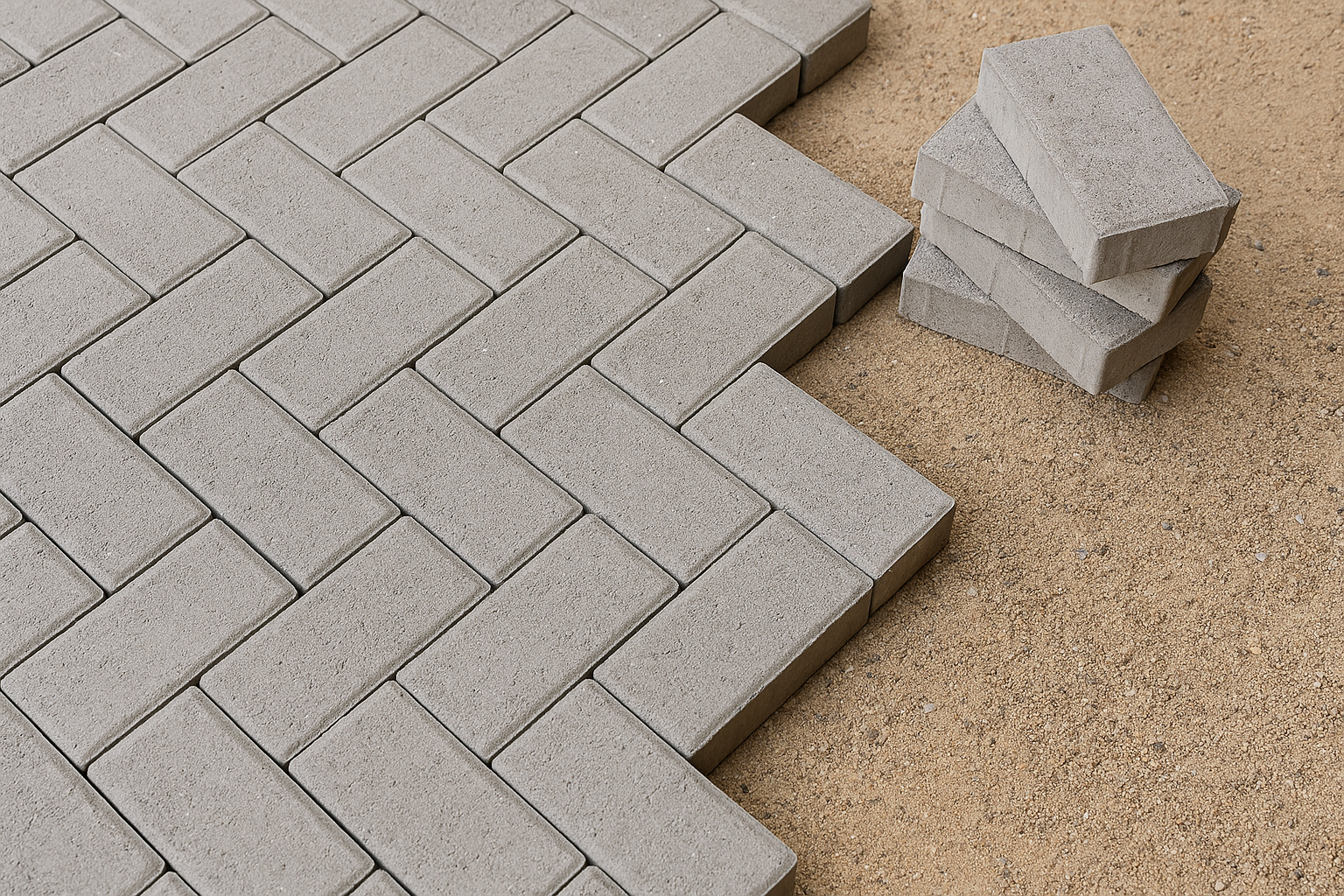
Patios can showcase patterns such as herringbone, basketweave, or running bond. Walkways benefit from slip-resistant textures and complementary edging.
Pool Decks and Outdoor Living
Pavers for pool decks should be slip-resistant and comfortable underfoot. Lighter colors reduce heat absorption, and permeable options help manage splash runoff.
Installation Overview
Site Preparation
Begin with proper grading to ensure drainage away from structures. Remove vegetation and unstable soils to reach a solid subgrade.
Base and Bedding
A compacted base of crushed stone provides support and load distribution. A thin bedding layer of coarse sand (or specialized bedding mix) allows final leveling and bedding of pavers.
Cutting and Edge Restraints
Edge restraints keep pavers locked in place. Cutting with a wet saw or angle grinder ensures tight fits against borders and curves.
Jointing, Compaction, and Sealing
Pour jointing sand (or polymeric sand) into joints, then compact the surface with a plate compactor. Sealing is optional but can enhance color, reduce staining, and limit weed growth.
Maintenance and Longevity
Cleaning
Regular sweeping and occasional pressure washing keep pavers looking their best. Use pH-neutral cleaners for stubborn stains.
Weed and Joint Care
Maintain joint material to prevent weed growth. Polymeric sand can reduce weeds and insect intrusion compared with loose sand.
Repairs and Replacement
Because pavers are modular, repairing a small stained or damaged area is straightforward—remove the affected units and replace them without major disruption.
Sealing
Sealers can protect color and resist oil or mildew. Test a small area first, and follow manufacturer recommendations for reapplication intervals.
Cost Considerations
Costs vary widely by region, paver type, and project complexity. As a rough guide: pedestrian pavers may start around $8–$15 per square foot installed, while driveway pavers often range $12–$25/sq ft. Permeable systems and complex patterns increase costs. Always get multiple detailed quotes and confirm what’s included (base preparation, edge restraints, removal of old surfaces).
Choosing a Contractor vs. DIY
DIY installation can save money on small, simple projects, but proper base preparation and compaction are critical. For driveways, permeable systems, or large patios, hiring an experienced contractor reduces the risk of premature failure and can ensure warranties and code compliance.
Conclusion
Concrete pavers are a versatile, durable option for many outdoor projects. With many styles and functional choices—from permeable systems to decorative finishes—pavers can meet aesthetic goals and performance needs. Careful planning, proper installation, and routine maintenance will keep your paved surfaces attractive and long-lasting.