Introduction
Stone remains one of the most durable, beautiful, and versatile materials for masonry. Whether you’re building a garden wall, restoring an old facade, or designing a stone fireplace, understanding the characteristics of different stones and the techniques for working with them will help you get lasting, attractive results. This guide covers common stone types, selection criteria, tools and techniques, mortar compatibility, maintenance, and sustainability.
Common Types of Stone for Masonry
Granite
Granite is very hard, dense, and extremely durable. It resists weathering and abrasion, making it ideal for structural elements, exterior cladding, and high-traffic areas. It can be heavy and more costly to cut and install.
Limestone
Limestone offers a classic look with warm, neutral tones. It’s softer than granite, easier to work with, and widely used for veneers, trim, and load-bearing blocks where extreme hardness is not required. It can be susceptible to acid rain and chemical staining.
Sandstone
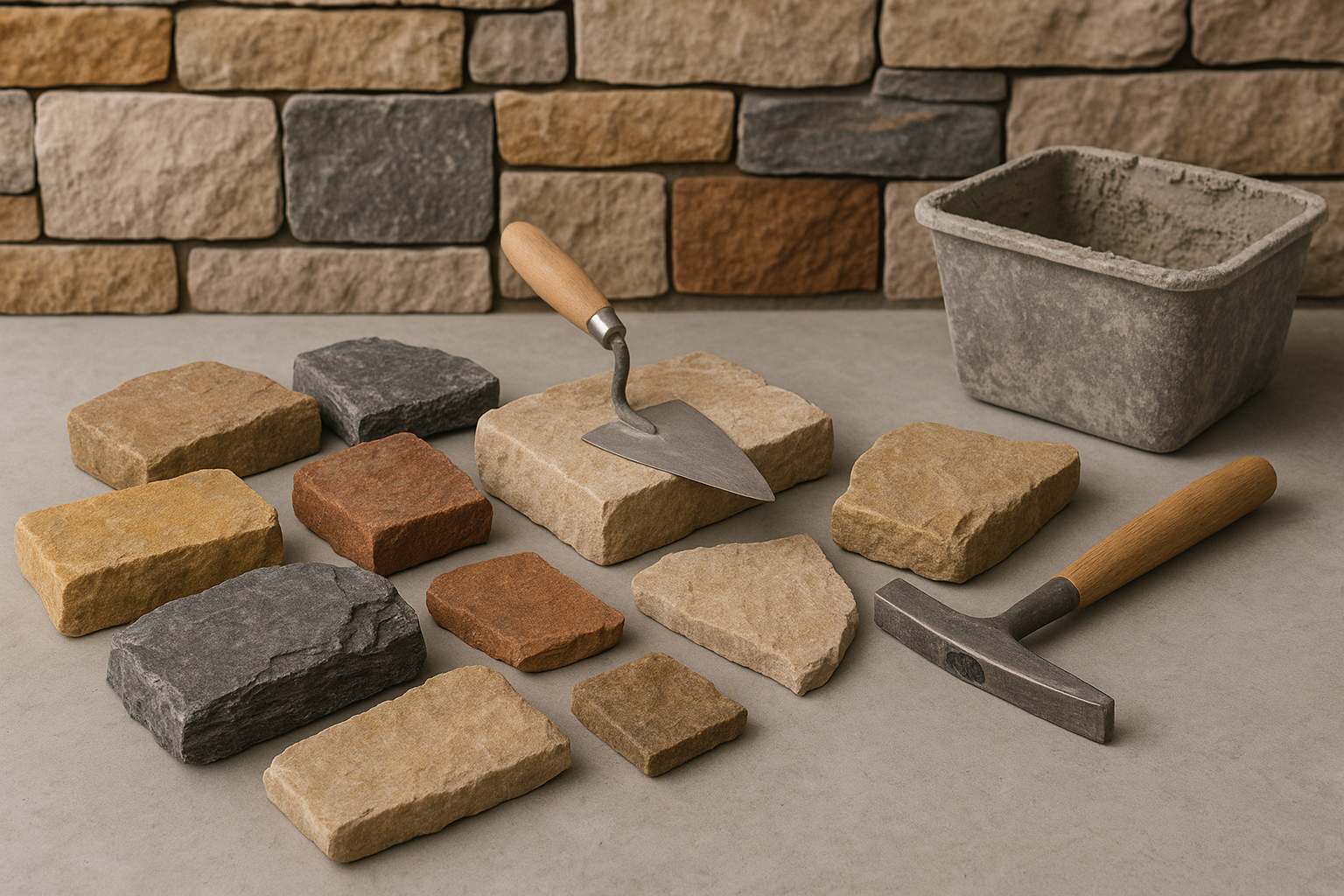
Sandstone is available in a range of colors and textures. It’s relatively easy to split into slabs and is popular for walls, paving, and facades. Porosity varies, so check freeze-thaw performance for cold climates.
Slate
Slate splits into thin, flat sheets, making it great for roofing, flooring, and thin cladding. It’s dense and durable but can be brittle under impact.
Marble and Quartzite
Marble is prized for refined applications and interior features; it’s less common for exterior structural work due to weathering. Quartzite is harder and more durable than sandstone and can be used where a stone with high strength and aesthetics is required.
Fieldstone and Reclaimed Stone
Fieldstone and reclaimed stone offer rustic character and sustainability benefits. They suit landscaping, garden walls, and historic restoration projects.
Key Properties to Consider
- Compressive strength: Important for load-bearing applications.
- Porosity and absorption: Affects freeze-thaw performance and staining risk.
- Durability and weathering: Choose stones suited to local climate and exposure.
- Workability: Some stones are easier to cut and finish than others.
- Aesthetics: Color, texture, and finish influence the overall design.
Selecting the Right Stone
Selection starts with the project’s structural and aesthetic requirements. Ask these questions: Is the stone structural or veneer? Will it be exposed to freeze-thaw cycles? What load will it carry? What finish is desired (rough, split, sawn)? Local availability often dictates cost and sustainability, so source nearby stone when possible. For historic work, matching the original stone and mortar is crucial.
Mortar Compatibility and Jointing
Choosing the right mortar is as important as choosing the stone. Mortar comes in different strengths and compositions (Types M, S, N, and K are common classifications). Strong mortars with high cement content can be too rigid for softer stones; they can cause cracking by not allowing compatible movement. For softer stones like limestone or historic masonry, use a more flexible, lime-rich mortar. For heavy structural work where strength is critical, higher-strength mortar may be appropriate. Always test a small area and consult local codes or experienced masons for structural work.
Tools and Techniques
Working with stone requires the right tools and safety practices. Common tools include chisels, stone hammers, pitching tools, mason’s saws with diamond blades, grinders, and polishing pads. Use proper safety gear: eye protection, hearing protection, dust masks or respirators, gloves, and steel-toe boots. Cutting wet with water or using dust extraction reduces silica dust hazards. For precise work, handheld grinders and diamond blades provide clean cuts; for rustic work, hand-tool finishing preserves natural character.
Installation Best Practices
- Prepare a stable, well-drained foundation or footing for load-bearing walls.
- Ensure proper flashing and weep holes to manage moisture behind stone veneers.
- Lay stones with tight, consistent joints where possible; use appropriate joint widths for aesthetics and movement.
- Allow mortar to cure slowly; protect new masonry from rapid drying, freezing, or heavy rain.
Maintenance and Repair
Routine maintenance extends the life of stone masonry. Clean with gentle methods: low-pressure washing, soft brushes, and stone-safe cleaners. Avoid harsh acids on sensitive stones like limestone. Repointing (removing and replacing deteriorated mortar) should match original mortar in composition and color. Address efflorescence and biological growth with appropriate cleaners, and consider breathable sealers only when necessary; non-breathable sealers can trap moisture and cause damage.
Sourcing and Sustainability
Consider reclaimed stone and local quarries to lower embodied energy and transportation impact. Responsible quarrying practices, waste reduction, and sourcing from suppliers with environmental and ethical credentials improve sustainability. Reused stone not only reduces waste but adds character and often matches historic projects better than new stone.
Cost Considerations
Costs vary widely by stone type, finish, size, and labor. Hard stones like granite and quartzite typically cost more for material and cutting, while common sandstones and limestones are more economical. Specialized finishes, transport distance, and skilled labor increase overall expense. Get multiple quotes and consider lifecycle costs: durable stone often pays back through lower maintenance and longer service life.
DIY vs. Professional Work
Small projects like garden walls, stepping stones, and simple paving can be DIY-friendly with the right tools and planning. Structural work, complex cladding, and historic restoration benefit from professional masons who understand load-bearing design, mortar compatibility, and long-term performance.
Conclusion
Stone is a timeless masonry material that combines strength, beauty, and longevity when selected and installed correctly. Match stone type to function and climate, use compatible mortar and proper detailing to manage moisture, and maintain masonry with gentle, appropriate care. Whether you’re doing a small landscaping project or a large structural build, thoughtful choices at every stage ensure results that endure.