What is a concrete job?
A concrete job covers the planning, preparation, placement, finishing, and curing of concrete to form durable structures like foundations, slabs, driveways, sidewalks, patios, and retaining walls. Whether you're hiring a contractor or tackling a project yourself, understanding the stages and essential details helps ensure a long-lasting result.
Types of concrete jobs
- Residential slabs and foundations
- Driveways, sidewalks, and curbs
- Patios, steps, and decorative stamped concrete
- Repair work: patching, resurfacing, and crack repair
- Commercial and heavy-duty structures: parking lots, loading docks
Who performs concrete jobs?
Concrete work typically involves a small team of specialists: form setters, concrete laborers, finishers, and equipment operators. For larger jobs, a project manager or general contractor coordinates scheduling, permits, and inspections.
Preparing for a concrete job
Site preparation
Careful site prep sets the foundation for success. This includes clearing vegetation, excavating to the correct depth, and compacting the subgrade. Proper slope and drainage planning prevents standing water that can damage concrete over time.
Permits and planning
Check local building codes and obtain required permits before work begins. Some jurisdictions require engineering plans for foundations or retaining walls. Also verify utility locates to avoid damaging underground lines.
Materials and equipment
- Concrete mix: choose the right strength (psi) and admixtures for your climate and load.
- Reinforcement: rebar, wire mesh, or fibers help control cracking and increase strength.
- Equipment: forms, concrete pump or mixer, screeds, trowels, bull float, and finishing tools.
Step-by-step of a typical concrete job
1. Layout and formwork
Set forms to the exact dimensions and elevation required. Sturdy, well-braced forms prevent bulging and ensure straight edges.
2. Excavation and base preparation
Excavate to the correct depth and spread a layer of compactable base material (gravel or crushed stone). Compact in lifts to provide a stable base that minimizes future settling.
3. Reinforcing
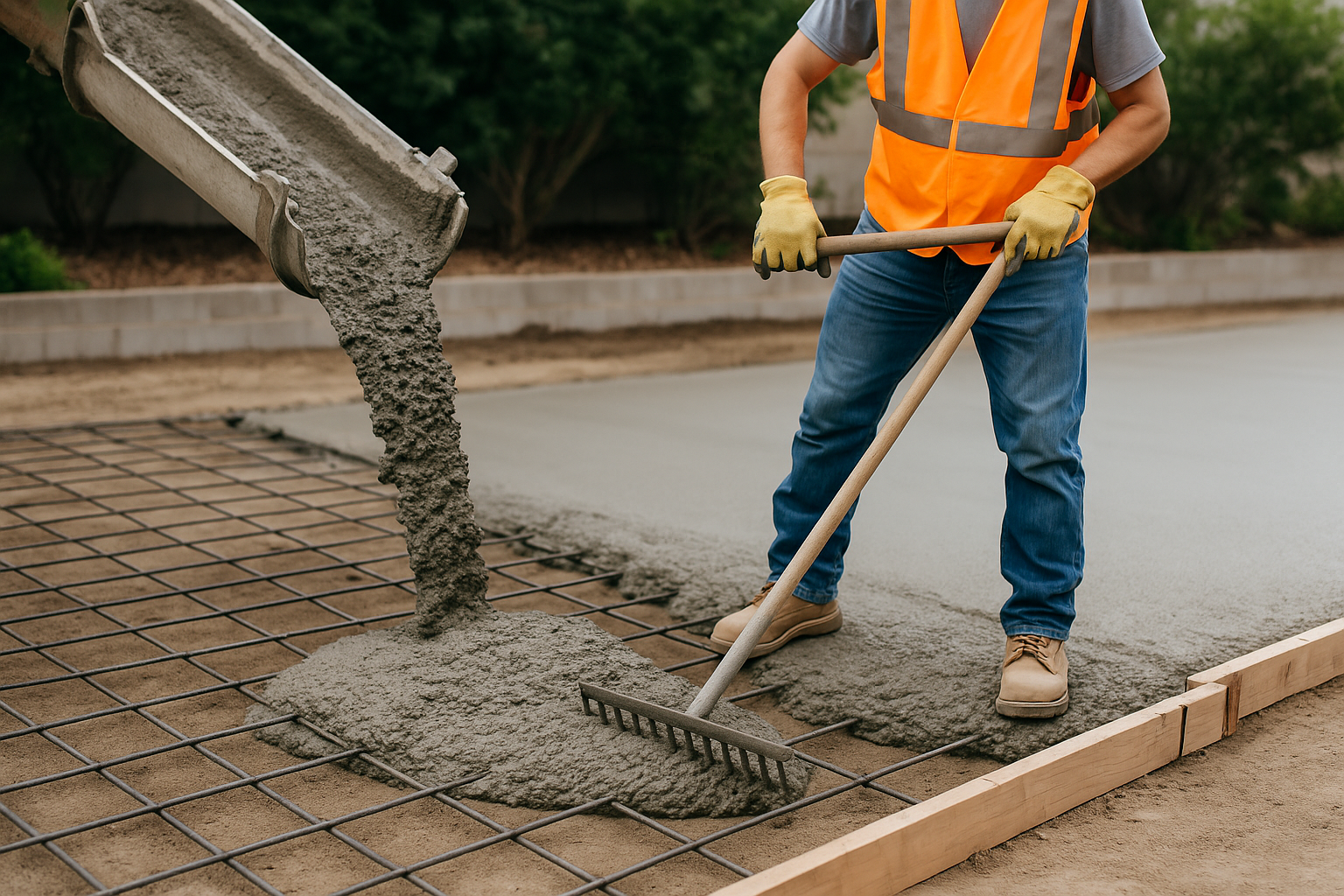
Install reinforcement according to plans. Keep reinforcement elevated so it is embedded properly within the concrete, not sitting on the subgrade.
4. Pouring and placing concrete
Place concrete continuously where possible to avoid cold joints. Use a vibrator or tamping tool to consolidate and remove air pockets.
5. Screeding and initial finish
Screed to the proper elevation, then use a bull float to remove high and low spots. Timing is important: begin finishing once bleed water has evaporated but before the mix is too stiff.
6. Final finishing and joints
Use trowels, brooms, or stamps to achieve the desired surface texture. Cut control joints at recommended intervals to direct cracking where it won't be structural or visible.
7. Curing and sealing
Keep the concrete moist for at least 7 days (longer for higher-strength mixes) to achieve proper strength. After curing, apply a sealer if desired to protect against stains, freeze-thaw damage, and deicing chemicals.
Common challenges and how to avoid them
Weather-related issues
Cold weather slows curing and may require insulation or heated enclosures. Hot, dry, or windy conditions accelerate drying and can cause cracking; use windbreaks, retarders, or rapid curing practices.
Cracking
Cracking can result from shrinkage, settlement, or improper joint spacing. Proper subgrade compaction, reinforcement, and timely joint cutting reduce risk.
Drainage and slope problems
Insufficient slope leads to pooling and surface deterioration. Plan for at least a 1/8 to 1/4 inch per foot slope for exterior flatwork to shed water.
Surface finish defects
Overworking the surface or finishing too late causes dusting, blisters, or delamination. Follow manufacturer and industry timing guidelines for finishing operations.
Safety and regulations
Concrete work involves heavy materials and chemical exposure. Standard safety practices include:
- Wearing PPE: gloves, eye protection, boots, and dust masks when cutting or mixing.
- Using proper lifting techniques and mechanical aids for heavy forms and bags of cement.
- Following OSHA guidance for trenching, scaffolding, and equipment operation.
- Handling wet concrete carefully—prolonged skin contact can cause chemical burns.
Hiring a contractor vs. DIY
Small jobs like simple footings or minor repairs can be DIY-friendly for those with the right tools and experience. Larger or structural jobs, complex decorative finishes, or anything requiring permits and inspections are usually best left to licensed concrete contractors who can guarantee workmanship, manage logistics, and ensure compliance.
Conclusion
A successful concrete job depends on careful planning, proper site preparation, correct mix selection, timely finishing, and adequate curing. Whether you hire a pro or take on the project yourself, following best practices reduces common problems and improves long-term performance.