Introduction
A skilled mason brings more than technical ability to a construction project. Masonry is a craft built on precision, experience, and an eye for detail that turns brick, stone, and concrete into durable, attractive structures. Whether the work involves a new home, a retaining wall, a chimney repair, or a custom outdoor feature, the quality of the mason’s work can affect both the appearance and longevity of the finished project.
In this post, we’ll explore what a skilled mason does, the qualities that set great masons apart, the types of projects they handle, and why hiring an experienced professional is worth the investment.
What Does a Skilled Mason Do?
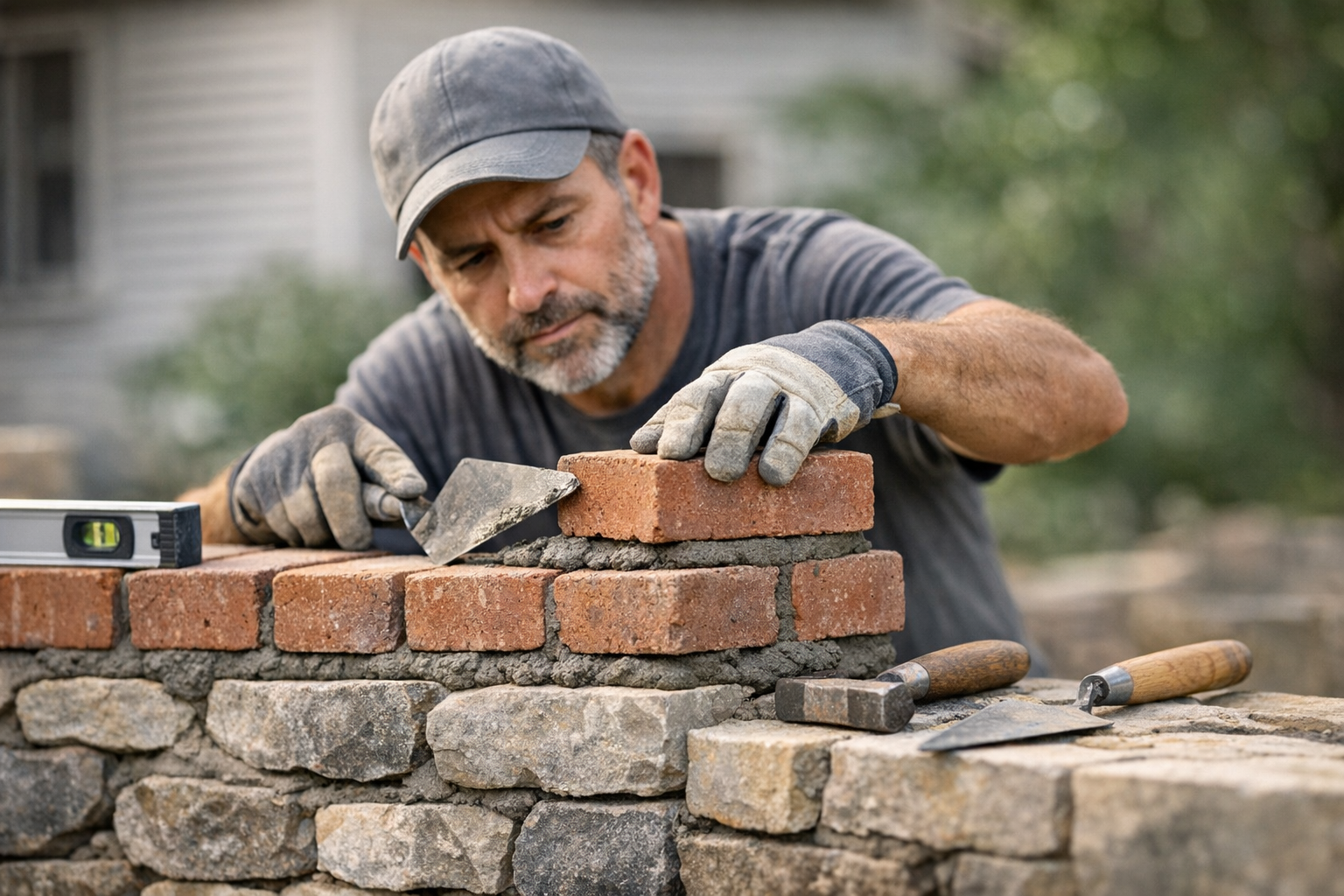
A skilled mason works with materials such as brick, block, stone, and mortar to build, repair, and restore structures. Their work may be structural, decorative, or both. From laying a perfectly level brick wall to restoring old stonework, the mason’s role requires a balance of physical labor and craftsmanship.
Masons often handle tasks such as:
- Constructing walls, fireplaces, chimneys, patios, and walkways
- Repairing cracked brick, damaged mortar joints, and worn stone
- Installing veneers and decorative masonry features
- Mixing mortar and preparing surfaces for accurate placement
- Reading blueprints and following project specifications
Because masonry materials are heavy and unforgiving, accuracy matters at every stage. A small error in alignment or mortar application can affect the strength and appearance of the entire structure.
Qualities of a Skilled Mason
Precision and Attention to Detail
Masonry is measured in fractions of an inch. A skilled mason must keep courses level, joints even, and patterns consistent. This attention to detail ensures the finished structure looks professional and performs properly over time.
Strong Technical Knowledge
Experienced masons understand how different materials behave. Brick, natural stone, and concrete block each have unique properties, and mortar must be matched correctly to the job. A knowledgeable mason knows how to choose the right materials, use proper bonding methods, and account for expansion, moisture, and structural support.
Problem-Solving Ability
No two projects are exactly alike. A skilled mason can adapt to uneven foundations, weather-related delays, material variations, and restoration challenges. They know how to assess a situation and make practical decisions that keep the project on track.
Physical Strength and Endurance
Masonry work is demanding. It requires lifting materials, working outdoors, and maintaining consistent quality over long periods. Physical endurance is important, but so is working safely and efficiently with the right tools and techniques.
Common Projects Handled by a Skilled Mason
Brickwork
Brick remains one of the most popular masonry materials because of its classic appearance and durability. Skilled masons build brick walls, columns, mailboxes, and facades that add value and curb appeal to homes and commercial properties.
Stone Masonry
Stone work often demands even greater precision because natural stone varies in shape, size, and texture. A mason with strong stonecraft skills can create beautiful retaining walls, garden features, fireplaces, and custom accents that look both natural and refined.
Concrete Block Construction
Concrete block, or CMU, is widely used for foundations, structural walls, and utility buildings. Skilled masons ensure that block work is straight, reinforced properly, and aligned with the project’s engineering requirements.
Repairs and Restoration
Over time, masonry can crack, shift, or deteriorate due to weather, settling, or age. A skilled mason can restore damaged mortar joints, replace broken bricks or stones, and preserve the character of older structures. Restoration work requires a careful touch, especially when matching original materials and finishes.
Why Hiring a Skilled Mason Matters
Hiring a skilled mason is about more than getting the job done quickly. It is about ensuring the finished work is safe, durable, and attractive. Poor masonry can lead to water intrusion, structural problems, uneven surfaces, and costly repairs down the road. A professional mason helps prevent these issues by doing the work correctly the first time.
There are also aesthetic benefits. Masonry is highly visible, and flaws in alignment or finishing are easy to notice. A skilled mason creates clean lines, smooth transitions, and consistent workmanship that elevates the overall look of a property.
In addition, quality masonry can improve property value. Well-built walls, patios, fireplaces, and facades add long-term appeal and can make a home or business more desirable to buyers or visitors.
How to Choose the Right Mason
Finding the right professional starts with experience. Look for a mason with a solid portfolio of completed projects similar to yours. Photos, references, and reviews can help you evaluate the quality of their work.
It is also wise to ask about licensing, insurance, and warranties. A reputable mason should be able to explain their process, timeline, and material recommendations clearly. Communication matters just as much as craftsmanship, especially on projects that involve structural or decorative detail.
When possible, compare more than one estimate. The lowest price is not always the best value if it comes with rushed work or lower-quality materials. A skilled mason will provide a fair quote that reflects the labor, expertise, and materials required to complete the project properly.
Conclusion
A skilled mason combines craftsmanship, experience, and problem-solving to create work that stands the test of time. From new construction to restoration, their expertise helps ensure masonry projects are strong, beautiful, and built to last. If you want reliable results and lasting value, choosing a skilled mason is one of the smartest decisions you can make.