
Introduction
Concrete installation services are a smart investment for homeowners and businesses looking for a durable, low-maintenance, and versatile surface. From driveways and sidewalks to patios, foundations, and commercial floors, concrete plays a major role in both function and curb appeal. When installed correctly, it can last for decades while standing up to heavy use, weather, and daily wear.
Whether you are planning a new project or replacing an old surface, understanding the concrete installation process can help you make better decisions. In this guide, we will walk through the types of concrete services available, the installation process, key benefits, and what to look for in a professional contractor.
What Are Concrete Installation Services?
Concrete installation services cover the planning, preparation, pouring, finishing, and curing of concrete surfaces. These services are used for residential, commercial, and industrial projects, depending on the size and purpose of the structure.
A professional concrete contractor typically handles every stage of the project, including site evaluation, grading, forming, mixing, pouring, leveling, and finishing. In many cases, they also offer decorative options such as stamping, staining, or exposed aggregate to improve appearance.
Types of Concrete Installation Projects
Driveways
Concrete driveways are popular because they offer strength, longevity, and a clean appearance. They can handle vehicle traffic well and require less maintenance than many other materials. With the right finish, a driveway can also boost curb appeal and add value to your property.
Patios and Outdoor Living Areas
Concrete patios create a solid foundation for outdoor entertaining, dining, and relaxation. Homeowners often choose decorative finishes, such as stamped or stained concrete, to give the surface the look of stone, tile, or brick without the same level of upkeep.
Sidewalks and Walkways
Sidewalks and walkways need to be safe, smooth, and durable. Concrete is an excellent choice because it provides a stable surface that can be customized in shape and design. Proper installation also helps prevent cracking, shifting, and drainage issues.
Foundations
Concrete foundations are essential for the structural integrity of homes, garages, sheds, and commercial buildings. A well-installed foundation helps support the weight of the structure and reduce the risk of settling or water damage over time.
Commercial and Industrial Floors
Businesses often rely on concrete flooring for warehouses, retail buildings, workshops, and manufacturing facilities. These surfaces must be level, strong, and capable of handling foot traffic, equipment, and heavy loads. Professional installation ensures long-term performance and safety.
The Concrete Installation Process
Site Assessment and Planning
Every concrete project starts with a careful site assessment. The contractor evaluates soil conditions, slope, drainage, access, and project requirements. This step is important because poor planning can lead to cracking, pooling water, or surface failure later on.
Excavation and Base Preparation
Before concrete can be poured, the area must be excavated and prepared. This usually involves removing old materials, leveling the ground, and adding a compacted base layer of gravel or sand. A stable base helps support the slab and reduces movement.
Forming and Reinforcement
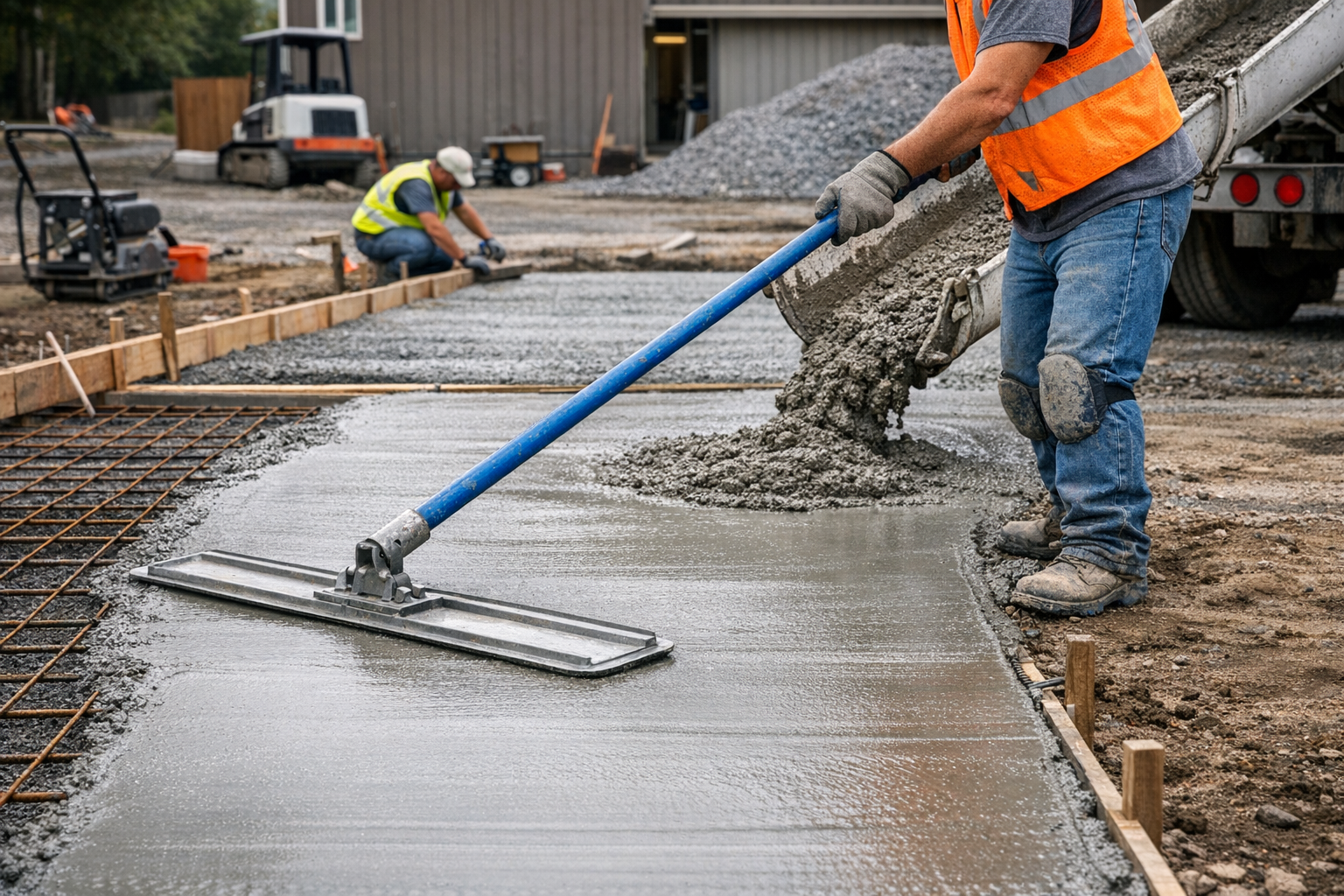
Forms are built to shape the concrete and keep it in place during pouring. Depending on the project, reinforcement such as rebar or wire mesh may be added to improve strength and help control cracking. This is especially important for driveways, foundations, and high-traffic areas.
Pouring and Finishing
Once the site is ready, the concrete is mixed and poured into the forms. Workers then level and smooth the surface using specialized tools. The finish may be simple and functional or more decorative, depending on the desired look and purpose of the project.
Curing and Sealing
Curing is one of the most important parts of concrete installation. It allows the concrete to gain strength over time and helps prevent premature cracking. In some cases, a sealant is applied after curing to protect the surface from moisture, stains, and wear.
Benefits of Professional Concrete Installation
Hiring a professional for concrete installation services offers several advantages. First, experienced contractors know how to prepare the site properly and use the right mix for the project. This reduces the risk of costly mistakes and improves the finished result.
Second, professional installation leads to better durability. Concrete surfaces that are poured and cured correctly are more likely to resist cracking, shifting, and surface damage. This means fewer repairs and lower maintenance costs over time.
Third, professionals can help you choose the right finish, design, and thickness for your needs. Whether you want a plain utility slab or a decorative outdoor space, expert guidance can make a big difference in the outcome.
How to Choose the Right Concrete Contractor
Selecting the right contractor is essential for a successful project. Start by looking for a company with experience in the type of concrete work you need. A contractor who specializes in driveways may not be the best choice for a commercial slab or structural foundation.
It is also wise to ask for references, review past projects, and confirm that the contractor is licensed and insured. A reliable provider should be transparent about pricing, timelines, materials, and project details. Clear communication can help prevent misunderstandings and keep the job on track.
Finally, ask about the curing process, maintenance recommendations, and warranty options. A trustworthy contractor will stand behind their work and explain how to protect your investment after installation.
Maintenance Tips for Concrete Surfaces
Although concrete is known for being low-maintenance, a few simple steps can extend its life. Regular cleaning helps remove dirt, debris, and stains before they become more difficult to handle. For outdoor surfaces, sweeping and occasional pressure washing can be enough to keep them looking good.
Sealing the concrete every few years can also protect it from moisture, chemicals, and surface wear. In colder climates, it is important to avoid harsh de-icing products that may damage the surface. Promptly repairing small cracks can prevent larger problems from developing later.
Conclusion
Concrete installation services provide a practical, long-lasting solution for a wide range of residential and commercial needs. From planning and preparation to pouring and finishing, each step plays an important role in the final quality of the surface. By choosing an experienced contractor and maintaining the concrete properly, you can enjoy a strong, attractive surface that performs well for years to come.