
Introduction
Cementing a driveway is one of the best ways to improve your home’s curb appeal, create a durable parking surface, and reduce long-term maintenance. A well-built cement driveway can last for decades when it is properly designed, installed, and cared for. Whether you are replacing a worn-out surface or planning a brand-new driveway, understanding the process helps you make better decisions and avoid costly mistakes.
In this guide, we’ll cover the main considerations before starting, the steps involved in pouring a driveway, and the best ways to maintain it over time. If you want a driveway that looks great and performs well, good planning is just as important as the concrete itself.
Why Choose Cement for a Driveway?
Cement driveway surfaces are popular because they combine strength, versatility, and a clean appearance. Compared with gravel or asphalt, concrete offers a more polished look and can support heavy vehicles with less rutting or shifting. It is also highly customizable. You can choose from brushed finishes, stamped patterns, colored concrete, or exposed aggregate for a more decorative result.
Another major advantage is longevity. While a concrete driveway may cost more upfront than some alternatives, it often pays off through lower maintenance needs and a longer service life. When installed correctly, it can withstand weather changes, vehicle traffic, and everyday wear for many years.
Planning Your Driveway Project
Measure the space and evaluate drainage
Before any digging begins, measure the driveway area carefully and think about how water will flow across the surface. Poor drainage is one of the most common causes of driveway damage. Water that pools or runs toward your garage can lead to cracking, sinking, or even structural issues.
Make sure the driveway has the proper slope so water moves away from buildings and does not collect in low spots. If your property has unusual grading, you may need additional drainage solutions such as trench drains or swales.
Check local codes and permits
Many areas require permits for driveway installation or replacement. Local rules may also regulate setbacks, width, driveway aprons, or how close the driveway can be to utilities. Checking these requirements early can save time and prevent problems later.
Choose the right thickness
The thickness of the concrete matters. A standard residential driveway usually needs to be thicker than a sidewalk because it must support the weight of cars, trucks, and occasional delivery vehicles. In many cases, a reinforced slab is recommended for added strength and durability.
Preparing the Base
Good concrete work starts below the surface. The base layer provides support and helps prevent cracking caused by soil movement or settling. The area must be excavated to the correct depth, then compacted so the foundation is stable.
After excavation, a layer of crushed stone or gravel is typically added and compacted. This base improves drainage and creates a level surface for the concrete pour. Skipping this step or rushing it can shorten the life of the driveway significantly.
Forming and Reinforcing the Driveway
Forms define the shape and edges of the driveway, so they must be set accurately. Straight lines, consistent slopes, and solid support for the forms are essential for a professional-looking result. Once the forms are in place, reinforcement is often added to help control cracking and improve load-bearing strength.
Steel rebar or wire mesh can be used depending on the design and expected traffic. While reinforcement does not eliminate cracking completely, it can help keep cracks smaller and reduce the chance of major surface failure.
Pouring and Finishing the Concrete
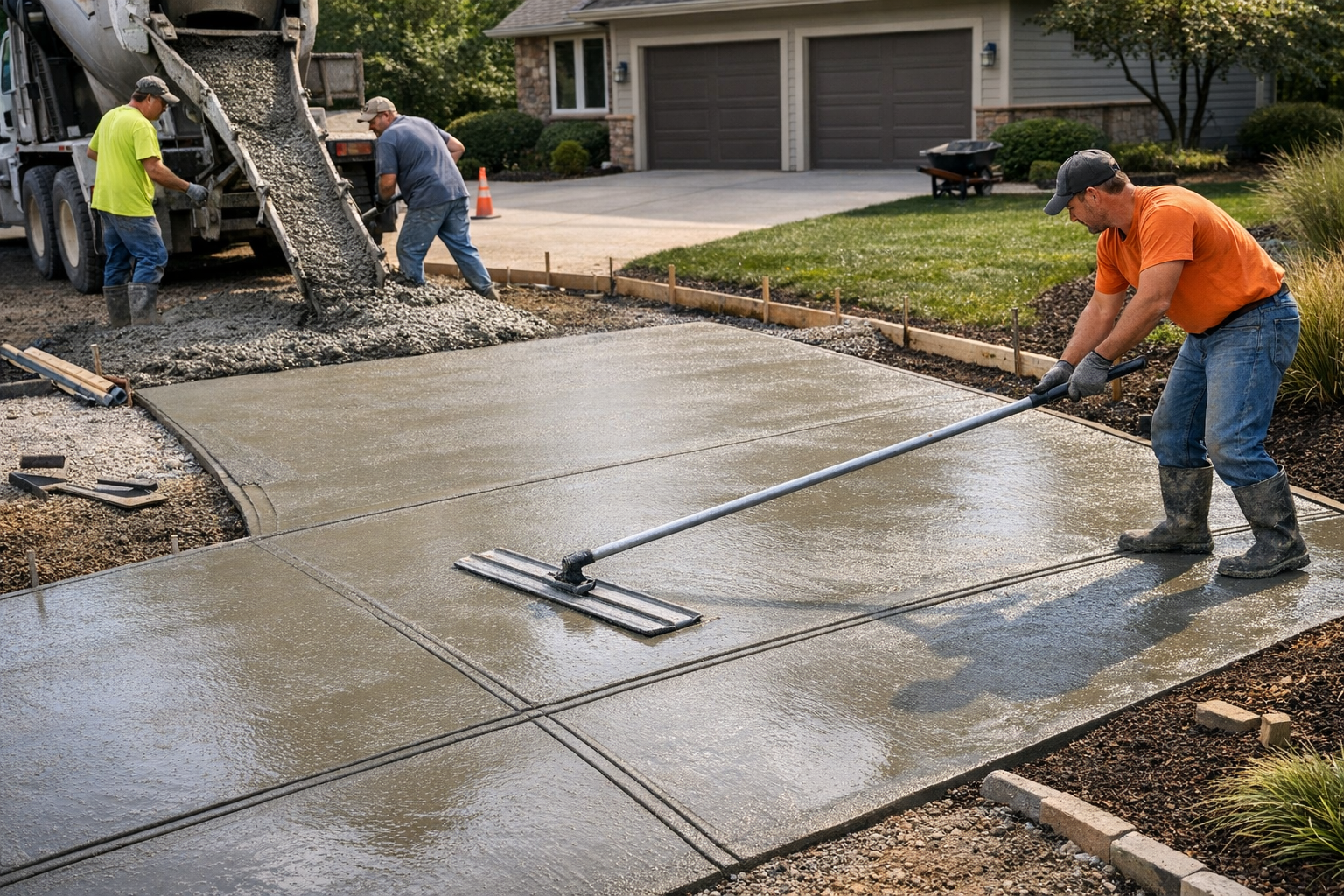
Pouring concrete is a time-sensitive process. The material must be placed evenly and worked quickly before it begins to set. During the pour, workers spread the mix, remove air pockets, and level the surface with the forms.
After leveling, the surface is finished based on the desired look and traction. A broom finish is common for driveways because it provides a slip-resistant texture. Decorative finishes can also be added, but function should always be a priority in a high-traffic area like a driveway.
Control joints are another critical step. These are deliberate cuts or grooves that encourage the concrete to crack in planned locations rather than randomly across the slab. Proper joint placement helps preserve the appearance and performance of the driveway over time.
Curing the Driveway Properly
One of the most overlooked parts of cementing a driveway is curing. Even after the surface appears hard, concrete continues to gain strength over time. Curing helps retain moisture so the slab can achieve its full durability.
The driveway should be protected from rapid drying, extreme heat, and early traffic. Depending on weather and mix design, curing may involve keeping the surface damp, using curing compounds, or covering the slab with plastic sheeting. It is best to avoid driving on the new surface until it has had enough time to strengthen properly.
Maintenance Tips for a Longer-Lasting Driveway
Once your driveway is installed, regular maintenance will help it stay in good shape. Start by keeping the surface clean. Dirt, leaves, oil stains, and standing water can all affect the appearance and condition of the slab.
Sealing the driveway every few years can help protect it from moisture, stains, and freeze-thaw damage. In colder climates, this is especially important. You should also avoid using harsh de-icing chemicals that can weaken the surface over time.
If small cracks appear, address them early. Minor repairs are much easier and less expensive than dealing with larger structural issues later. Also, avoid using heavy equipment or placing concentrated loads in the same spot for long periods unless the driveway was specifically designed for that purpose.
Common Mistakes to Avoid
Several common errors can shorten the life of a cement driveway. These include poor base preparation, inadequate drainage, incorrect thickness, rushing the curing process, and failing to use control joints. Another frequent issue is pouring concrete in unfavorable weather without the proper planning or protection.
For the best results, treat driveway construction as a system. The soil, base, reinforcement, concrete mix, finish, and curing process all work together. If one part is done poorly, the entire driveway may suffer.
Conclusion
Cementing a driveway is a major home improvement project, but it can deliver excellent value when done the right way. With careful planning, proper preparation, and routine maintenance, a concrete driveway can provide a strong, attractive surface for many years. Taking the time to do each step correctly is the key to getting a driveway that performs as well as it looks.