Concrete Driveway Installation Near Me: What Homeowners Should Know
If you have been searching for concrete driveway installation near me, you are probably ready to improve your home’s curb appeal, durability, and everyday convenience. A concrete driveway can be a smart long-term investment, but the best results come from understanding the process, materials, and local factors before the work begins.
Whether you are replacing an old cracked driveway or installing a brand-new one, it helps to know what to expect from start to finish. Below is a simple guide to planning a concrete driveway project that looks great and performs well for years.
Why Choose Concrete for Your Driveway?
Concrete remains one of the most popular driveway materials for good reason. It offers a clean, polished appearance and strong performance under daily use. Compared with gravel or asphalt, concrete often provides a longer lifespan and requires less frequent maintenance when installed correctly.
Homeowners also appreciate the versatility of concrete. It can be finished in several ways, including broom finish, exposed aggregate, stamping, and staining. That means you can choose a style that matches your home instead of settling for a plain gray surface.
Key Benefits of Concrete Driveways
- Durability: Handles heavy vehicles and regular traffic well.
- Low maintenance: Typically only needs cleaning and periodic sealing.
- Curb appeal: Creates a neat, attractive first impression.
- Longevity: Can last decades with proper installation and care.
What Affects the Cost of Concrete Driveway Installation?
The cost of a concrete driveway depends on several factors, so it is important to get a detailed estimate rather than relying on a simple per-square-foot price. Size is usually the biggest factor, but it is far from the only one.
The thickness of the slab, site preparation, reinforcement, decorative finishes, drainage needs, and local labor rates can all affect the final price. If the old driveway must be removed first, demolition and disposal costs will also be added.
Common Cost Factors
- Driveway size and shape: Larger or curved driveways require more materials and labor.
- Soil conditions: Soft or uneven ground may need extra grading and base work.
- Finish type: Decorative options usually cost more than standard finishes.
- Reinforcement: Rebar or wire mesh may be recommended for added strength.
- Permits and local codes: Some locations require approvals before work begins.
When comparing quotes, make sure each contractor is pricing the same scope of work. A lower estimate may leave out essential steps like proper excavation, base compaction, or control joints.
How to Choose the Right Contractor Near You
Searching for concrete driveway installation near me will likely bring up many local companies, but not all contractors offer the same level of quality. Choosing the right one can make the difference between a driveway that lasts for decades and one that develops problems quickly.
Start by looking for contractors with strong local experience. A company that understands your area’s climate, soil conditions, and building requirements is better prepared to recommend the right mix and installation methods.
Questions to Ask Before Hiring
- How many years have you installed concrete driveways in this area?
- Do you handle permits and inspections if needed?
- What is included in your estimate?
- Do you use reinforcement, and if so, what type?
- Can you provide recent references or photos of completed work?
It is also a good idea to check reviews, verify insurance, and ask about warranty coverage. A trustworthy contractor should be willing to explain the process clearly and answer your questions without pressure.
What the Installation Process Looks Like
Knowing the steps involved can help you prepare for the project and set realistic expectations. While every job is slightly different, most concrete driveway installations follow a similar process.
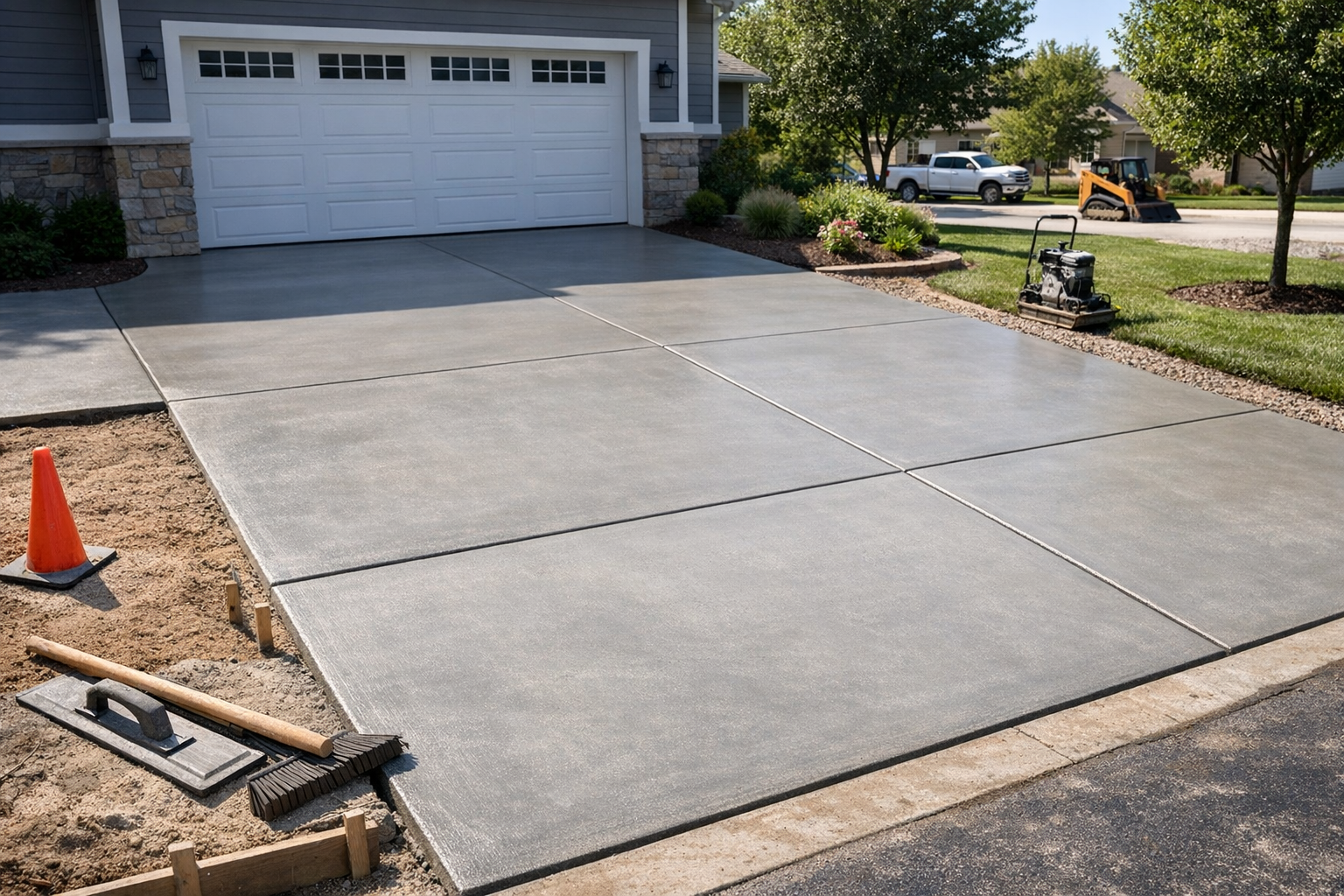
1. Site Preparation
The contractor will remove any existing driveway surface if necessary, then grade and compact the soil. This step is crucial because a stable base helps prevent shifting and cracking later on.
2. Forming and Reinforcement
Wood or metal forms are set in place to define the shape of the driveway. Reinforcement such as rebar or wire mesh may be added to improve strength.
3. Pouring and Finishing
Once the concrete is poured, the crew levels and finishes the surface. A broom finish is common because it adds traction, especially in wet weather. Decorative textures or patterns may be applied at this stage if selected.
4. Cutting Joints
Control joints are cut into the slab to help manage natural cracking. These joints give the concrete a planned place to crack instead of letting random cracks form across the surface.
5. Curing
Curing is one of the most important parts of the job. Concrete needs time to gain strength, so the driveway should be protected from heavy traffic until it is ready. In many cases, light foot traffic may be allowed sooner than vehicle use.
How to Maintain Your New Concrete Driveway
Once your driveway is installed, a little care goes a long way. Concrete is durable, but it still benefits from routine maintenance.
Keep the surface clean by removing dirt, leaves, and spilled fluids. Sealing the driveway every few years can help protect it from moisture, stains, and surface wear. In colder climates, use de-icing products carefully, since some chemicals can damage the surface over time.
It is also wise to avoid using sharp tools or heavy equipment that may chip the edges. If you notice small cracks or surface issues, have them inspected early before they become larger repairs.
Conclusion
A concrete driveway can add value, style, and long-lasting performance to your home when it is installed by the right team. If you are comparing options for concrete driveway installation near me, focus on experience, clear pricing, and quality workmanship. With the right contractor and proper maintenance, your new driveway can serve your home well for many years.