Introduction
Masonry has been used for centuries to build everything from homes and garden walls to fireplaces, chimneys, patios, and commercial facades. Its lasting appeal comes from a combination of strength, fire resistance, visual character, and long service life. But the performance of any masonry project depends heavily on choosing the right materials.
Whether you are planning a new build, a repair, or a decorative feature, understanding masonry materials helps you make better decisions about durability, cost, appearance, and maintenance. Below is a clear guide to the most common masonry materials and how they are used.
What Are Masonry Materials?
Masonry materials are the units, binders, and accessories used to construct structures from individual pieces rather than poured or framed systems. These materials are typically assembled and joined with mortar or another bonding method to create walls, pavements, columns, retaining structures, and architectural details.
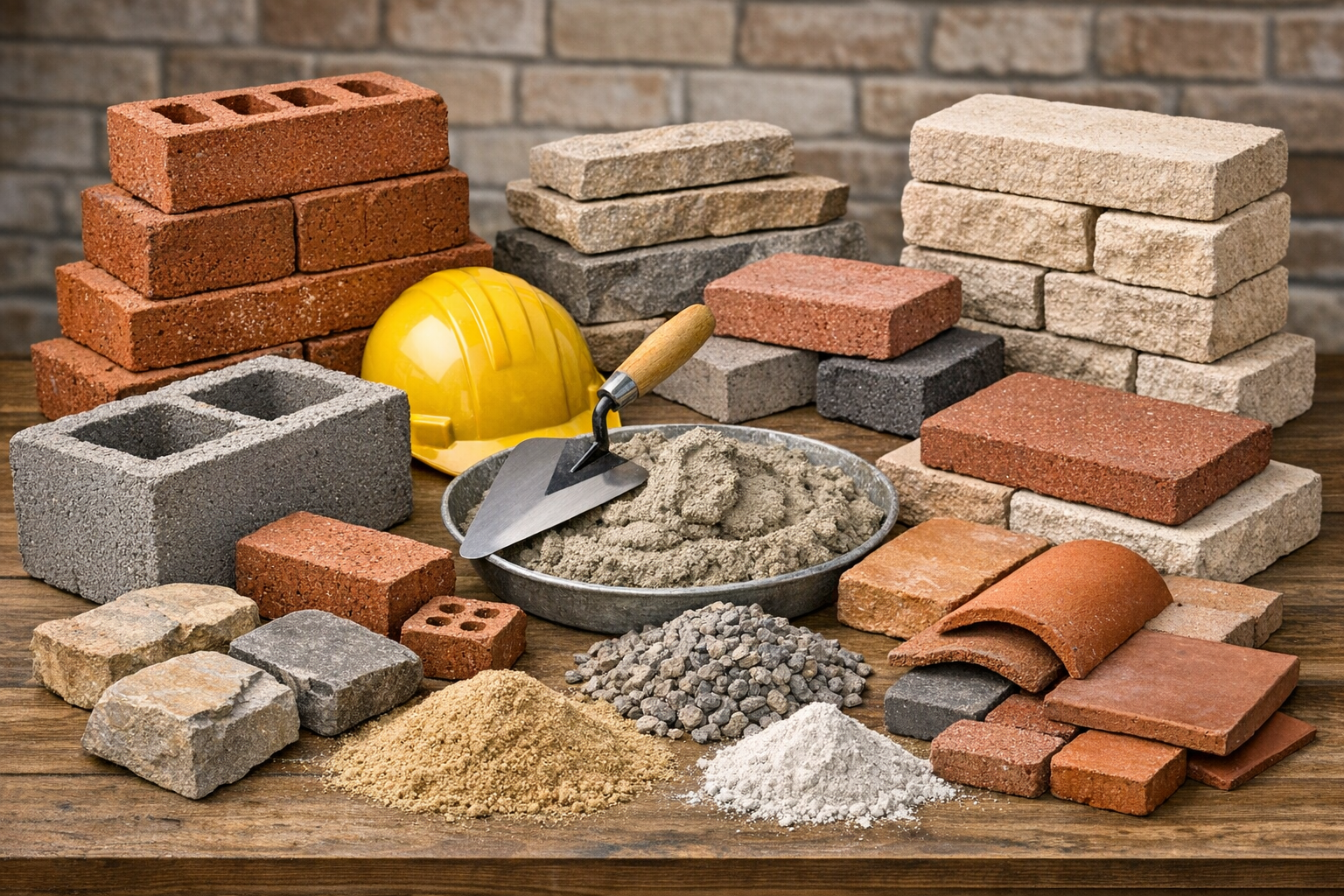
The most common masonry materials include brick, stone, concrete block, mortar, and certain specialty products such as glass block and manufactured veneer. Each has its own advantages, limitations, and best-use applications.
Common Types of Masonry Materials
Brick
Brick is one of the oldest and most recognizable masonry materials. Made from clay and fired in a kiln, brick is valued for its uniform shape, attractive color range, and durability. It works well in both structural and decorative applications, including exterior walls, chimneys, garden features, and interior accent walls.
Bricks are available in many sizes, textures, and finishes. Some are designed for load-bearing construction, while others are intended as veneer or decorative facing. When properly installed and maintained, brick masonry can last for decades with relatively low upkeep.
Stone
Natural stone offers unmatched beauty and a sense of permanence. Common options include granite, limestone, sandstone, slate, and fieldstone. Stone can be used for walls, foundations, retaining structures, fireplaces, walkways, and façades.
Because stone varies in density, texture, and color, it can create either a rustic or refined look. It is often more expensive than other masonry materials, and installation may require skilled labor. However, the long-term durability and premium appearance often justify the investment.
Concrete Block
Concrete masonry units, often called CMUs or concrete blocks, are widely used in both residential and commercial construction. They are manufactured from cement, aggregates, and water, then formed into uniform blocks that are easy to stack and install.
Concrete block is especially useful for foundations, basement walls, retaining walls, and structural buildings. It offers strength, fire resistance, and cost efficiency. It can also be finished with stucco, paint, brick veneer, or stone veneer for a more decorative appearance.
Mortar
Mortar is the binding material that holds masonry units together. It is typically made from cement, lime, sand, and water. While it may not be as visually prominent as brick or stone, mortar is essential to the strength and stability of a masonry assembly.
The right mortar mix must match the type of masonry unit and the project conditions. Too hard a mortar can damage softer masonry, while a weak mortar may not provide adequate support. Proper mortar selection is one of the most important steps in achieving a long-lasting installation.
Mortar Joints and Accessories
In addition to the mortar itself, joint profiles and related accessories play an important role in performance. Mortar joints help seal out moisture, accommodate slight movement, and give a finished appearance. Common joint styles include concave, flush, raked, and struck joints.
Other masonry accessories may include ties, anchors, reinforcement, flashing, and weep systems. These components improve structural stability and help manage water intrusion, which is one of the biggest threats to masonry durability.
How to Choose the Right Masonry Material
Selecting the right masonry material depends on the purpose of the project, climate conditions, budget, and desired appearance. A structural foundation, for example, has very different requirements than a decorative garden wall.
Consider these key factors:
- Strength requirements: Load-bearing projects need materials with appropriate compressive strength.
- Moisture exposure: Areas exposed to rain, snow, or ground moisture need materials and details that resist water damage.
- Thermal performance: Some materials help regulate temperature better than others.
- Aesthetic goals: Color, texture, and shape all affect the final appearance.
- Budget: Natural stone typically costs more than brick or block, both in material and labor.
- Maintenance: Some materials require sealing, repointing, or occasional repair over time.
In many projects, a combination of materials works best. For example, a concrete block wall may provide the structural core while brick or stone veneer creates the finished look.
Durability and Maintenance Considerations
One of the reasons masonry is so popular is its long service life. Still, even the strongest materials need proper care. Water intrusion, freeze-thaw cycles, shifting foundations, and improper installation can all lead to cracking, spalling, or mortar deterioration.
Routine maintenance should include inspecting for cracks, missing mortar, stains, and loose units. Repointing damaged joints, repairing flashing, and keeping drainage systems clear can significantly extend the life of masonry construction. In colder climates, using materials suitable for freeze-thaw exposure is especially important.
Sealing may be helpful in certain applications, but it is not always necessary. In some cases, the wrong sealer can trap moisture and cause problems. The best approach is to choose materials correctly from the start and follow maintenance practices suited to the specific structure.
Conclusion
Masonry materials offer a rare combination of strength, beauty, and longevity. From brick and stone to concrete block and mortar, each material plays a distinct role in creating durable and attractive structures. By understanding the properties of each option, you can choose materials that match your project’s needs and stand the test of time.
With the right selection, installation, and maintenance, masonry can provide lasting value for generations.