Construction Services Concrete: A Practical Guide for Stronger, Smarter Builds
Concrete is one of the most important materials in modern construction. From foundations and slabs to sidewalks, retaining walls, and structural elements, it supports projects of every size and type. When handled by experienced construction services, concrete becomes more than just a mix of cement, water, and aggregate—it becomes the foundation of long-lasting performance, safety, and value.
If you are planning a commercial, residential, or industrial project, understanding how concrete construction services work can help you make better decisions. The right team can improve efficiency, reduce costly mistakes, and deliver a finished result that stands up to weather, traffic, and time.
What Are Construction Services Concrete?
Construction services concrete refers to professional services involved in planning, preparing, placing, finishing, and maintaining concrete structures. These services may cover everything from site evaluation and formwork to pouring, curing, repair, and replacement.
Depending on the project, concrete services may include:
- Foundation installation
- Concrete slabs and pads
- Driveways and sidewalks
- Retaining walls
- Stamped or decorative concrete
- Concrete repair and resurfacing
- Structural concrete for commercial buildings
These services are essential because concrete must be installed correctly from the start. Poor site prep, weak mixing, or rushed finishing can lead to cracks, uneven surfaces, and premature failure.
Why Concrete Is So Widely Used in Construction
Concrete is popular for a reason. It offers a combination of strength, versatility, and cost-effectiveness that few materials can match. In many construction projects, it is the preferred choice for load-bearing and weather-resistant applications.
Here are some of the biggest advantages of concrete:
- Durability: Concrete can last for decades with proper installation and maintenance.
- Strength: It supports heavy loads, making it ideal for foundations and structural work.
- Versatility: It can be shaped, stamped, colored, or reinforced for different uses.
- Low maintenance: Compared to many materials, concrete requires less upkeep over time.
- Fire resistance: Concrete performs well in fire-prone environments.
Because of these benefits, concrete remains a core material for builders, developers, property managers, and homeowners alike.
Key Stages in Concrete Construction Services
High-quality concrete work depends on a careful process. Every stage matters, from planning to final curing. A reliable contractor follows a structured approach to ensure the finished surface or structure performs as expected.
1. Planning and Site Assessment
Every project begins with a site review. The contractor evaluates soil conditions, grading, drainage, access, and project requirements. This stage helps identify potential issues before work begins and ensures the concrete design fits the site.
2. Preparation and Formwork
Proper preparation is essential for a successful pour. The site is cleared, leveled, and compacted. Forms are then built to define the shape and dimensions of the concrete area. Good formwork helps keep the concrete in place and creates a clean, accurate finish.
3. Reinforcement and Material Selection
Depending on the project, reinforcement such as rebar or wire mesh may be added to improve strength and reduce cracking. The concrete mix itself must also be chosen carefully based on the application, weather conditions, and load demands.
4. Pouring and Placement
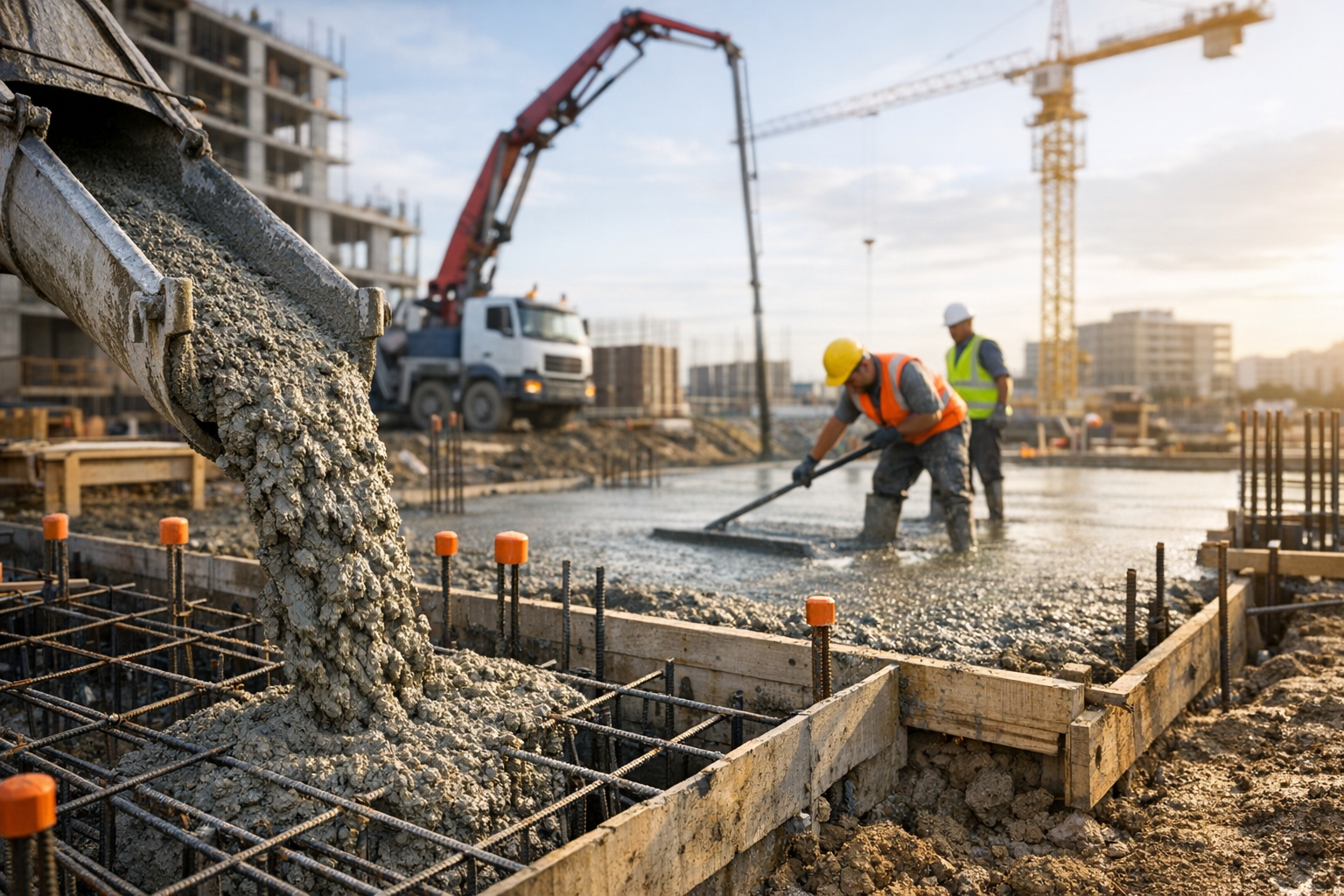
During the pour, the concrete is placed evenly and efficiently to avoid weak spots or air pockets. Skilled crews work quickly but carefully to ensure the material is distributed properly before it begins to set.
5. Finishing
Finishing gives concrete its final appearance and texture. Depending on the project, this may include smoothing, broom finishing, troweling, edging, or stamping. A well-finished surface improves both function and appearance.
6. Curing
Curing is one of the most important steps in concrete construction. It allows the material to gain strength over time by retaining moisture and stabilizing the chemical reaction. Rushing this step can weaken the final result.
Residential and Commercial Concrete Services
Concrete construction services are used in both residential and commercial settings, but the goals may differ.
Residential concrete services often focus on driveways, patios, sidewalks, garage slabs, pool decks, and foundations for homes and additions. Homeowners may also choose decorative concrete to improve curb appeal and outdoor living spaces.
Commercial concrete services are usually larger in scale and may involve parking lots, warehouse floors, office foundations, loading docks, and structural components. These projects often require strict timelines, specialized equipment, and compliance with building codes and engineering standards.
In both cases, experienced contractors help ensure the concrete is installed safely, efficiently, and according to project specifications.
How to Choose the Right Concrete Contractor
Choosing the right contractor can make a major difference in the success of your project. Concrete work is highly technical, and even small errors can lead to expensive repairs later.
When evaluating construction services concrete providers, consider the following:
- Experience: Look for a contractor with a proven record in projects similar to yours.
- Licensing and insurance: Make sure the company is properly licensed and insured.
- References and reviews: Past client feedback can reveal a lot about reliability and workmanship.
- Detailed estimates: A good contractor provides clear pricing and scope of work.
- Communication: Responsive, transparent communication helps avoid misunderstandings.
It is also smart to ask about curing methods, reinforcement options, project timelines, and warranty coverage before signing a contract.
Common Mistakes to Avoid in Concrete Projects
Concrete is durable, but only when installed properly. Some of the most common mistakes include poor soil preparation, inadequate drainage, using the wrong mix, skipping reinforcement, and finishing too early or too late.
Another common issue is failing to allow enough curing time. Concrete may look solid quickly, but it continues to gain strength over days and weeks. Using it too soon can cause surface damage or structural problems.
Working with skilled professionals helps reduce these risks and improves the long-term performance of the finished project.
Conclusion
Construction services concrete play a vital role in building durable, functional, and attractive structures. Whether the project is small or large, residential or commercial, professional concrete services help ensure quality from the ground up. By understanding the process and choosing the right contractor, you can protect your investment and achieve lasting results.