What Is Stone on Masonry?
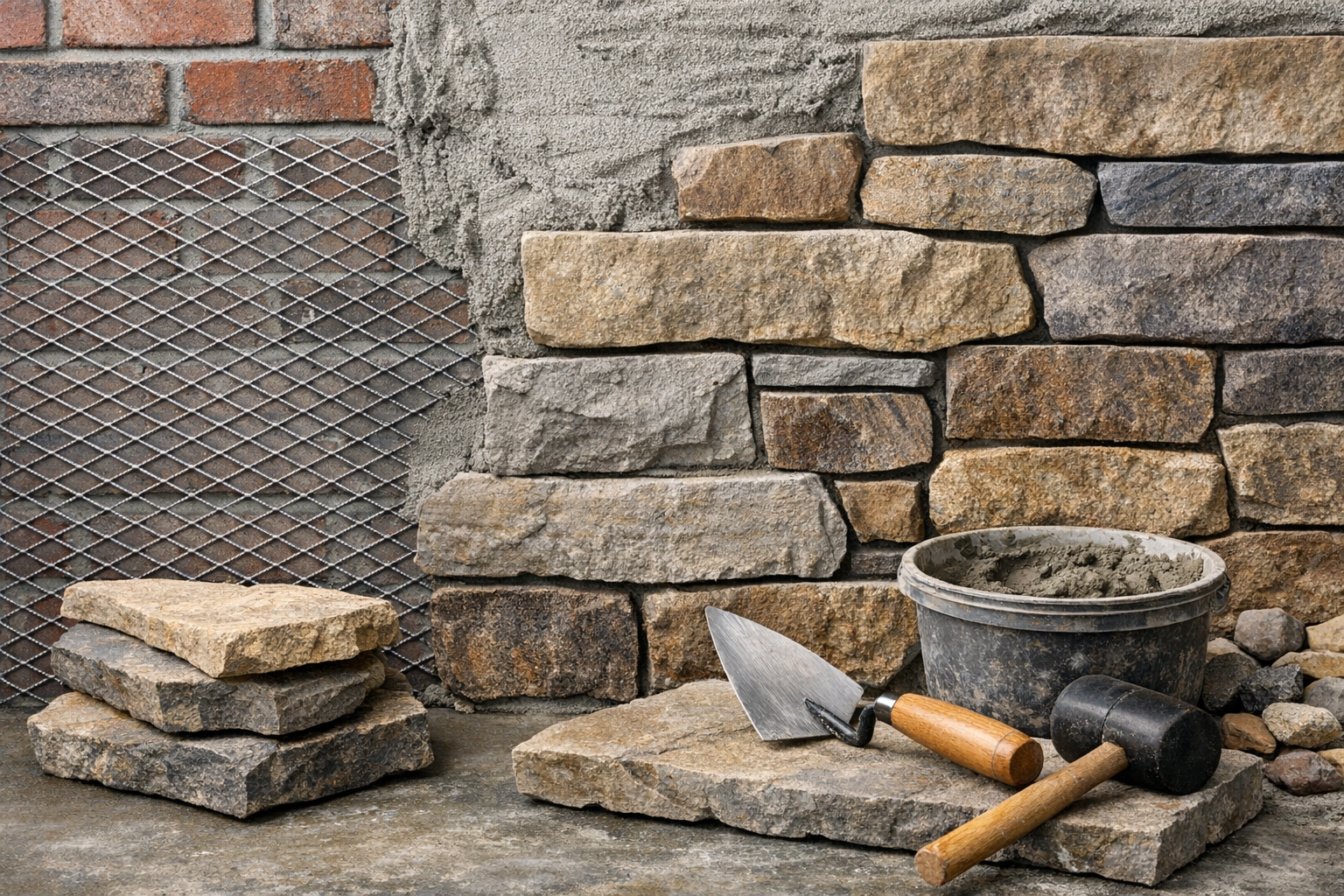
Stone on masonry refers to the use of stone as a facing, veneer, or structural element applied to a masonry base such as brick, concrete block, or poured concrete. In simple terms, it combines the strength and stability of masonry with the natural beauty of stone. This approach is common in both new construction and renovation projects because it creates a durable, attractive finish without requiring a full-load-bearing stone wall.
In many cases, stone on masonry is used to enhance exterior walls, fireplaces, retaining walls, entryways, and interior accent walls. Depending on the design and structural needs, the stone may be full-bed natural stone, thin veneer stone, or manufactured stone. Each option has its own look, installation requirements, and performance characteristics.
Why Choose Stone on Masonry?
There are several reasons homeowners, builders, and designers choose stone on masonry. One of the biggest advantages is visual appeal. Stone adds texture, depth, and timeless character that can elevate a plain masonry surface. It works well with traditional, rustic, modern, and transitional architecture.
Stone also offers excellent durability. When properly installed, it stands up well to weather, impact, and everyday wear. It can help protect the underlying masonry surface while improving insulation and increasing property value. For many projects, it provides the look of solid stone at a lower cost and with less structural demand.
Another benefit is versatility. Stone can be used on small decorative features or large exterior walls, and it comes in a wide range of colors, cuts, shapes, and finishes. This makes it easier to match existing architecture or create a custom design.
Types of Stone Used in Masonry Applications
Natural Stone Veneer
Natural stone veneer is cut from real stone and applied in thin pieces over a masonry surface. It offers authentic texture and color variation, making it a popular choice for high-end finishes. Common types include limestone, granite, slate, sandstone, and fieldstone.
Full-Bed Natural Stone
Full-bed stone is thicker and heavier than veneer. It is often used where a more substantial appearance is desired and where the structure can support the added weight. Although more labor-intensive, it delivers a traditional, solid-stone look.
Manufactured Stone
Manufactured stone is made from concrete and pigments designed to mimic the appearance of natural stone. It is lighter and often easier to install than natural stone, which can reduce labor and structural requirements. It is a budget-friendly option for many residential projects.
How Stone Is Installed on Masonry
Proper installation is essential for long-term performance. While methods vary depending on the stone type and surface conditions, the process usually begins with preparing the masonry substrate. The wall must be clean, stable, and free of dust, loose mortar, grease, or paint that could interfere with bonding.
If needed, a moisture barrier or metal lath may be added to support the stone veneer. A scratch coat of mortar is then applied to create a strong bonding surface. After that, the stone pieces are set with mortar, typically starting from the bottom and working upward. Careful spacing, alignment, and mortar joint finishing are important for both appearance and durability.
For exterior work, proper drainage and flashing are critical. Water that gets behind the stone must be able to escape, or the masonry may suffer from moisture damage over time. Expansion joints may also be required to allow for movement caused by temperature changes.
Common Uses for Stone on Masonry
Stone on masonry is used in many settings because it balances function and style. On homes, it is often applied to lower wall sections, chimneys, porch columns, foundations, and front facades. This can create a grounded, upscale appearance that improves curb appeal.
Inside the home, stone-faced masonry is often seen around fireplaces, feature walls, wine rooms, and kitchen backsplashes. It adds warmth and texture while creating a focal point in the room. Commercial buildings also use stone on masonry to convey strength, permanence, and elegance.
Retaining walls, garden walls, and outdoor living spaces benefit from stone because it blends naturally with landscaping and holds up well in outdoor environments. Whether the goal is decoration or performance, stone provides a practical and attractive solution.
Maintenance and Longevity
One of the advantages of stone on masonry is relatively low maintenance. Regular inspection and occasional cleaning are usually enough to keep it looking good. Dirt, mildew, and debris can be removed with a soft brush and mild cleaner. Harsh chemicals and pressure washing should be used cautiously, especially on mortar joints and natural stone surfaces.
Sealing may be recommended in some cases, particularly for porous stone types or areas exposed to heavy moisture. A quality sealer can help reduce staining and water absorption, though it should be chosen carefully to avoid changing the appearance of the stone.
With proper installation and basic care, stone on masonry can last for decades. Issues such as cracking, efflorescence, or loose stones are often linked to poor preparation, moisture intrusion, or structural movement. Addressing these problems early helps extend the life of the installation.
Design Tips for a Better Finish
When selecting stone for masonry, consider the style of the building, the surrounding materials, and the desired level of contrast. Larger stones can create a bold, rustic look, while smaller or more uniform cuts tend to feel refined and contemporary. Mortar color also matters because it affects how visible the joints appear and how the stone is perceived overall.
It is often helpful to sample several stone colors and textures in natural light before making a final decision. Stone can look very different outdoors than it does in a showroom. Coordinating the stone with roofing, siding, trim, and hardscaping can also make the finished design feel cohesive.
Conclusion
Stone on masonry is a practical and beautiful way to combine strength, durability, and style. Whether you are upgrading a home exterior, creating a striking fireplace, or adding character to a retaining wall, stone can transform plain masonry into a standout feature. With the right material choice, proper installation, and routine care, it delivers long-lasting value and timeless appeal.