Introduction
Masonry materials are the foundation of some of the most durable, attractive, and long-lasting structures in construction. From homes and garden walls to commercial buildings and restoration projects, the right masonry materials can affect strength, appearance, cost, and maintenance for decades. Understanding the most common options helps homeowners, builders, and property managers make better decisions for new builds and repairs alike.
What Are Masonry Materials?
Masonry materials are the units, binders, and accessories used to build structures by stacking, bonding, and finishing individual pieces. Unlike wood framing or steel construction, masonry relies on durable materials such as brick, stone, concrete block, and mortar. These materials work together to create walls, facades, chimneys, retaining walls, and other structural or decorative elements.
The best masonry material depends on the project’s goals. Some materials are chosen for strength and load-bearing performance, while others are selected for appearance, fire resistance, insulation, or low maintenance. In many cases, a project uses more than one masonry material to achieve the right balance of function and style.
Common Types of Masonry Materials
Brick
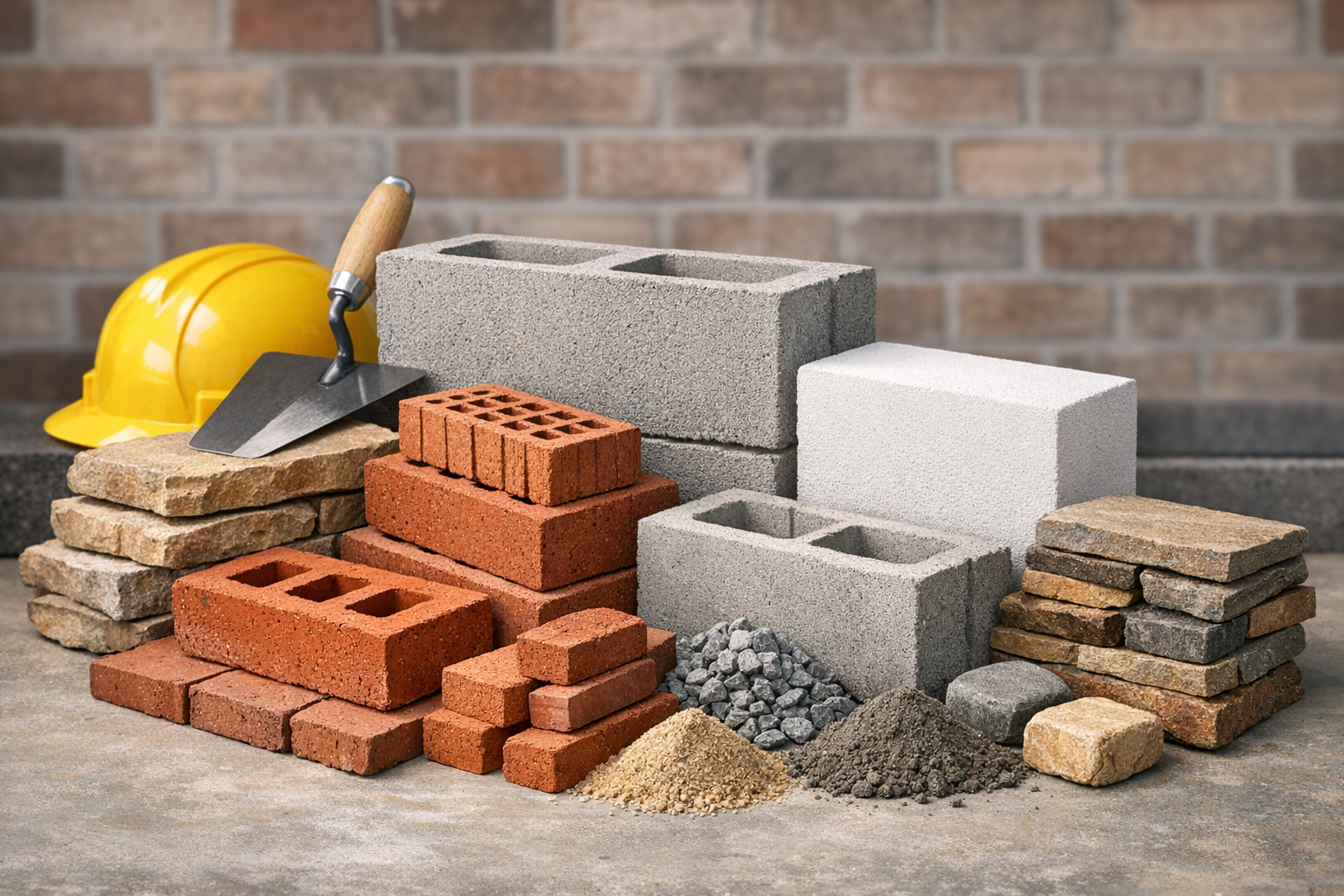
Brick is one of the most recognizable masonry materials and has been used for centuries. Made from clay and fired in a kiln, brick offers classic appearance, good durability, and strong resistance to fire and weather. It is often used for exterior walls, fireplaces, chimneys, walkways, and decorative features.
Brick is valued for its timeless look and relatively low maintenance. However, quality varies depending on the type, firing process, and water absorption rate. In colder climates, freeze-thaw resistance is especially important to prevent cracking and spalling.
Concrete Block
Concrete block, also known as CMU (concrete masonry unit), is a versatile and cost-effective masonry material. It is made from cement, aggregates, and water, then molded into hollow blocks that can be reinforced and filled with grout when needed. Concrete block is commonly used in foundations, load-bearing walls, retaining walls, and commercial buildings.
One major advantage of concrete block is its structural strength. It can also be finished with paint, stucco, veneer, or other coverings for improved appearance. While it may not have the visual warmth of brick or stone, it remains a practical choice for many projects.
Natural Stone
Natural stone is prized for its beauty, uniqueness, and long service life. Common types include granite, limestone, sandstone, slate, and fieldstone. Each stone type has its own texture, color palette, and performance characteristics. Natural stone is frequently used for facades, landscaping walls, fireplaces, patios, and high-end architectural details.
Because it is quarried from the earth, natural stone offers a distinct, organic look that cannot be fully replicated by manufactured products. It is typically more expensive than other masonry materials, and installation may require skilled labor due to weight, irregular shapes, and cutting requirements.
Manufactured Stone Veneer
Manufactured stone veneer is a lighter, more affordable alternative to natural stone. It is made from concrete-based mixtures molded and colored to resemble real stone. This material is often used for decorative wall coverings, accent features, fireplaces, and exterior facades.
It provides many of the visual benefits of natural stone without the same cost or structural demand. Because it is lighter, it can often be installed more easily on framed walls. That said, proper installation and moisture management are essential to ensure long-term performance.
Mortar
Mortar is the binding material that holds masonry units together. It is usually made from cement, sand, lime, and water. Although mortar is not a structural unit like brick or block, it plays a critical role in load distribution, weather resistance, and overall stability. The right mortar mix depends on the type of masonry material and the project conditions.
Mortar joint width, color, and finish also influence the final appearance of a structure. In restoration work, matching historic mortar can be especially important to preserve the integrity and look of older buildings.
How to Choose the Right Masonry Material
Choosing the best masonry material starts with understanding the demands of the project. A retaining wall, for example, needs strong structural performance and proper drainage, while a decorative fireplace may prioritize aesthetics and heat resistance. Climate, budget, and maintenance expectations also matter.
If durability is the top concern, brick, concrete block, and natural stone are all strong contenders. If visual appeal is the goal, natural stone and brick often stand out, while manufactured stone veneer can deliver a similar look at a lower cost. For structural walls or foundations, concrete block is often the most practical option.
It is also important to consider whether the material will be exposed to moisture, freezing temperatures, or heavy use. Materials with high water resistance and proper installation details tend to last longer and require fewer repairs over time.
Benefits of Quality Masonry Materials
High-quality masonry materials offer several advantages. They are known for their strength, fire resistance, and longevity. Many masonry systems also provide excellent sound control and can improve a building’s energy efficiency when properly designed. In addition, masonry often adds resale value by creating a premium, solid appearance that appeals to buyers.
Another benefit is low maintenance. Compared with many other construction materials, masonry usually requires less frequent replacement. While routine inspections and occasional repointing or sealing may be needed, well-chosen masonry can last for generations.
Maintenance and Longevity
Even the best masonry materials need care to perform well over time. Regular inspections can help identify cracks, water intrusion, loose mortar joints, or surface damage before they become more serious. Cleaning should be done carefully, since harsh chemicals or high-pressure washing can damage certain surfaces.
Repairs should be made with compatible materials. For example, using the wrong mortar on older brick can trap moisture and cause deterioration. Proper maintenance not only extends the life of masonry but also preserves its appearance and structural integrity.
Conclusion
Masonry materials play a major role in how a structure looks, performs, and lasts. Whether you choose brick, concrete block, natural stone, or manufactured veneer, the right material can improve durability, beauty, and long-term value. By considering the project’s structural needs, climate, budget, and style, you can select masonry materials that stand the test of time.