Introduction
Getting a masonry estimate is one of the first steps in planning a repair, installation, or restoration project. Whether you need brickwork, stone veneer, tuckpointing, or a new retaining wall, a clear estimate helps you understand the scope, budget, and timeline before work begins. It also gives you a chance to compare contractors and avoid surprise costs later.
Because masonry projects can vary widely in materials, labor, access, and structural complexity, estimates are rarely one-size-fits-all. A good estimate should explain what is being done, what materials are included, and how the final price is calculated. Knowing how to read a masonry estimate can help you make a smarter hiring decision and protect your investment.
What Is a Masonry Estimate?
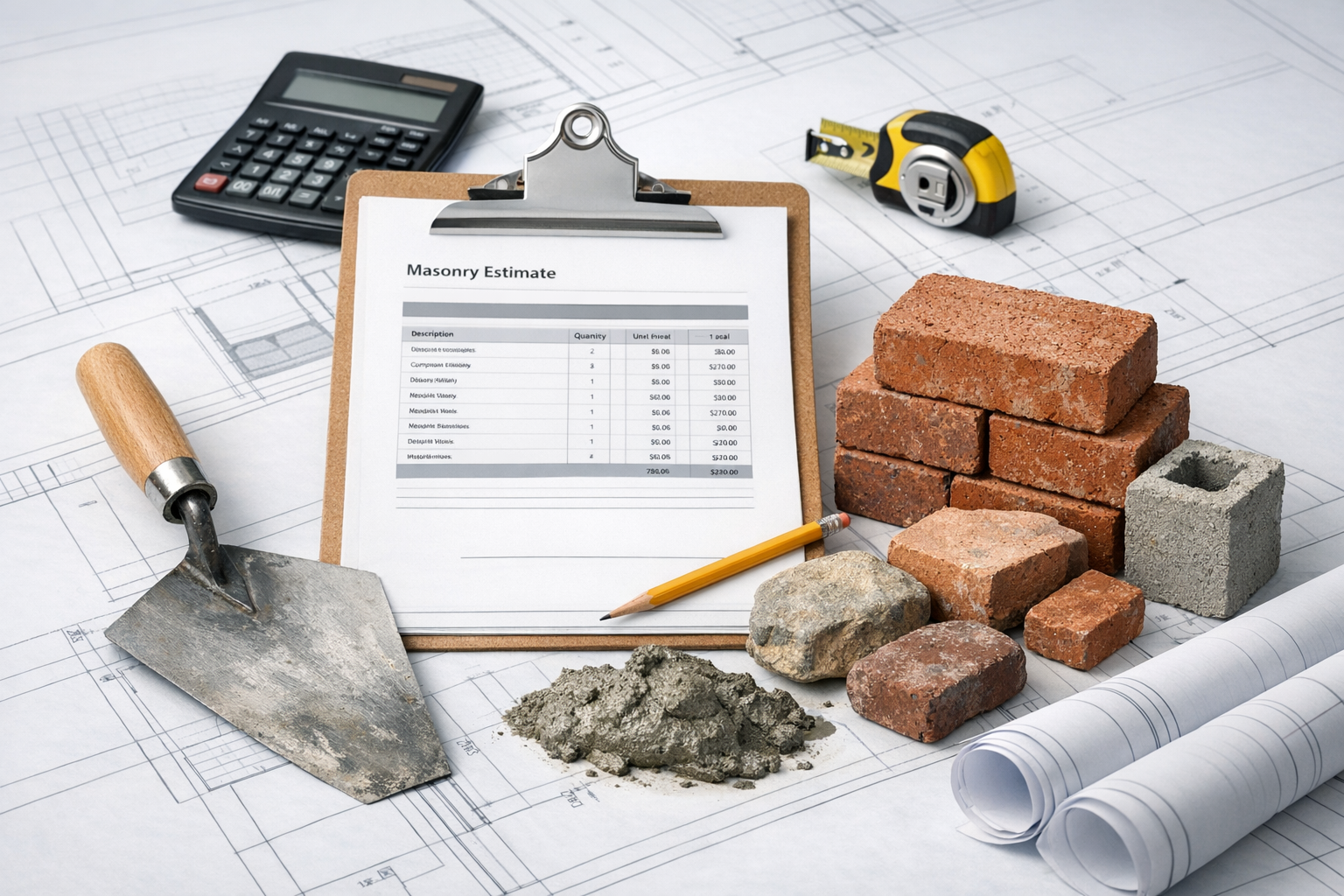
A masonry estimate is a written cost projection for masonry work. It outlines the expected price for labor, materials, equipment, and any related services needed to complete the project. Depending on the contractor, it may be a simple price summary or a detailed breakdown of every major task.
Estimates are commonly used for projects such as brick wall repair, chimney rebuilding, paver installation, stone steps, foundation repairs, and mortar repointing. The purpose is to give both the homeowner and contractor a shared understanding of what the job involves before work starts.
What a Masonry Estimate Typically Includes
Project Scope
The scope describes exactly what work will be performed. This may include removing damaged brick, replacing mortar joints, installing new stone, or building a new wall. A detailed scope is important because vague descriptions can lead to misunderstandings and extra charges.
Materials
Materials are a major part of any masonry estimate. The contractor should list the type and quantity of brick, block, stone, mortar, cement, sealant, reinforcement, or other supplies. If matching existing materials is necessary, that should also be noted since specialty materials can affect pricing.
Labor Costs
Labor is usually the largest portion of a masonry estimate. It reflects the skill, time, and crew size required to complete the work safely and correctly. Complex projects, high walls, hard-to-access areas, and structural repairs often require more labor and a higher price.
Equipment and Access Needs
Some masonry jobs require scaffolding, lifts, dumpsters, cutting tools, or other equipment. If the project site is difficult to reach, the estimate may also include extra setup or protection costs. These details matter because access challenges can significantly affect the final budget.
Permits and Cleanup
Depending on the project, permits may be needed for structural work or major exterior changes. A complete estimate may also include cleanup, debris removal, and site restoration. Always check whether these items are included or billed separately.
Factors That Affect Masonry Pricing
Type of Project
Simple repair work generally costs less than full rebuilds or custom installations. For example, repointing a small brick wall will usually be more affordable than rebuilding a chimney or constructing a decorative stone façade.
Materials Used
Natural stone, specialty brick, and matching historic materials often cost more than standard block or common brick. The more unique the material, the more likely it is that sourcing and installation will increase the estimate.
Condition of Existing Structure
If the existing masonry is damaged beyond what appears on the surface, the contractor may need to uncover hidden issues such as water damage, unstable mortar, or foundation movement. Poor underlying conditions usually increase both labor and material needs.
Project Size and Complexity
Larger projects naturally cost more, but complexity also matters. Curved walls, detailed patterns, load-bearing structures, and hard-to-match restoration work require greater precision and time, which can raise the estimate.
Location and Season
Local labor rates, transportation costs, and seasonal demand can all influence pricing. In some areas, masonry work is more expensive due to higher demand or stricter code requirements. Weather can also affect scheduling and project duration.
How to Read a Masonry Estimate
Start by checking whether the estimate clearly describes the work to be done. Look for specific terms rather than general phrases. For example, “repoint 40 linear feet of brick joints” is more useful than “repair brick wall.” The more precise the description, the easier it is to compare bids.
Next, review the line items. A reliable estimate should separate labor, materials, and any extra fees. This makes it easier to understand where your money is going and whether one contractor is charging more for a specific reason. If something is listed as “allowance” or “provisional,” ask what that means and how it could change the final cost.
You should also check the payment terms, project timeline, warranty information, and any exclusions. Exclusions are especially important because they spell out what is not included in the quote, such as paint touch-ups, landscaping repairs, or hidden damage that may be discovered later.
How to Compare Multiple Masonry Estimates
When you receive more than one masonry estimate, avoid choosing based on price alone. The cheapest quote may leave out important details, use lower-quality materials, or underestimate the time needed for proper installation.
Instead, compare the estimates side by side. Look at the scope of work, material specifications, labor description, cleanup, warranty, and project schedule. If one estimate is much lower than the others, ask what is missing. If one is much higher, ask what makes it different. Clear answers can help you determine which contractor offers the best overall value.
Questions to Ask Before Approving an Estimate
Before signing off on a masonry estimate, ask a few key questions:
- Is this a fixed price or an estimate that may change?
- What materials are included, and can they be matched to the existing structure?
- Are permits, cleanup, and debris removal included?
- What happens if hidden damage is found during the work?
- Is there a warranty on workmanship or materials?
These questions can help you avoid confusion and make sure the contractor’s expectations align with yours.
Conclusion
A masonry estimate is more than a price quote. It is a planning tool that helps you understand the full scope of the job, compare contractors, and budget with confidence. By reviewing the details carefully and asking the right questions, you can choose a masonry professional who delivers quality work and clear communication from start to finish.