
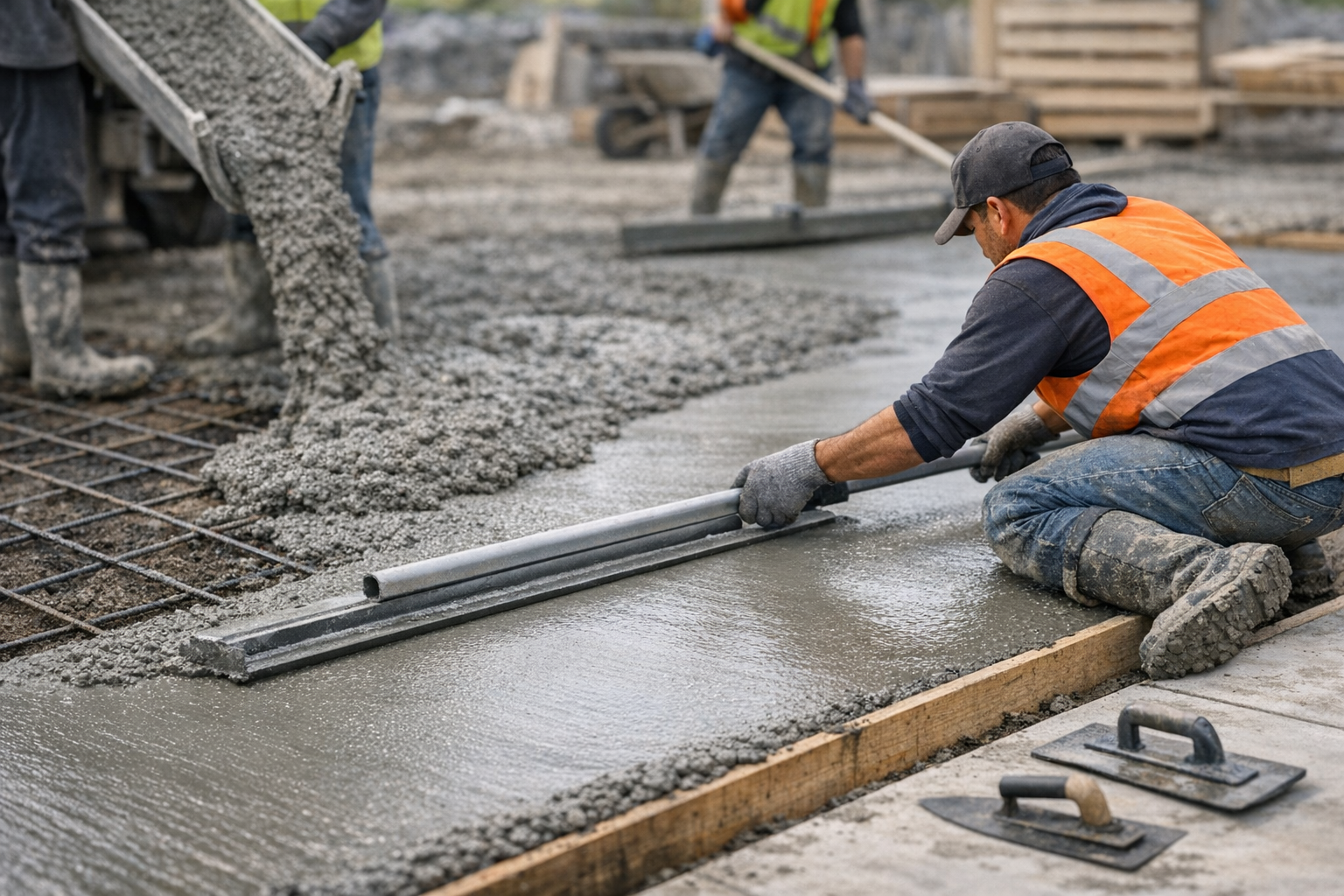
Concrete Installation
Concrete installation is one of the most important steps in creating durable surfaces for driveways, patios, sidewalks, slabs, and foundations. When done correctly, it delivers strength, stability, and long-term value. When rushed or poorly planned, it can lead to cracking, uneven surfaces, drainage issues, and costly repairs. Understanding the process helps homeowners and property managers make better decisions and get better results.
Planning Before the Pour
Successful concrete installation starts long before the truck arrives. Careful planning ensures the finished surface performs as expected and fits the needs of the space. This stage includes measuring the area, determining thickness, checking soil conditions, and deciding whether reinforcement is needed.
Site Evaluation
Every project begins with assessing the site. The ground must be stable, properly graded, and free from debris, roots, and soft spots. If the soil is weak or poorly drained, it may need to be compacted or improved with a base material. Good site preparation prevents settling and helps the concrete support weight over time.
Choosing the Right Mix
Not all concrete is the same. The right mix depends on the project. A driveway may need a stronger mix than a garden path, while a foundation may require specific strength and moisture considerations. Climate also matters. In areas with freeze-thaw cycles, air-entrained concrete can help reduce damage from expanding ice.
The Concrete Installation Process
Once the planning stage is complete, the installation itself must be carried out efficiently. Concrete begins to set soon after mixing, so timing and teamwork are essential. A smooth process helps create an even surface and minimizes defects.
Formwork and Reinforcement
Forms act as a mold for the concrete and define the final shape of the slab. They must be level, secure, and properly braced to hold the weight of the wet mix. Reinforcement such as rebar or wire mesh may also be added to increase strength and reduce cracking. While reinforcement does not prevent all cracks, it helps control them and improve structural performance.
Pouring and Spreading
During the pour, the concrete is placed into the forms and spread evenly. Workers use tools to move the mix into corners and around edges, making sure there are no empty pockets. Vibrating or consolidating the concrete may be necessary for thicker sections or structural pours to remove trapped air and ensure full coverage.
Screeding and Finishing
After the concrete is poured, the surface is leveled using a screed. This step removes excess material and creates a flat, even plane. Finishing then begins, which may include floating, edging, troweling, or texturing. The type of finish depends on the intended use. A broom finish, for example, is often chosen for outdoor surfaces because it provides better traction.
Curing and Drying
Curing is one of the most overlooked parts of concrete installation, yet it has a major impact on durability. Concrete does not simply dry; it cures through a chemical process that allows it to gain strength. Proper curing helps reduce cracking, improve hardness, and extend the lifespan of the finished surface.
Why Curing Matters
If concrete dries too quickly, it can lose moisture needed for proper curing. This may lead to weak spots, surface dusting, or shrinkage cracks. Keeping the surface moist or using curing compounds helps the concrete develop strength more evenly. In hot, windy, or dry conditions, curing becomes even more important.
How Long It Takes
Concrete may be firm enough for light foot traffic within a day or two, but that does not mean it has reached full strength. Most concrete continues curing for weeks, and full strength often takes 28 days or more. Heavy loads should be avoided until the material has matured enough to handle them safely.
Common Mistakes to Avoid
Many concrete problems can be traced back to a few avoidable mistakes. One common issue is poor base preparation. If the ground is not compacted properly, the slab may settle or crack. Another mistake is adding too much water to the mix, which can weaken the concrete and increase surface wear.
Timing also matters. Delays during pouring and finishing can affect the appearance and performance of the slab. In addition, skipping control joints can cause random cracking as the concrete shrinks. Finally, failing to cure the slab properly can reduce strength and shorten its service life.
Working with a Professional Installer
While some small projects may be suitable for experienced DIYers, many concrete installation jobs benefit from professional expertise. A skilled installer understands site preparation, mix selection, finishing techniques, and curing requirements. This knowledge can save time, reduce waste, and improve the final result.
Professionals also have the equipment needed to handle larger pours efficiently. For driveways, foundations, or other load-bearing applications, hiring an experienced contractor can be a smart investment. They can identify problems before they become expensive and ensure the project meets local standards and expectations.
Conclusion
Concrete installation is more than just pouring a slab. It is a process that depends on careful planning, proper materials, skilled execution, and patient curing. When each step is handled correctly, the result is a strong, attractive surface built to last for years.