Introduction
When you’re planning a new driveway, patio, sidewalk, foundation, or commercial slab, choosing the right concrete installation company can make all the difference. Concrete is one of the most durable building materials available, but only when it is installed correctly. A skilled contractor can help ensure your project looks great, performs well, and lasts for years with minimal maintenance.
Whether you are a homeowner improving curb appeal or a business owner managing a larger construction project, understanding what concrete installation companies do and how to evaluate them can save time, money, and stress. Below, we’ll cover the services they provide, what to look for in a contractor, and how to prepare for a successful project.
What Concrete Installation Companies Do
Concrete installation companies specialize in preparing, placing, finishing, and curing concrete for a wide range of residential, commercial, and industrial applications. Their work often includes more than simply pouring concrete. A quality contractor manages the entire process from site preparation to the final finish.
Common Concrete Services
Many concrete installation companies offer services such as:
- Driveways and garage slabs
- Patios and outdoor living areas
- Sidewalks and walkways
- Pool decks
- Foundations and footings
- Commercial flooring and slabs
- Stamped or decorative concrete
- Concrete repair and replacement
Some contractors focus on residential work, while others handle large-scale commercial projects. The best company for your job will have experience with the specific type of structure you need.
Why Hiring a Professional Matters
Concrete may seem straightforward, but it requires careful planning and technical knowledge. Problems with grading, reinforcement, mix design, or curing can lead to cracking, uneven surfaces, drainage issues, and premature deterioration.
A professional concrete installation company brings the tools, training, and experience needed to avoid these common mistakes. They know how to evaluate soil conditions, prepare the base, set forms accurately, and finish the surface properly. In addition, they understand local building codes and permitting requirements, which helps keep your project compliant and on schedule.
Hiring professionals also gives you better long-term value. While a lower bid may be tempting, poor workmanship can lead to costly repairs or complete replacement later. A well-installed concrete surface should provide durability, safety, and visual appeal for many years.
How to Choose the Right Concrete Installation Company
Not all contractors deliver the same level of quality. Taking time to compare companies can help you find a team that fits your needs, budget, and timeline.
Check Experience and Specialization
Start by looking for companies with proven experience in projects similar to yours. A contractor who excels at decorative patios may not be the best choice for a structural foundation. Ask how long they have been in business and what types of concrete work they perform most often.
Review Licenses, Insurance, and Certifications
A reputable concrete installation company should carry proper licensing and insurance. This protects both you and the contractor in case of accidents or property damage. If applicable in your area, ask whether they hold any industry certifications or belong to professional associations.
Ask for References and Portfolio Examples
Photos of completed work can reveal a lot about a contractor’s craftsmanship. Even better, ask for references from recent clients. Speaking with past customers can help you learn whether the company communicated clearly, showed up on time, and completed the job as promised.
Compare Detailed Quotes
When requesting estimates, make sure each quote includes the same project details so you can compare accurately. A solid estimate should outline labor, materials, site preparation, reinforcement, finishing, cleanup, and any special features. Be cautious of bids that are significantly lower than the others, as they may reflect shortcuts or hidden costs.
Evaluate Communication and Professionalism
Good communication is essential throughout the installation process. The right company should answer your questions clearly, explain the timeline, and help you understand what to expect before work begins. Professionalism during the quoting process often reflects how they will handle the project itself.
What to Expect During the Installation Process
While every project is different, most concrete installations follow a similar sequence. Understanding the process can help you plan ahead and know when your contractor is doing quality work.
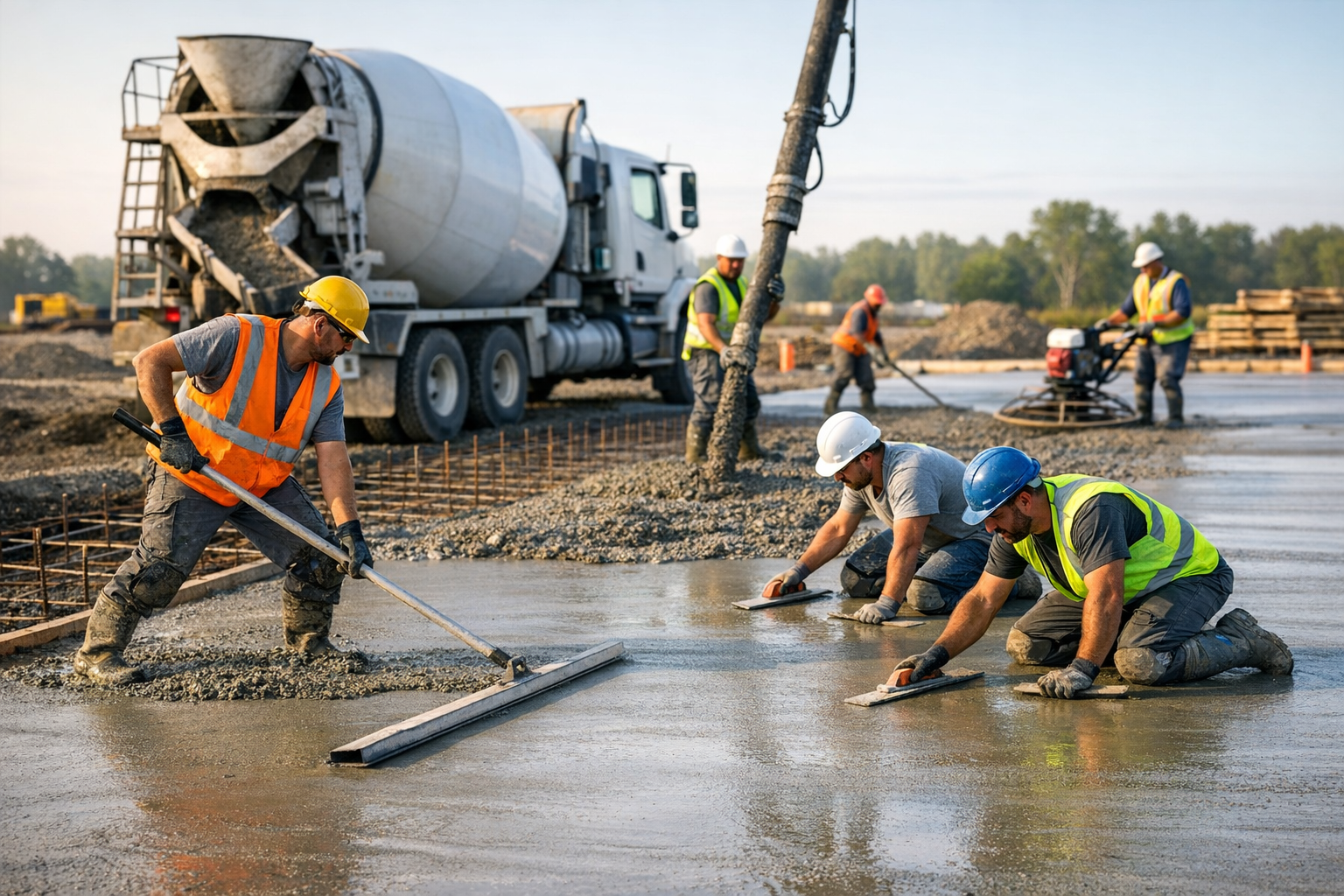
The process usually begins with site evaluation and preparation. This may include removing existing materials, grading the area for proper drainage, and compacting the base. Next, the crew sets forms, installs reinforcement such as rebar or wire mesh if needed, and ensures everything is level and properly measured.
Once the site is ready, concrete is mixed and poured into place. The crew then spreads and finishes the surface, which may involve smoothing, texturing, edging, or stamping. After installation, the concrete must cure properly. Curing is one of the most important steps because it affects the slab’s strength and durability. Depending on the project and weather, curing may take several days to several weeks.
Questions to Ask Before Hiring
Before signing a contract, ask a few important questions to make sure the company is a good fit:
- How long have you been installing concrete?
- Do you have experience with projects like mine?
- Are you licensed and insured?
- What type of concrete mix do you recommend?
- How will you handle drainage and site preparation?
- What is included in the estimate?
- How long will the project take?
- What maintenance will the concrete need after installation?
These questions can help you avoid misunderstandings and choose a contractor who is transparent and qualified.
Maintaining Your New Concrete Surface
Once your concrete is installed, a little maintenance goes a long way. Keep the surface clean by sweeping away dirt and rinsing off debris when needed. Sealing the concrete can help protect it from moisture, stains, and wear, especially in areas exposed to heavy traffic or harsh weather.
It’s also important to avoid using de-icing chemicals that can damage the surface, especially during the first winter after installation. If you notice cracks or chips, address them early before they grow into larger problems. A reputable concrete installation company may also offer maintenance or repair services if needed.
Conclusion
Concrete installation companies play a key role in creating strong, attractive, and long-lasting surfaces for homes and businesses. By choosing an experienced, licensed, and well-reviewed contractor, you can improve the success of your project and protect your investment. From driveways and patios to foundations and commercial slabs, the right team will deliver quality results that stand the test of time.