
Understanding Professional Concrete Work
Professional concrete work is the foundation of many durable, functional, and attractive structures. From driveways and sidewalks to patios, foundations, and commercial slabs, concrete is valued for its strength, versatility, and long service life. When installed correctly, it can handle heavy loads, resist weather exposure, and maintain its appearance for decades.
While concrete may seem straightforward, quality results depend on planning, material selection, mixing, placement, finishing, and curing. Small mistakes at any stage can lead to cracking, uneven surfaces, premature wear, or costly repairs. That is why professional concrete work is about much more than pouring a gray mixture into a form. It is a skilled process that combines technical knowledge, experience, and attention to detail.
What Makes Concrete Work Professional?
Professional concrete work stands out because it follows proven methods and industry standards from start to finish. A skilled contractor evaluates the site, prepares the ground properly, uses the right concrete mix, and ensures the finished surface meets both structural and aesthetic expectations.
Key qualities of professional work include:
- Proper site preparation: Removing weak soil, grading the area, and compacting the base.
- Accurate formwork: Creating clean edges and the correct shape, slope, and thickness.
- Correct mix design: Choosing a mix suited to the project’s load and environmental conditions.
- Careful placement and finishing: Pouring evenly, smoothing properly, and preventing surface defects.
- Thorough curing: Protecting the concrete so it gains strength and durability.
These details may not always be visible once the job is complete, but they determine how well the concrete performs over time.
Common Types of Concrete Projects
Professional concrete work is used in a wide range of residential, commercial, and industrial applications. Each project has unique requirements, but all benefit from skilled execution.
Driveways and Walkways
Driveways and walkways must be both strong and visually appealing. A well-built concrete driveway should support vehicle traffic without settling or cracking excessively. Walkways should remain level and safe to use while enhancing curb appeal. Decorative finishes, such as broom texture or stamped patterns, can add style while improving traction.
Patios and Outdoor Living Spaces
Concrete patios create long-lasting outdoor spaces for relaxing, dining, and entertaining. Professional installation helps ensure proper drainage, smooth transitions, and a finish that complements the home. Stamped, stained, or exposed aggregate options can turn a simple slab into a standout feature.
Foundations and Slabs
Foundations and structural slabs are among the most important forms of concrete work. These elements must be engineered and installed with precision because they support the weight of the structure above them. A small error in leveling, reinforcement, or curing can affect the performance of the entire building.
Commercial and Industrial Concrete
Commercial projects often require larger-scale pours, heavier reinforcement, and strict attention to load-bearing demands. Warehouses, parking lots, retaining walls, and equipment pads must withstand constant use and environmental stress. Professional crews are equipped to manage timing, logistics, and quality control on these demanding jobs.
The Importance of Proper Site Preparation
One of the most overlooked parts of concrete work is the preparation beneath the surface. Even the best concrete mix will fail if the base is unstable. Professional contractors begin by assessing soil conditions, drainage, and the intended use of the slab.
Preparation may include excavation, adding compacted gravel, installing vapor barriers, and setting grade lines for drainage. This step helps prevent water from pooling under or around the slab, which can lead to shifting, cracking, and long-term damage. Good preparation is often the difference between a project that lasts a few years and one that lasts for decades.
Mixing, Pouring, and Finishing Techniques
The way concrete is mixed and placed has a major impact on its strength and appearance. A professional crew uses the correct water-to-cement ratio and may include additives depending on the project’s needs. Too much water can weaken the concrete, while too little can make it difficult to work with.
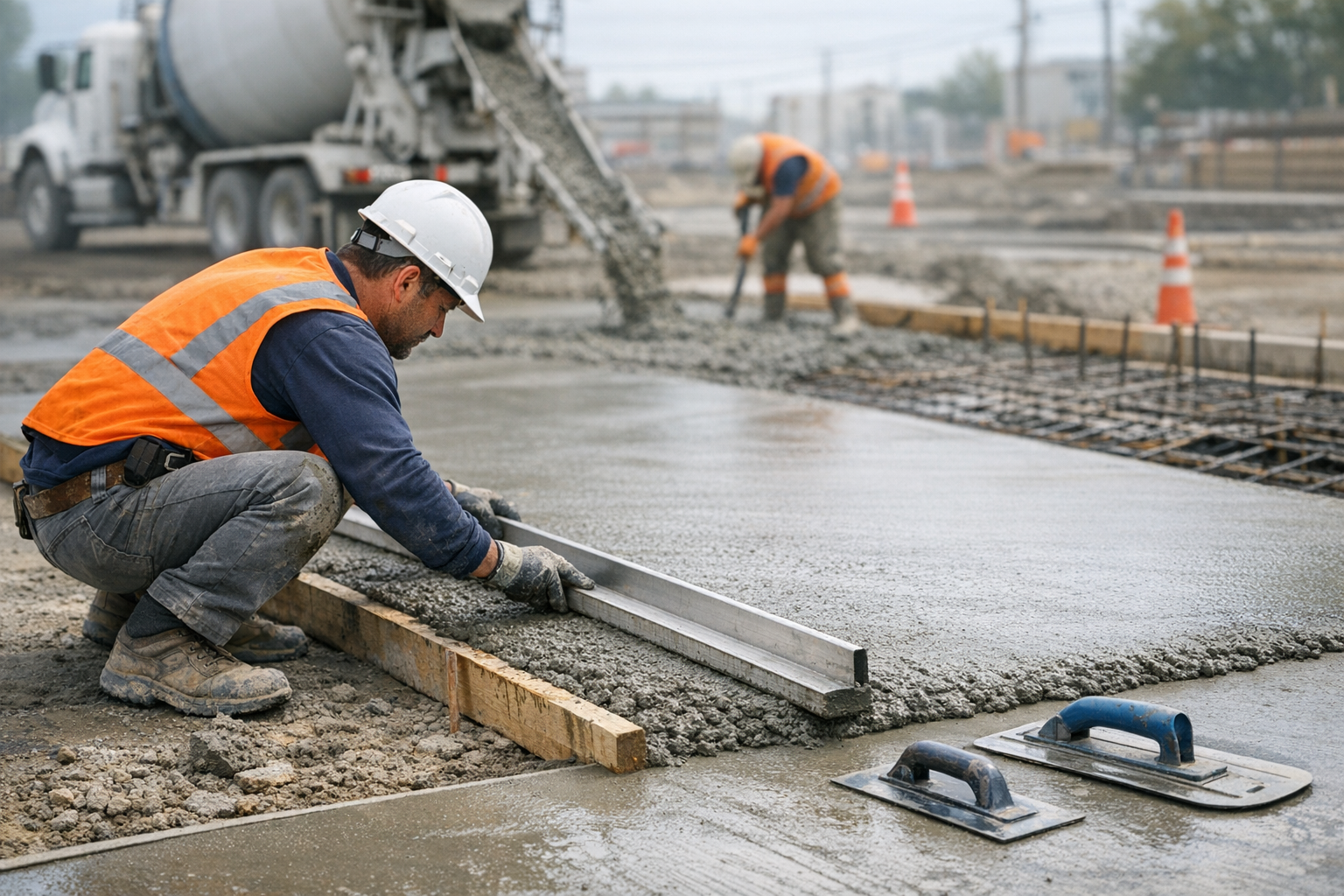
During pouring, the concrete must be placed efficiently and evenly to avoid air pockets and weak spots. Workers use tools and techniques to consolidate the material and level the surface. Once poured, the finishing process begins. Depending on the desired result, this may involve screeding, floating, edging, brooming, troweling, or decorative stamping.
Timing matters during finishing. Concrete that is worked too early or too late can develop surface issues such as scaling, blisters, or a poor final texture. Skilled professionals know how to read the material and adjust their technique accordingly.
Curing: The Step That Protects the Investment
Curing is essential for strong, durable concrete. After placement, concrete needs time and moisture retention to develop its full strength. If it dries too quickly, the surface can crack or lose durability. Professional concrete work includes proper curing methods such as water curing, curing blankets, or chemical curing compounds.
Depending on the project, curing may continue for several days or longer. During this period, it is important to protect the slab from heavy traffic, extreme temperatures, and rapid moisture loss. Proper curing is one of the simplest ways to improve the final quality and lifespan of concrete.
Benefits of Hiring a Professional Concrete Contractor
Hiring a professional concrete contractor offers several important benefits. First, it reduces the risk of mistakes that can be expensive to fix later. Experienced crews understand local conditions, building codes, and best practices for different project types. They also have the right equipment to complete the work efficiently and safely.
In addition, professional contractors can help homeowners and business owners choose the best finish, thickness, reinforcement, and drainage solution for their needs. This guidance can improve both performance and appearance. Instead of guessing, clients get a result designed to suit the property and the long-term use of the surface.
Another major advantage is accountability. A reputable contractor stands behind the work and is more likely to provide clear timelines, transparent pricing, and reliable communication throughout the project.
How to Choose the Right Concrete Professional
Choosing the right contractor is a critical step in getting excellent results. Start by looking for experience with the specific type of project you need. A company that excels at decorative patios may not be the best choice for a structural foundation, and vice versa.
It is also wise to review references, photos of past projects, licensing, insurance, and written estimates. Ask about the materials they use, how they handle curing, and what kind of warranty or follow-up support they offer. Clear communication and a detailed scope of work are good signs that the contractor takes quality seriously.
Conclusion
Professional concrete work combines skill, planning, and craftsmanship to create surfaces and structures that are built to last. Whether the project is decorative or structural, success depends on proper preparation, precise installation, and careful curing. By hiring experienced professionals, property owners can protect their investment and enjoy durable, attractive concrete for years to come.