
Introduction
Concrete is one of the most durable and versatile building materials used in homes, businesses, and public spaces. Whether you are planning a driveway, patio, walkway, slab, or foundation, understanding the concrete installation process can help you prepare for the project and set realistic expectations. A successful installation depends on careful planning, proper site preparation, accurate mixing, expert placement, and correct finishing and curing. When each step is done well, the finished concrete can provide strength, longevity, and a clean appearance for many years.
Planning the Project
Every good concrete installation starts with a solid plan. Before any digging or pouring begins, it is important to define the purpose of the slab or structure, determine the needed thickness, and assess the soil and site conditions. A driveway will require different specifications than a backyard patio or a footing for a wall. Climate, drainage, load-bearing needs, and local building codes should also be considered at this stage.
Contractors and property owners should decide on the layout, edges, reinforcement, control joints, and finish type before the work begins. Planning ahead reduces delays and helps avoid expensive changes once the concrete is already on site.
Site Preparation
Proper site preparation is essential for a long-lasting concrete installation. The area must be cleared of grass, debris, roots, loose material, and any old pavement that could interfere with the new pour. After clearing, the ground is excavated to the correct depth based on the project design and expected load.
Once the site is excavated, the subgrade is compacted to create a stable base. In many projects, a gravel or crushed stone base is added to improve drainage and support the concrete. Good compaction helps prevent settling, cracking, and uneven surfaces later on. If drainage is a concern, the site should be graded so water flows away from structures and does not pool beneath the slab.
Formwork and Reinforcement
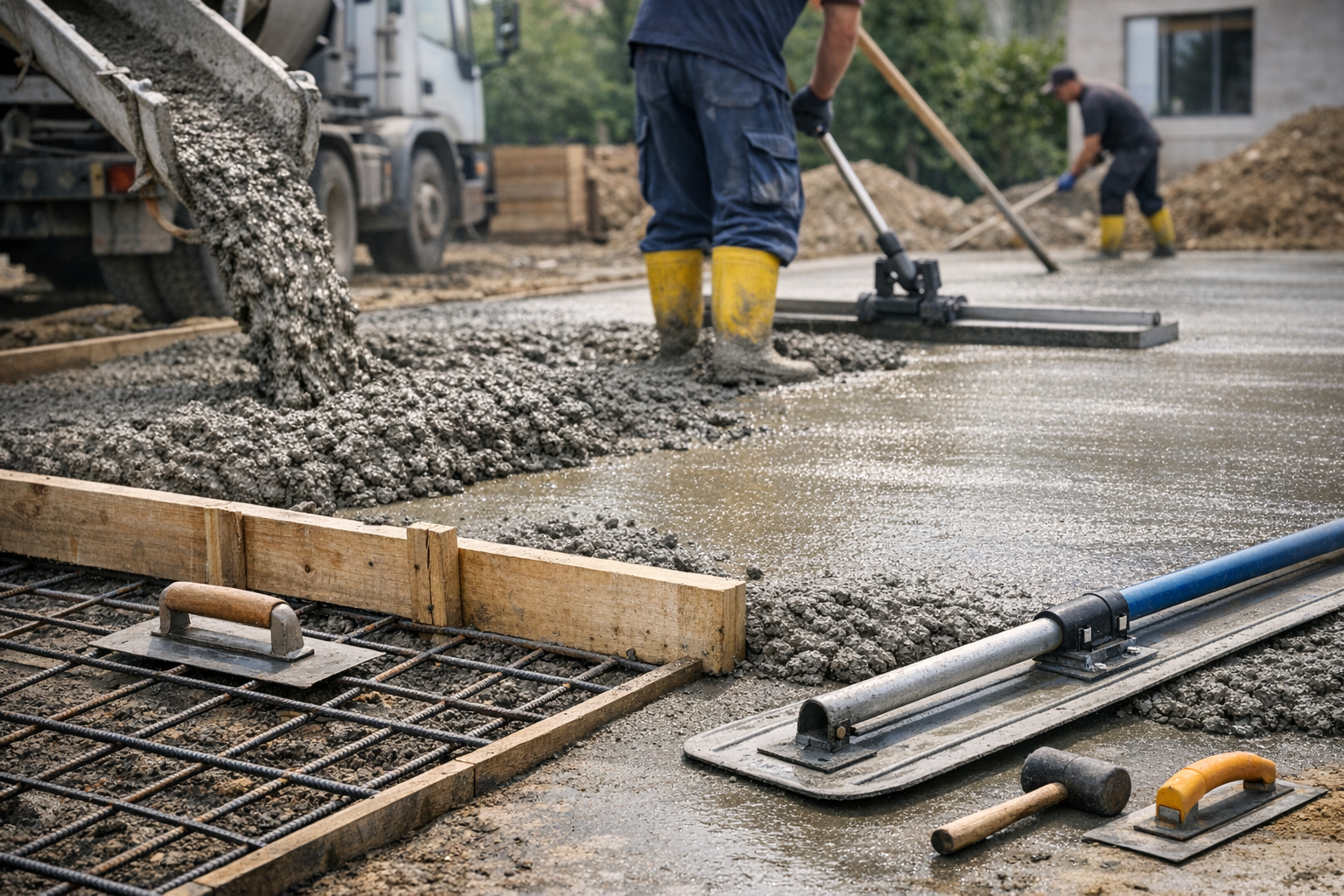
After the base is prepared, forms are installed to shape the concrete and hold it in place while it sets. These forms are typically made from wood, metal, or plastic and must be set level and secured tightly. Accurate formwork ensures the finished concrete has the correct dimensions, slope, and edges.
Reinforcement is also added when needed. Rebar or welded wire mesh may be used to improve the concrete’s tensile strength and help control cracking. The type and amount of reinforcement depend on the project’s intended use. For example, a heavily used driveway may need more reinforcement than a small decorative patio.
Mixing and Ordering Concrete
Concrete must be mixed to the right consistency and strength for the project. In many cases, ready-mix concrete is ordered from a supplier and delivered to the site in a truck. This helps ensure consistency and saves time during installation. The mix design may include cement, water, sand, gravel, and any special additives needed for performance, such as air entrainment or water reducers.
If concrete is mixed on site, measurements must be precise. Too much water can weaken the final product, while too little can make the mixture difficult to place and finish. The mix should be workable but not overly wet. Once concrete begins to set, time becomes critical, so the crew should be ready for placement before the delivery arrives.
Pouring the Concrete
Pouring is the stage where the concrete installation process comes together. The mix is placed into the forms as evenly as possible, starting at one end and moving steadily across the site. Workers use tools such as shovels, rakes, and come-alongs to spread the concrete and fill corners and edges completely.
During the pour, it is important to avoid overworking the material or adding extra water to make it easier to handle. The concrete should be placed quickly enough to prevent cold joints, which can form when a section hardens before the next one is added. For larger projects, the crew may use pumps or other equipment to keep the material moving efficiently.
Leveling and Finishing
Once the concrete has been placed, it must be leveled and finished. The first step is screeding, which removes excess concrete and brings the surface to the correct height. After screeding, the surface is floated to smooth out marks and push larger aggregate slightly below the top layer.
Finishing methods vary depending on the intended use of the slab. A broom finish is often used for driveways and walkways because it provides traction. Trowel finishes can create a smoother, more polished look for indoor slabs or decorative surfaces. Edging tools are used to round off corners and create clean lines. At this stage, control joints may also be cut or formed to help manage cracking as the concrete shrinks and cures.
Curing the Concrete
Curing is one of the most important steps in the entire concrete installation process, yet it is often overlooked. Concrete does not reach its full strength immediately after pouring. It gains strength over time through a chemical reaction that requires moisture. If the surface dries too quickly, the concrete can crack, weaken, or become dusty.
To cure concrete properly, the surface may be covered with plastic sheeting, sprayed with a curing compound, or kept damp with water for several days. The exact method depends on the project and weather conditions. In hot, dry, or windy weather, careful curing is especially important. Even after the surface looks hard, the concrete continues curing for weeks, and full strength is typically reached after about 28 days.
Final Inspection and Sealing
After the curing period, the concrete should be inspected for surface defects, cracks, drainage issues, or uneven areas. Small cosmetic imperfections are common, but larger problems may indicate issues with preparation, placement, or curing. If the surface meets expectations, a sealer may be applied to protect against moisture, stains, and wear.
Sealing is especially useful for exterior concrete exposed to de-icing salts, oil, and weather changes. It can also enhance the appearance of decorative finishes and make the surface easier to maintain. Routine cleaning and occasional resealing can extend the life of the installation.
Conclusion
A successful concrete installation process depends on careful planning, strong site preparation, proper placement, and patient curing. When each step is handled correctly, the result is a durable, functional surface that stands up to daily use and changing weather. Whether you are installing a slab, patio, driveway, or foundation, taking the time to do the job right will pay off for years to come.