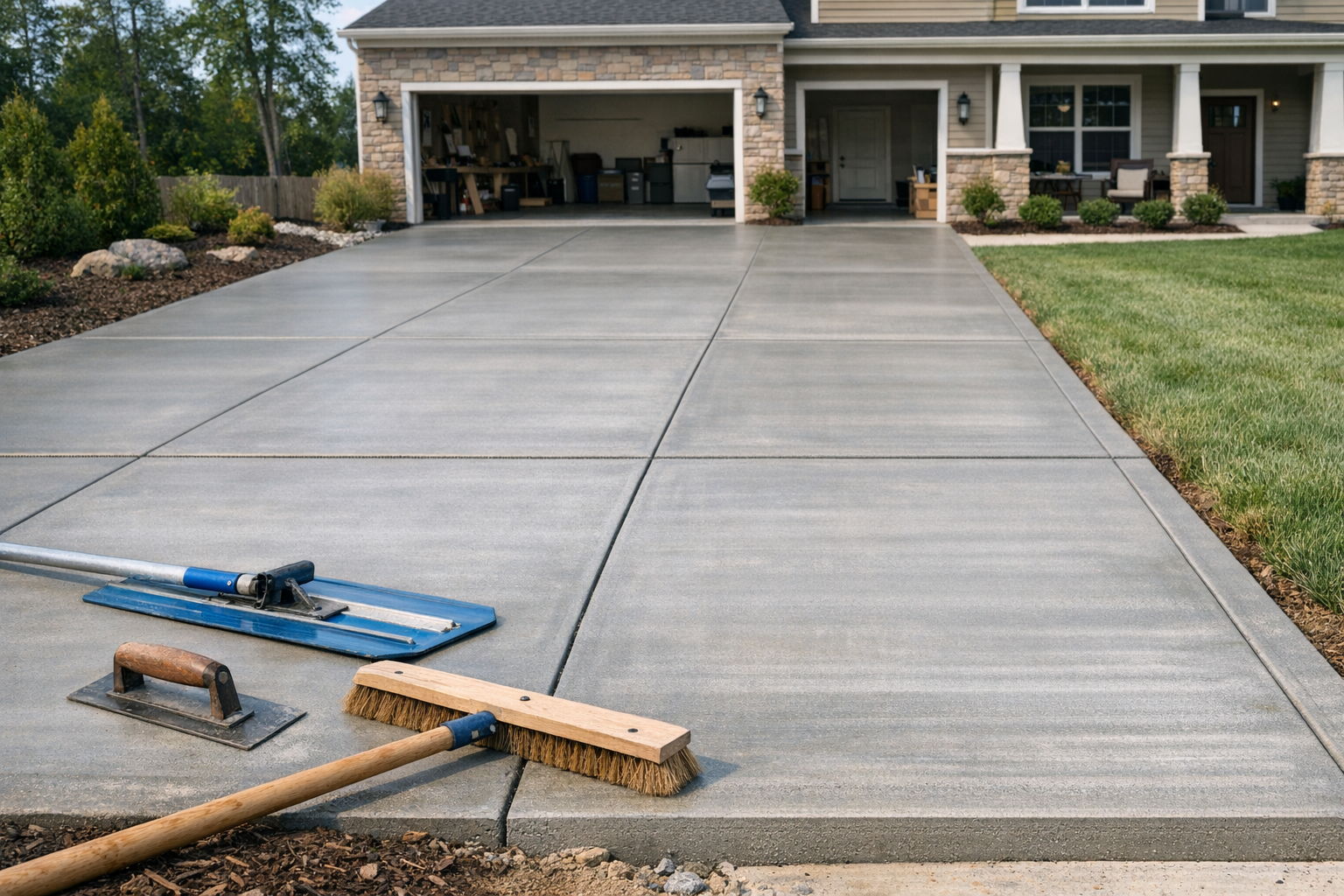
Why a Concrete Driveway Is a Smart Choice
If you’re thinking, “I need a concrete driveway,” you’re probably looking for something durable, attractive, and low-maintenance. Concrete driveways are one of the most popular choices for homeowners because they can handle heavy vehicle traffic, withstand daily use, and provide a clean, finished look that boosts curb appeal.
Compared with gravel or asphalt, concrete often offers a longer service life and fewer maintenance needs over time. It also gives you more design flexibility than many people realize. From simple brushed finishes to decorative edges and stamped patterns, a concrete driveway can be both practical and polished.
Benefits of Installing a Concrete Driveway
Long-Lasting Durability
One of the biggest reasons homeowners choose concrete is its strength. When installed properly, a concrete driveway can last for decades. It resists rutting, holds up well under cars and trucks, and performs reliably in a wide range of climates.
Low Maintenance
Concrete driveways don’t need frequent resealing like asphalt, and they don’t need the constant top-offs that gravel driveways require. Basic maintenance usually includes occasional cleaning, sealing as needed, and addressing small cracks early before they spread.
Improved Curb Appeal
A concrete driveway gives your property a neat, finished appearance. Whether your home is modern, traditional, or somewhere in between, concrete can be customized to match the style of your exterior. Even a standard gray slab can look clean and professional, while decorative options can make the driveway a standout feature.
Better Value Over Time
Although concrete may cost more upfront than some alternatives, its longevity and lower maintenance can make it a smart long-term investment. A well-built driveway can add value to your home and reduce the need for repeated repairs or replacement.
What to Consider Before Installing
Budget and Upfront Costs
If you need a concrete driveway, the first thing to understand is that pricing depends on several factors: driveway size, thickness, site preparation, local labor rates, and any decorative upgrades. A simple driveway is usually more affordable than one with curves, color, stamping, or special edging.
It’s helpful to get multiple estimates so you can compare scope and materials, not just the final number. The lowest quote isn’t always the best value if it includes thinner concrete, minimal base prep, or rushed installation.
Climate and Weather
Your local weather plays a major role in how a concrete driveway should be designed. In colder climates, concrete needs to be properly mixed, placed, and finished to handle freeze-thaw cycles. In hot areas, curing and moisture control are especially important to prevent premature cracking or surface issues.
If your region gets a lot of snow or ice, ask about surface texture and sealing options that can improve traction and protect the slab.
Drainage and Site Preparation
Good drainage is essential. If water pools on or around the driveway, it can weaken the base, increase cracking, or cause settling over time. Before installation, the area should be graded correctly so water flows away from the home and doesn’t collect near the slab.
Site preparation also includes removing old materials, compacting the base, and making sure the soil is stable enough to support the new driveway. A strong foundation is just as important as the concrete itself.
Choosing the Right Style and Finish
Standard Broom Finish
A broom finish is the most common choice for concrete driveways because it provides a clean look and a slip-resistant surface. It’s practical, cost-effective, and works well for most homes.
Stamped or Decorative Concrete
If you want a more custom appearance, stamped concrete can mimic stone, brick, or tile patterns. Decorative color options can also be added to blend with your home’s exterior. These upgrades can elevate the look of the driveway, though they usually increase the overall cost.
Exposed Aggregate
Exposed aggregate offers a textured, stylish finish by revealing the stone within the concrete surface. It’s a popular choice for homeowners who want something more visually interesting than plain concrete while still keeping the durability benefits.
How Long a Concrete Driveway Takes to Install
Most driveway projects take several steps: demolition or removal of the existing surface, base preparation, form setting, pouring, finishing, and curing. A straightforward installation may take only a few days, but weather and project size can affect timing.
The curing process is especially important. While the driveway may look finished shortly after pouring, concrete continues to gain strength over time. It’s best to follow the contractor’s guidance on when vehicles can safely use the new surface.
Maintenance Tips to Keep It Looking Good
Seal the Surface When Needed
Sealing helps protect concrete from moisture, stains, and surface wear. Depending on the type of sealer and your local conditions, resealing may be needed every few years.
Clean Spills and Debris Promptly
Oil, fertilizer, and harsh chemicals can stain or damage concrete if left too long. Sweeping regularly and washing off spills quickly can help preserve the driveway’s appearance.
Watch for Small Cracks
Hairline cracks are common and don’t always mean there’s a serious problem, but they should be monitored. Sealing minor cracks early can help prevent moisture from getting in and causing bigger issues later.
When to Call a Professional
Concrete driveway installation is one of those projects where experience matters. Proper grading, base preparation, reinforcement, and finishing all influence how long the driveway lasts. If you need a concrete driveway that performs well for years, a skilled contractor can help you avoid common problems like cracking, poor drainage, and uneven surfaces.
A professional can also help you choose the right thickness, finish, and layout for your property. This is especially important if the driveway will support heavier vehicles or if the site has slopes, drainage concerns, or challenging soil conditions.
Conclusion
If you need a concrete driveway, you’re making a practical choice that can improve both function and curb appeal. With the right planning, materials, and installation, a concrete driveway can provide long-lasting performance and a polished look that adds value to your home. Take time to compare options, prepare the site properly, and work with a trusted contractor to get the best results.