Best Time of Year for Concrete Work
When planning a concrete project, timing matters more than many homeowners realize. Temperature, moisture, and seasonal weather patterns all affect how concrete is mixed, placed, finished, and cured. Choosing the right season can improve durability, reduce delays, and help you avoid common problems like cracking or surface damage.
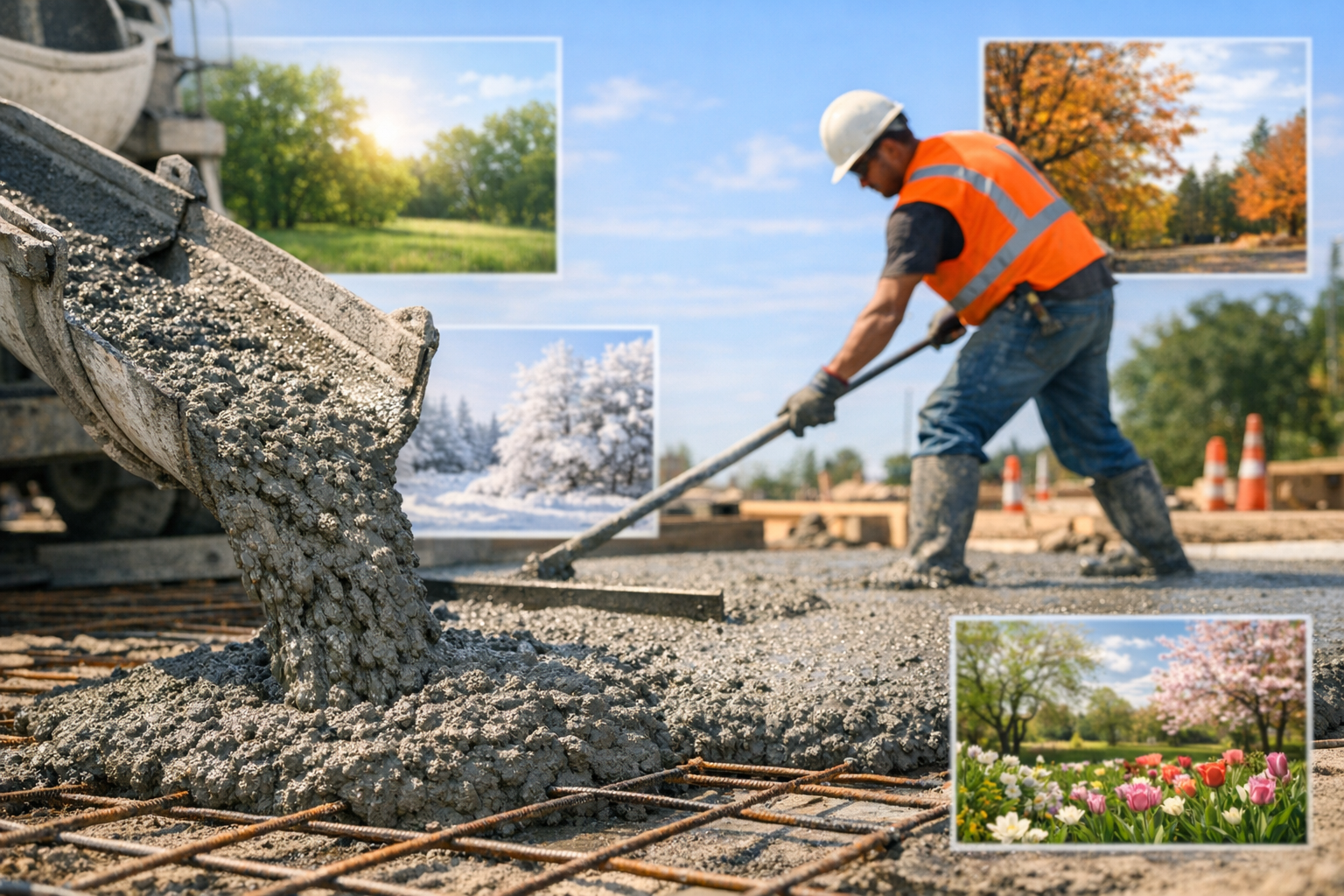
In most cases, the best time of year for concrete work is during mild weather in spring or fall. These seasons usually offer the most balanced conditions for concrete placement and curing. That said, summer and winter projects can still be successful with the right planning, materials, and contractor expertise.
Why Timing Matters for Concrete Projects
Concrete does not simply “dry.” It cures through a chemical reaction that depends on temperature and moisture. If conditions are too hot, the surface can dry too quickly, leading to shrinkage cracks and a weaker finish. If conditions are too cold, curing slows down and the concrete may not gain strength properly.
Rain, wind, and freeze-thaw cycles can also interfere with placement and finishing. That is why scheduling concrete work around the weather is one of the smartest decisions you can make for driveways, patios, sidewalks, foundations, and other projects.
Ideal Temperature Range
Concrete is generally happiest when temperatures are moderate, typically between 50°F and 70°F. In this range, the material has enough time to be placed and finished properly while still curing at a healthy rate. Extreme heat or cold can create challenges that affect both appearance and long-term performance.
Best Seasons for Concrete Work
Spring
Spring is often one of the most popular times for concrete work. Temperatures are usually mild, and the ground has thawed after winter, making it easier to excavate and prepare the site. This season also gives concrete enough time to cure before summer heat arrives.
However, spring weather can be unpredictable. Frequent rain can delay scheduling, and wet ground may complicate grading or base preparation. Still, when conditions are right, spring offers excellent results for many residential and commercial projects.
Summer
Summer is another common season for concrete work, especially for larger outdoor projects. Longer daylight hours allow contractors to work efficiently, and dry weather can make site access easier. This can be helpful for time-sensitive jobs or projects that need to be completed quickly.
The main challenge in summer is heat. High temperatures can speed up the curing process too much, making it harder to finish the surface properly. Contractors often combat this by working early in the day, using curing blankets or hydration methods, and adjusting the concrete mix to slow down setting time.
Fall
For many professionals, fall is the best time of year for concrete work. The weather is usually cool but not cold, humidity tends to be lower, and there is less risk of extreme heat interfering with curing. These conditions create a stable environment for strong, even results.
Fall is also a smart time to complete concrete projects before winter weather sets in. Driveways, walkways, and patios installed in the fall can be ready for use before snow and ice arrive, giving the concrete time to gain strength first.
Winter
Winter is generally the most difficult season for concrete work. Cold temperatures slow curing, and if the concrete freezes before it has gained enough strength, the finished product can be permanently damaged. Snow, ice, and frozen ground can also make site preparation and installation more complicated.
That said, winter concrete work is not impossible. Commercial projects, emergency repairs, and certain interior slabs can still be completed with heated enclosures, insulated blankets, accelerators, and other cold-weather techniques. These methods, however, usually require more planning and added expense.
Factors That Can Affect the Best Time to Pour Concrete
While spring and fall are often ideal, the best time for your project may depend on several practical factors beyond the calendar.
- Project type: A driveway, patio, foundation, and decorative slab may each have different timing needs.
- Local climate: A mild fall in one region may be colder than winter in another.
- Site conditions: Shade, drainage, soil type, and wind exposure can all influence curing.
- Scheduling availability: Popular seasons often book up early, so planning ahead matters.
- Special finishing requirements: Stamped, stained, or exposed aggregate concrete may need more controlled conditions.
It is also worth considering how soon the concrete will need to be used. If you are installing a driveway or patio before an event, holiday, or seasonal change, working backward from that deadline can help you choose the best start date.
Tips for Getting the Best Results
No matter what time of year you schedule your concrete work, preparation makes a big difference. Start by working with an experienced contractor who understands local weather patterns and can recommend the right mix design and curing methods for the season.
Make sure the site is properly prepared with a stable base, correct drainage, and enough access for equipment and materials. In hot weather, ask about early morning pours and curing plans. In cold weather, confirm that protection methods are in place to keep the slab above freezing during the curing period.
Finally, be flexible. A contractor may recommend shifting a pour by a day or two if weather conditions are not ideal. That small delay can protect your investment and lead to a stronger, longer-lasting result.
Conclusion
The best time of year for concrete work is usually spring or fall, when temperatures are mild and curing conditions are more predictable. Still, with the right techniques and planning, concrete can be installed successfully in summer or even winter. If you want the best possible outcome, focus on weather conditions, project type, and contractor expertise rather than the season alone.