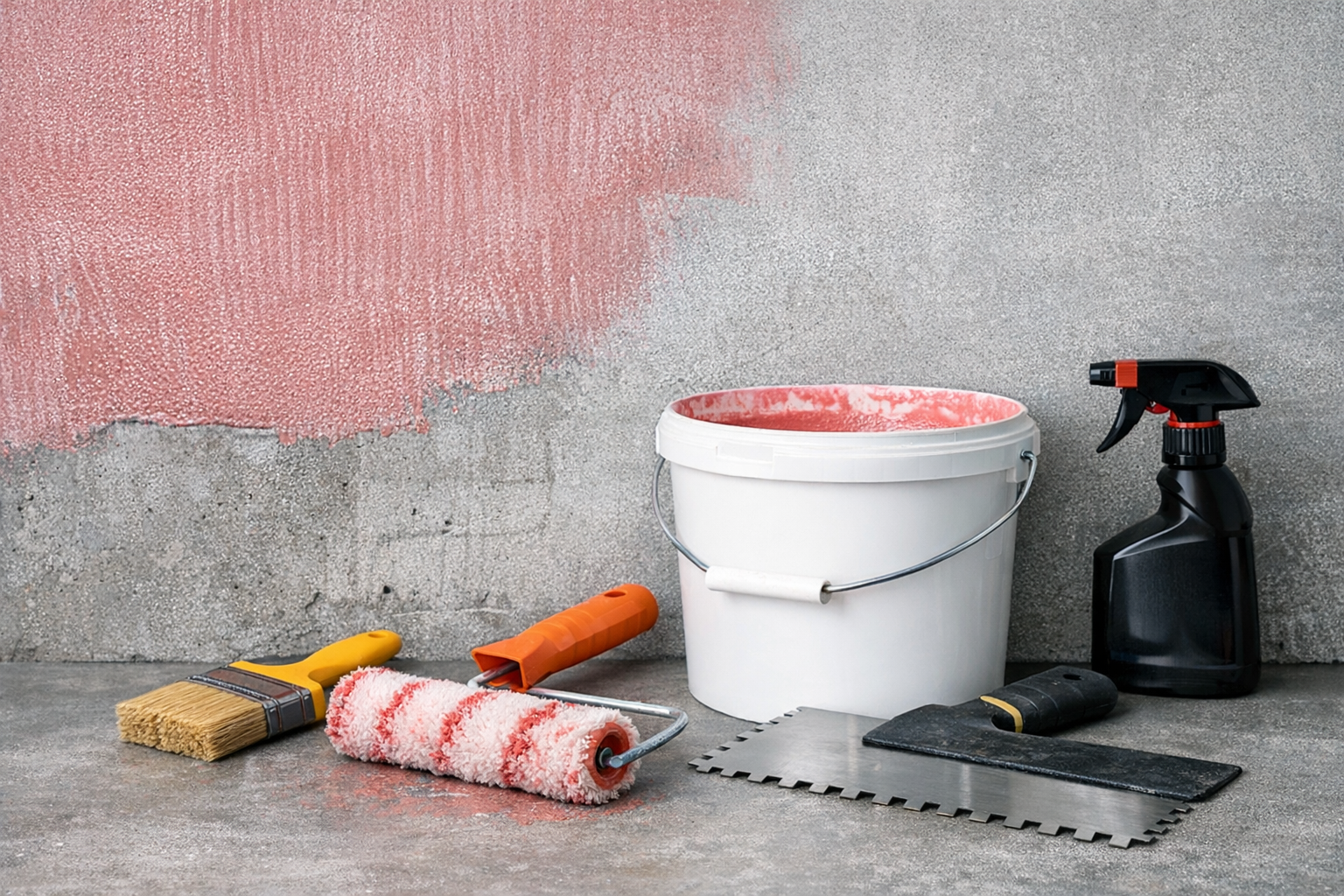
Concrete contact is a specialized bonding agent designed to help new materials adhere to existing concrete surfaces. If you have ever patched a slab, repaired a wall, or applied fresh mortar over old concrete, you have likely run into the challenge of getting the new material to bond properly. Because concrete is dense, hard, and often dusty or smooth, it does not always provide an ideal surface for adhesion. That is where concrete contact comes in.
In simple terms, concrete contact acts as a bridge between the old concrete and the new material. It improves grip, reduces the chance of delamination, and helps repairs last longer. Whether you are a homeowner tackling a small fix or a contractor working on a larger restoration, understanding how concrete contact works can make a major difference in the success of your project.
What Is Concrete Contact?
Concrete contact is a bonding primer or adhesive product applied to existing concrete before placing new concrete, mortar, plaster, or another cement-based material. Its job is to create a stronger connection between the two surfaces. Many products contain polymers, resins, or other bonding compounds that improve adhesion and sometimes add a slightly textured surface for better mechanical grip.
There are different types of concrete contact products depending on the application. Some are liquid bonding agents brushed or rolled onto the surface. Others are thicker compounds with sand or aggregate that leave behind a rough coating. The right choice depends on the repair, the condition of the substrate, and the type of topping or patch material being used.
When Should You Use Concrete Contact?
Concrete contact is useful anytime you need fresh cement-based material to bond to an existing concrete surface. It is especially helpful in situations where the old surface is smooth, dense, repaired, or slightly worn. If the concrete has become dusty or has minor surface imperfections, a bonding agent can help ensure better adhesion.
Common Applications
- Patching cracks, chips, and spalled areas
- Applying a resurfacer to an old slab
- Installing a thin mortar bed over concrete
- Repairing steps, curbs, and walkways
- Bonding new concrete to old concrete in small to medium repairs
Concrete contact is not always required for every job. In some cases, surface preparation alone may be enough, especially if the concrete is roughened properly and the repair material is formulated with strong bonding properties. Still, many professionals use it as an extra layer of insurance for better long-term performance.
How Does Concrete Contact Work?
Concrete contact works in two main ways. First, it improves chemical bonding by creating a more receptive surface for the new material. Second, it increases mechanical bonding by adding texture or tackiness that helps the new layer hold onto the old one.
Think of it like adding primer before painting a wall. The paint will stick better, look more uniform, and last longer. With concrete, the same principle applies. A bonding agent helps the fresh mix integrate with the existing surface instead of sitting loosely on top of it.
How to Apply Concrete Contact
Proper application is critical. Even the best bonding agent will not perform well on a dirty, greasy, or unstable surface. Before applying concrete contact, remove loose debris, dust, oil, paint, and any weak material. In many cases, the concrete should also be dampened or cleaned according to the manufacturer’s instructions.
Step-by-Step Application
- Prepare the surface. Clean the concrete thoroughly and remove anything that could interfere with adhesion.
- Repair major damage first. Fill large voids or structural issues before using the bonding agent.
- Apply the concrete contact. Brush, roll, spray, or spread the product evenly based on the directions.
- Place the new material at the right time. Some products require immediate placement while others need a short waiting period.
- Follow curing instructions. Let the repair or overlay cure properly to achieve maximum strength.
Always check the product label, because drying time, mixing ratios, and surface conditions can vary widely. Applying too much product or waiting too long before placing the repair material can reduce performance.
Concrete Contact vs. Surface Preparation
Surface preparation and concrete contact are related, but they are not the same thing. Surface preparation includes cleaning, profiling, and repairing the concrete so it is suitable for bonding. Concrete contact is an added step that further improves adhesion.
Some projects require only excellent surface prep, especially when using high-performance repair products. Other jobs benefit from both roughening the surface and applying a bonding agent. For the best results, think of concrete contact as a complement to preparation, not a replacement for it.
Choosing the Right Concrete Contact Product
Not all bonding agents are made for the same purpose. When choosing a product, consider the type of material you are applying, the thickness of the repair, and whether the surface will be indoors or outdoors. A product designed for vertical patching may not be ideal for a large horizontal overlay. Likewise, some products work better in damp conditions, while others require a dry substrate.
It is also important to match the bonding agent with the repair material. Using a compatible system from the same manufacturer can reduce the risk of adhesion problems and simplify installation.
Common Mistakes to Avoid
One of the most common mistakes is applying concrete contact over a dirty or unstable surface. If dust, laitance, oil, or loose concrete remain in place, the bond can fail. Another mistake is using too much product, which can create a weak film instead of a strong bond. Skipping the manufacturer’s instructions is another fast way to reduce the effectiveness of the repair.
It is also important not to delay too long after applying the bonding agent. Some products need the patch material placed while the surface is still tacky. Others must dry completely before application. Timing matters, and getting it wrong can weaken the final result.
Conclusion
Concrete contact is a simple but valuable product that can greatly improve the success of concrete repairs and overlays. By helping new material bond more securely to old concrete, it supports stronger, longer-lasting results. With proper surface preparation, the right product choice, and careful application, concrete contact can make a noticeable difference in both durability and finish quality.