
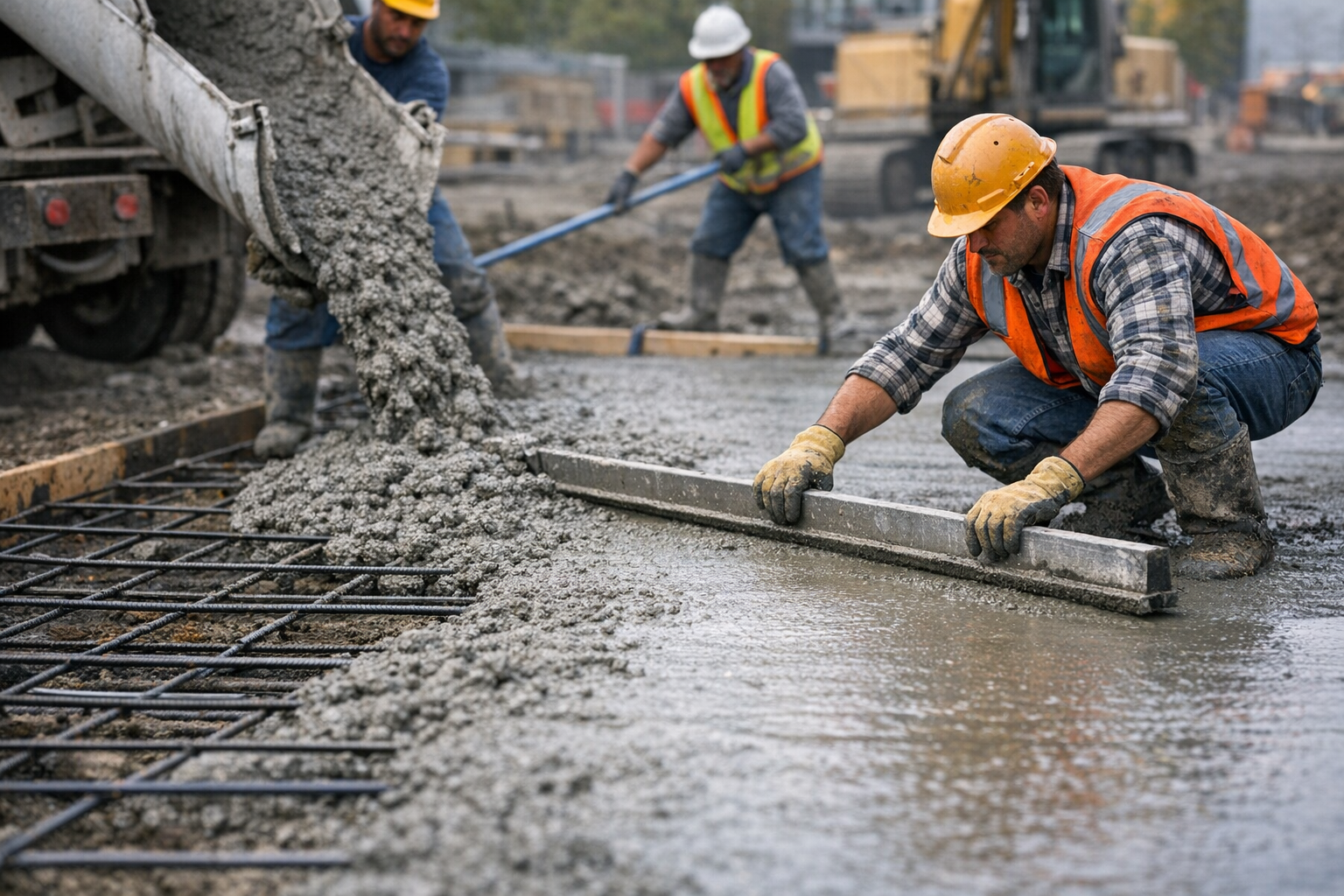
Concrete work is one of the most important parts of construction, whether you’re building a driveway, patio, foundation, sidewalk, or commercial slab. A concrete job may look simple from the outside, but getting strong, level, and long-lasting results takes planning, skill, and attention to detail. From the first site prep to the final curing process, every step affects the finished product.
What Is a Concrete Job?
A concrete job refers to any construction project that involves mixing, placing, finishing, repairing, or replacing concrete. Concrete is used because it is durable, versatile, and able to support heavy loads when installed correctly. Common concrete jobs include:
- Driveways
- Sidewalks
- Patios
- Garage floors
- Foundations
- Footings
- Retaining walls
- Concrete repair and resurfacing
Because concrete hardens into a solid structure, the quality of the installation matters just as much as the quality of the material itself.
Why Concrete Jobs Matter
Concrete is often the backbone of a structure. If a slab cracks, settles unevenly, or is poorly finished, it can create safety issues, drainage problems, and expensive repairs later. A well-done concrete job improves curb appeal, adds value to a property, and provides long-term durability.
For homeowners, concrete can improve outdoor living spaces and make a property easier to maintain. For businesses, concrete surfaces help support traffic, equipment, and daily operations. In both cases, proper installation helps prevent future problems and extends the life of the surface.
The Main Steps in a Concrete Job
1. Planning and Site Preparation
Every successful concrete project starts with planning. The area must be measured, marked, and evaluated for drainage, slope, and soil stability. Crews often remove grass, old concrete, rocks, or other debris before compacting the ground. Good site preparation helps reduce shifting and cracking after the concrete is poured.
2. Building Forms
Forms are temporary structures, usually made from wood or metal, that shape the concrete while it sets. They keep the concrete in place and help create clean edges and accurate dimensions. If the forms are not level or secure, the finished concrete may end up uneven or weak in certain spots.
3. Mixing and Pouring
Concrete is typically made from cement, water, sand, gravel, and sometimes additives. The mixture must have the right consistency for the job. Too much water can weaken the finished surface, while too little can make the concrete difficult to place and finish. Once mixed, the concrete is poured into the prepared forms and spread evenly.
4. Leveling and Finishing
After pouring, the surface is leveled with tools such as screeds and floats. Finishing may include smoothing, edging, or texturing the surface for better appearance and traction. Depending on the project, the finish may be sleek and polished or rougher for slip resistance. A quality finish improves both function and appearance.
5. Curing
Curing is one of the most important parts of any concrete job. Concrete does not simply “dry”; it chemically hardens over time. Proper curing allows the material to gain strength and reduces the chance of cracking. This process may involve keeping the surface moist, covering it with plastic, or using a curing compound. Skipping this step can lead to a weaker, less durable surface.
Common Types of Concrete Jobs
Different projects call for different techniques and levels of reinforcement. Some of the most common concrete jobs include:
- Residential slabs: Used for garages, patios, and home additions.
- Foundations: Provide structural support for homes and buildings.
- Flatwork: Includes driveways, walkways, and sidewalks.
- Decorative concrete: Adds style through stamping, staining, or coloring.
- Repair work: Fixes cracks, spalling, or surface damage.
Each type requires its own approach, tools, and finishing methods. A driveway, for example, must handle vehicle traffic, while a patio may focus more on appearance and comfort.
What Affects the Quality of a Concrete Job?
Several factors determine how well a concrete project will perform over time:
- Mix design: The ratio of materials affects strength and workability.
- Weather conditions: Extreme heat, cold, wind, or rain can interfere with placement and curing.
- Subgrade preparation: A poorly compacted base can lead to settling and cracking.
- Reinforcement: Rebar or wire mesh may be needed for added strength.
- Finishing technique: The way the surface is leveled and sealed influences appearance and durability.
Experienced contractors understand how these factors work together and adjust their process accordingly.
When to Hire a Professional for a Concrete Job
Small DIY projects can be manageable, but larger or more structural jobs often require professional help. If the project involves load-bearing support, precise grading, or a large pour, hiring an experienced contractor is usually the safer choice. Professionals bring the right equipment, knowledge, and crew size to complete the work efficiently.
It is especially important to hire a pro for foundations, structural slabs, or projects where drainage and long-term performance are critical. A mistake in these areas can be costly and difficult to fix later.
How to Choose the Right Concrete Contractor
Choosing the right contractor can make a big difference in the outcome of your project. Look for someone who is licensed, insured, and experienced with the type of job you need. Ask about previous work, check reviews, and request a written estimate that explains materials, labor, timeline, and any special features.
It is also wise to ask how the contractor handles curing, reinforcement, site preparation, and weather delays. Clear communication and a detailed plan are signs that the contractor takes quality seriously.
Conclusion
A concrete job is more than just pouring gray material into a form. It requires proper preparation, the right mix, skilled finishing, and careful curing to achieve lasting results. Whether you’re planning a driveway, foundation, or decorative patio, quality workmanship makes all the difference. With the right approach and the right contractor, concrete can provide strength, reliability, and value for years to come.