
Introduction
Concrete is one of the most widely used building materials in the world because it is strong, versatile, and durable. From sidewalks and driveways to foundations, slabs, and structural elements, the work of concrete plays a major role in construction projects of every size. Although concrete may seem simple at first glance, quality results depend on careful planning, proper materials, correct mixing, skilled placement, and good finishing practices.
Whether you are a homeowner preparing for a patio project or a contractor managing a large build, understanding concrete work helps you make better decisions and avoid costly mistakes. In this guide, we will walk through what concrete work involves, the main steps in the process, common applications, and the factors that affect strength and durability.
What Is Concrete Work?
Concrete work refers to the process of preparing, placing, shaping, finishing, and curing concrete for construction use. It includes everything from site preparation and formwork to reinforcement, pouring, leveling, and surface finishing. The quality of concrete work determines how well a structure performs over time.
Concrete itself is a mixture of cement, water, aggregates such as sand and gravel, and sometimes special admixtures that improve performance. When combined correctly, these ingredients create a material that can support heavy loads and withstand weather, wear, and time.
Main Steps in Concrete Work
1. Planning and Site Preparation
Every successful concrete project begins with proper planning. The area must be measured, cleared, and graded so the concrete can be placed on a stable base. Poor site preparation can lead to cracking, settling, and drainage problems later.
During this stage, contractors often check soil conditions, set elevations, and determine whether reinforcement or drainage improvements are needed. A well-prepared base helps ensure the finished concrete remains level and structurally sound.
2. Formwork and Reinforcement
Formwork is the temporary mold that holds the concrete in place while it is poured and cured. Forms must be strong, straight, and securely supported to prevent movement. The shape and accuracy of the final concrete surface depend heavily on the quality of the forms.
Reinforcement, such as steel rebar or wire mesh, is often used to improve strength and reduce the risk of cracking. While concrete is strong in compression, reinforcement helps it handle tension and structural stress more effectively.
3. Mixing and Pouring
Concrete must be mixed in the correct proportions to achieve the desired strength and workability. Too much water can weaken the mixture, while too little water can make it difficult to place and finish. For larger projects, ready-mix concrete is often delivered from a batch plant to ensure consistency.
Once the mix is ready, it is poured into the forms and placed as evenly as possible. Workers must act quickly and carefully, because concrete begins to set soon after mixing. Proper placement helps reduce air pockets and ensures full coverage around reinforcement and into corners of the formwork.
4. Leveling and Finishing
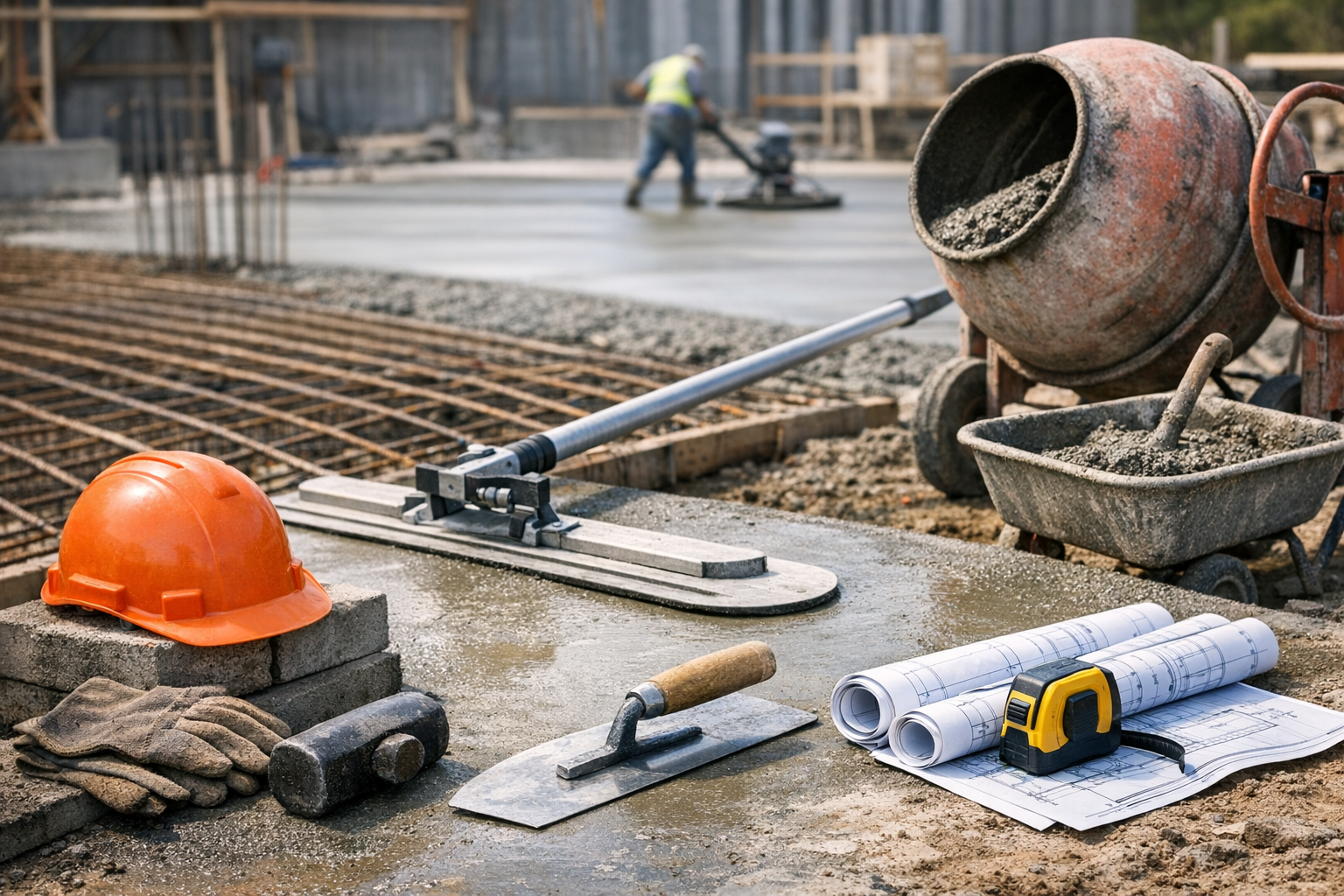
After pouring, the concrete is leveled using tools such as screeds and floats. This step removes excess material and creates a smooth, even surface. Depending on the project, the finish may be left plain, brushed for slip resistance, or troweled for a smoother appearance.
Finishing is both a technical and visual part of concrete work. The timing must be right, since finishing too early can trap water on the surface, while finishing too late can make the surface difficult to smooth. Skilled finishing improves appearance and performance.
5. Curing
Curing is one of the most important parts of concrete work, yet it is often overlooked. Concrete gains strength as it cures, and this process requires adequate moisture and temperature control. If concrete dries too quickly, it may crack or fail to develop full strength.
Common curing methods include keeping the surface moist, using curing blankets, or applying curing compounds. Proper curing can significantly improve durability, reduce shrinkage, and extend the life of the finished structure.
Common Types of Concrete Work
Concrete work covers many different applications in residential, commercial, and industrial construction. Some of the most common include:
- Foundations: Footings, slabs, and basement walls that support buildings.
- Driveways and sidewalks: Durable surfaces designed for regular use and exposure to the elements.
- Patios and outdoor spaces: Decorative or functional surfaces for homes and businesses.
- Floors and slabs: Interior and exterior slabs used in warehouses, garages, and homes.
- Retaining walls and structural elements: Load-bearing features that support soil or other structures.
Each type of project has its own requirements for thickness, reinforcement, finish, and curing. That is why experience and attention to detail matter so much in concrete construction.
Factors That Affect Concrete Quality
Several factors influence the strength, appearance, and long-term performance of concrete work. Understanding these variables helps prevent problems and improve results.
- Water-cement ratio: A key factor in strength and durability. Too much water weakens the mix.
- Weather conditions: Heat, cold, wind, and rain can affect setting and curing.
- Soil stability: Unstable ground can cause cracking or uneven settlement.
- Workmanship: Proper placement, finishing, and curing are essential.
- Materials: Quality cement, aggregates, and admixtures improve performance.
Concrete can last for decades when these factors are managed correctly. On the other hand, rushing the process or ignoring basic requirements often leads to visible damage and expensive repairs.
Benefits of Professional Concrete Work
Hiring skilled professionals for concrete work offers several advantages. Experienced crews know how to prepare the site, mix and place concrete efficiently, and handle challenges such as weather changes or difficult layouts. They also understand structural requirements and building codes.
Professional concrete work often results in a better finish, fewer cracks, improved drainage, and longer-lasting performance. For many projects, the cost of quality workmanship is far less than the cost of fixing problems later.
Conclusion
The work of concrete is more than simply pouring a gray mixture into a form. It is a careful process that requires planning, skill, and attention at every stage. From site preparation and reinforcement to finishing and curing, each step contributes to the strength and durability of the final result. By understanding how concrete work is done, property owners and builders can achieve safer, longer-lasting, and better-looking structures.