
Doing Concrete Work: A Practical Guide for Homeowners and DIYers
Concrete work is one of the most useful skills in home improvement and construction. Whether you are pouring a small slab for a shed, setting posts, or repairing a cracked walkway, getting the basics right makes a big difference in how long the finished project lasts. Concrete may seem simple at first glance, but good results depend on preparation, timing, and careful finishing.
If you are planning to take on a concrete project, it helps to understand the full process before you begin. From choosing materials to curing the finished surface, each step plays a role in strength, appearance, and durability. Here is a clear guide to doing concrete work the right way.
What Concrete Work Involves
Concrete work refers to any task that involves mixing, placing, shaping, and finishing concrete. It can include small projects such as sidewalks, steps, patios, and fence posts, as well as larger structural work like driveways and foundations. While the scale may change, the basic process stays the same.
Most concrete projects require a mix of planning and physical effort. You need the right materials, a prepared site, and enough time to work before the concrete begins to set. Weather also matters, since temperature and moisture can affect the final result.
Planning Before You Start
Good concrete work starts long before the first bag of mix is opened. Planning helps prevent waste, delays, and uneven surfaces.
Choose the Right Project Scope
Begin by deciding exactly what you want the concrete to do. Are you building a patio, repairing a crack, or installing a footing? The purpose of the project determines the thickness, reinforcement, and finish required. A decorative walkway needs a different approach than a load-bearing slab.
Measure and Mark the Area
Accurate measurements are essential. Mark the area clearly with stakes, string, spray paint, or landscape paint. Check your dimensions twice before you begin excavating or building forms. Small mistakes at this stage can lead to costly problems later.
Check Local Conditions and Requirements
Before starting, it is smart to review local building codes or permit requirements. Some projects, especially larger slabs and structural work, may need approval. It is also important to consider the ground conditions. Soft soil, poor drainage, or freeze-thaw cycles may require extra preparation.
Materials and Tools You Will Need
Concrete work is much easier when you gather everything beforehand. Common materials include ready-mix concrete or a sand, gravel, and cement blend, depending on the project. You may also need rebar or wire mesh for reinforcement, form boards, stakes, plastic sheeting, and curing compound.
Typical tools include a shovel, wheelbarrow or mixing tub, hoe or mixing paddle, level, screed board, trowel, float, and safety gear such as gloves, eye protection, and boots. For larger jobs, renting a concrete mixer or vibrator can save time and improve results.
Preparing the Site
Site preparation is one of the most important parts of doing concrete work. A well-prepared base helps prevent cracking, sinking, and water damage.
Excavate and Compact the Base
Remove grass, roots, loose soil, and debris from the work area. Dig to the proper depth based on your project. Then add a compacted base layer, often made of crushed stone or gravel. This provides drainage and a stable foundation for the concrete.
Build Strong Forms
Forms hold the concrete in place while it sets. Use straight, sturdy boards and secure them with stakes so they do not shift under pressure. Check that the forms are level or properly sloped, depending on the design. A poor form can lead to an uneven surface or weak edges.
Add Reinforcement if Needed
Many concrete projects benefit from reinforcement. Rebar or wire mesh helps control cracking and adds strength. Place reinforcement so it sits in the middle of the slab, not on the ground. Small supports or chairs can help keep it in the right position.
Mixing and Placing Concrete
Once the site is ready, concrete must be mixed and placed efficiently. Timing matters because concrete begins setting soon after water is added.
Mix to the Right Consistency
Follow the product instructions carefully. Too much water weakens concrete and can cause cracking, while too little makes it hard to place and finish. The ideal mix is workable but not soupy. Consistency should be even throughout the batch.
Place Concrete Quickly and Evenly
Pour the concrete into the forms and distribute it evenly with a shovel or rake. Work from one end to the other to avoid trapping air pockets or creating gaps. If the project is large, plan enough help so the mix can be placed before it starts to stiffen.
Level and Screed the Surface
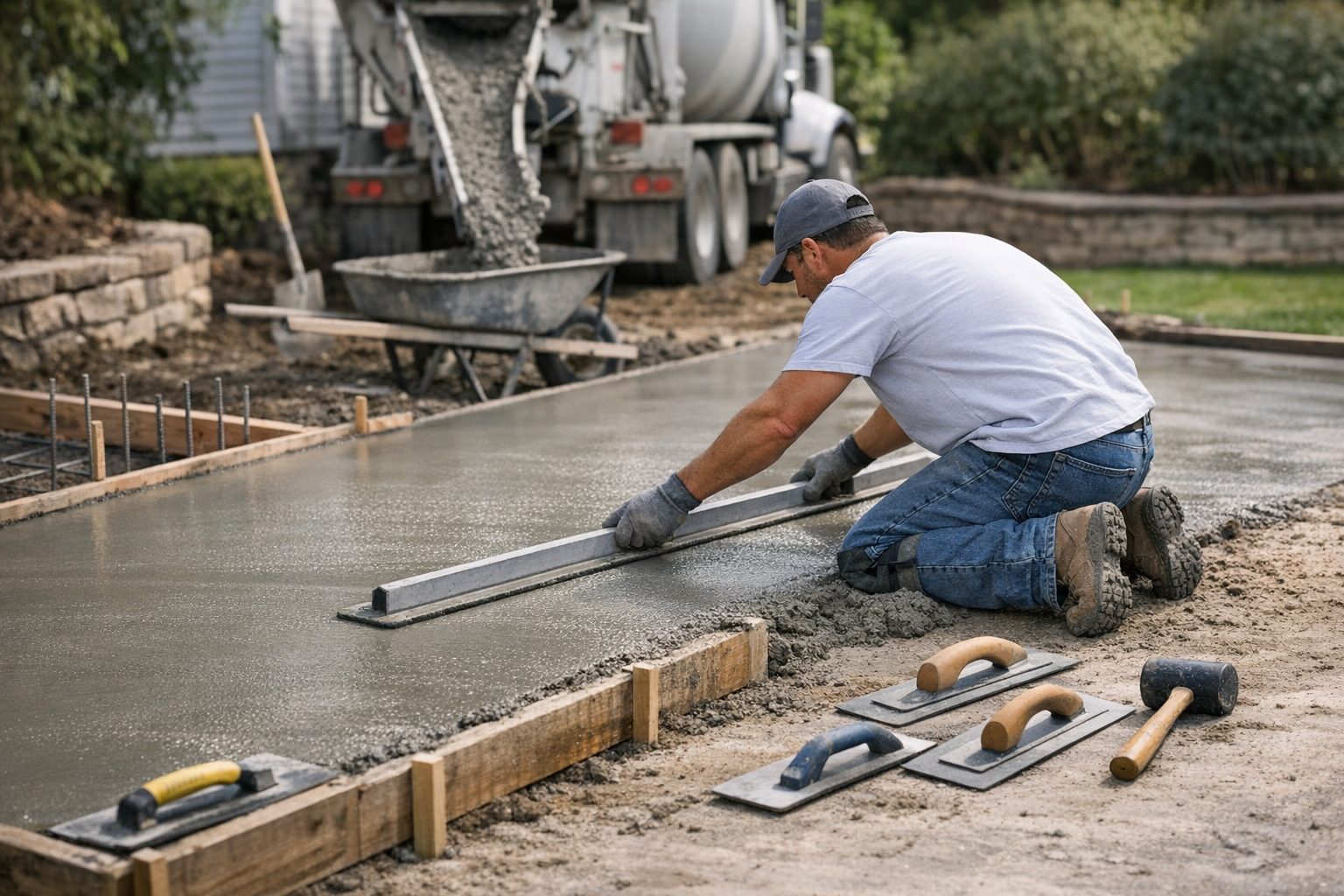
Use a straight board to screed across the top of the forms, removing excess material and leveling the surface. This step helps establish the final height. After screeding, use a float to smooth the surface and bring fine paste to the top.
Finishing the Surface
Finishing gives the concrete its final appearance and helps determine how well it performs. The best finish depends on the intended use of the surface.
Choose the Right Finish
A broom finish is common for outdoor surfaces because it adds traction. A smooth trowel finish may be better for indoor slabs or decorative areas. For patios and walkways, a light texture often balances appearance and safety.
Create Control Joints
Concrete naturally shrinks as it cures, which can lead to random cracking. Control joints give the slab a planned place to crack if movement occurs. These joints should be cut or tooled at regular intervals while the concrete is still workable.
Curing and Protecting the Concrete
Curing is the process that allows concrete to gain strength. Many people rush this step, but proper curing is essential for durability.
Keep the concrete moist and protected during the first several days after placement. Depending on conditions, this may involve misting the surface, covering it with plastic, or applying a curing compound. Avoid heavy traffic, freezing temperatures, and rapid drying. In warm or windy weather, concrete can dry too quickly and develop surface flaws.
Common Mistakes to Avoid
Even experienced DIYers can make errors when doing concrete work. One of the most common mistakes is poor site preparation, which leads to settling and cracking. Another is adding too much water, which weakens the mix. Rushing the finishing process, skipping reinforcement, or failing to cure properly can also shorten the life of the project.
It is also important to avoid working in extreme weather without a plan. Hot, dry conditions can speed up setting, while cold weather can slow curing and cause damage if concrete freezes too soon.
When to Call a Professional
Small concrete projects can often be handled by a confident DIYer, but some jobs are better left to professionals. Large slabs, foundations, structural repairs, and projects with drainage or code concerns may require expert knowledge and equipment. If the project needs precise grading, reinforcement design, or special finishes, hiring a contractor can save time and prevent expensive mistakes.
Conclusion
Doing concrete work successfully comes down to preparation, patience, and attention to detail. When you plan carefully, use the right materials, and protect the concrete as it cures, you set the stage for a strong and long-lasting result. Whether you are tackling a small repair or a larger project, understanding each step helps you work with confidence and avoid common problems.