Concrete Over: What It Means and Why It Matters
When people talk about concrete over an existing surface, they are usually referring to a concrete overlay or a new layer of concrete applied on top of old concrete. This approach is popular because it can restore worn surfaces, improve appearance, and extend the life of driveways, patios, floors, and walkways without the cost of full replacement.
A concrete overlay can solve several common problems at once: surface cracks, discoloration, minor spalling, and outdated finishes. In many cases, it is a faster and more budget-friendly alternative to tearing out and replacing the slab. Still, success depends on proper preparation, the right materials, and choosing a solution that matches the condition of the existing concrete.
Benefits of Installing Concrete Over Existing Concrete
One of the biggest advantages of putting concrete over old concrete is efficiency. Instead of removing and hauling away the original slab, you use the existing structure as a base. This can reduce labor, shorten the project timeline, and minimize disruption to your home or business.
Other benefits include:
- Improved appearance: A fresh overlay can create a clean, modern look.
- Cost savings: Overlays are often less expensive than full replacement.
- Surface protection: A new layer can shield the old slab from further wear.
- Customization: Overlays can be stained, stamped, textured, or polished.
- Faster project completion: Many overlay projects can be finished in less time than demolition and repouring.
For property owners who want both function and curb appeal, concrete over an existing slab can be a smart middle ground between simple patching and complete replacement.
When Is Concrete Over a Good Option?
Concrete over existing concrete works best when the original slab is structurally sound. Small cracks, surface wear, light settling, and cosmetic issues can often be addressed with an overlay. If the slab is stable and mostly level, the new layer can bond well and provide long-lasting results.
This option is commonly used for:
- Driveways with surface damage
- Patios that need a fresh finish
- Garage floors with moderate wear
- Sidewalks and walkways with cosmetic flaws
- Commercial floors needing a renewed surface
However, concrete over is not ideal for every situation. If the slab has major structural problems, severe heaving, deep cracks, or drainage issues, an overlay may only hide the symptoms temporarily. In those cases, repair or replacement may be the better long-term choice.
Preparing the Surface Before Applying Concrete Over
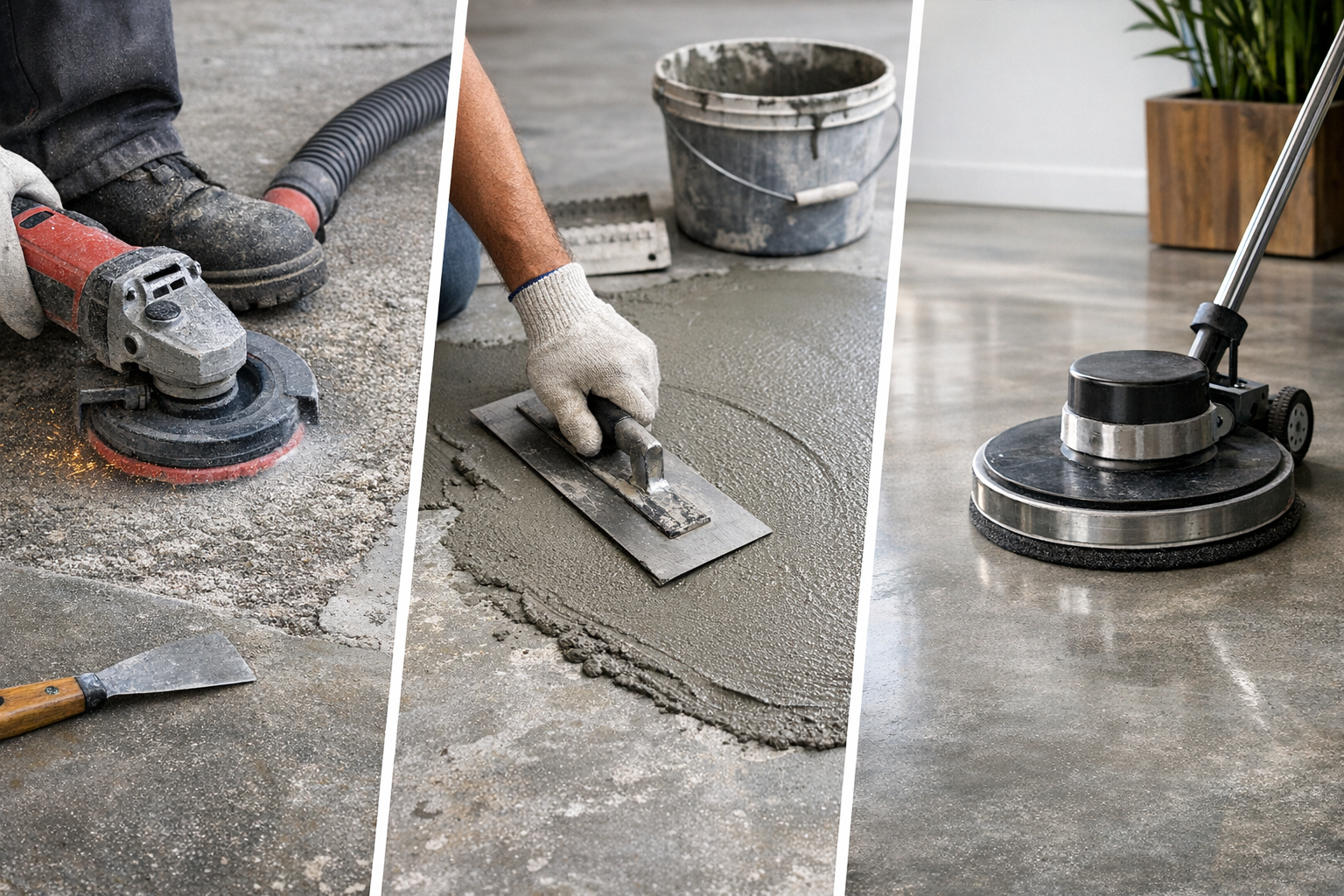
Surface preparation is the most important part of any overlay project. Even the best material will fail if the base is dirty, loose, or unstable. Proper preparation helps the new layer bond to the old concrete and reduces the risk of future cracking or peeling.
Before applying an overlay, the existing surface should be:
- Clean: Remove dirt, grease, paint, sealers, and debris.
- Sound: Patch large cracks, chips, or weak areas.
- Roughened: Mechanical grinding or shot blasting often improves adhesion.
- Dry and stable: Excess moisture can weaken the bond.
In many cases, a bonding agent is also used to help the new concrete adhere to the old slab. Skipping these steps may lead to delamination, which is when the overlay separates from the base concrete.
Types of Concrete Overlays
Not all overlays are the same. The type you choose depends on the current surface condition, your design goals, and how much thickness the project requires.
Thin Microtoppings
Microtoppings are very thin layers used mainly for cosmetic improvement. They are ideal for surfaces that need a decorative finish but do not require major resurfacing. These overlays can be textured, colored, or polished for a clean appearance.
Self-Leveling Overlays
Self-leveling products are designed to spread evenly and create a smoother surface. They are often used for interior floors where a flat, uniform finish is important. These overlays can correct minor irregularities and prepare a slab for staining or polishing.
Stamped and Decorative Overlays
If you want your concrete to mimic stone, brick, tile, or other textures, stamped overlays are a great option. These systems combine resurfacing with design, making them especially popular for patios, pool decks, and entryways.
Thicker Bonded Overlays
In some cases, a thicker bonded overlay is used to provide more durability and cover more visible damage. These are best for surfaces that need both structural improvement and a fresh finish.
Common Problems to Avoid
Although concrete over existing concrete can be highly effective, several common mistakes can shorten its lifespan. The most frequent issue is poor surface preparation. If the base is contaminated or unstable, the overlay may fail early.
Other problems include:
- Applying the wrong product: Not every overlay is designed for every surface or thickness.
- Ignoring movement: Existing expansion joints and control joints must be addressed properly.
- Overlooking moisture: Trapped moisture can cause bubbles, debonding, or staining.
- Expecting it to fix structural damage: Overlays improve surfaces, but they do not repair major slab failure.
Planning carefully and working with a knowledgeable contractor can help avoid these issues and improve the final result.
Maintenance Tips for a Long-Lasting Finish
Once the overlay is in place, regular maintenance helps preserve its appearance and performance. A well-maintained surface can last many years and continue to look attractive.
Helpful maintenance steps include:
- Cleaning regularly with mild soap and water
- Avoiding harsh chemicals that can damage the finish
- Resealing decorative overlays as recommended
- Repairing chips or cracks early
- Keeping heavy objects from dragging across the surface
For outdoor areas, proper drainage also matters. Standing water can gradually weaken even a good overlay, so make sure the slab drains correctly.
Conclusion
Concrete over an existing slab can be an excellent way to refresh damaged or outdated surfaces without the expense of full replacement. When the base is solid, the preparation is thorough, and the right overlay is selected, the result can be attractive, durable, and cost-effective. Whether you are updating a driveway, patio, or interior floor, a well-planned concrete overlay can give old concrete a second life.