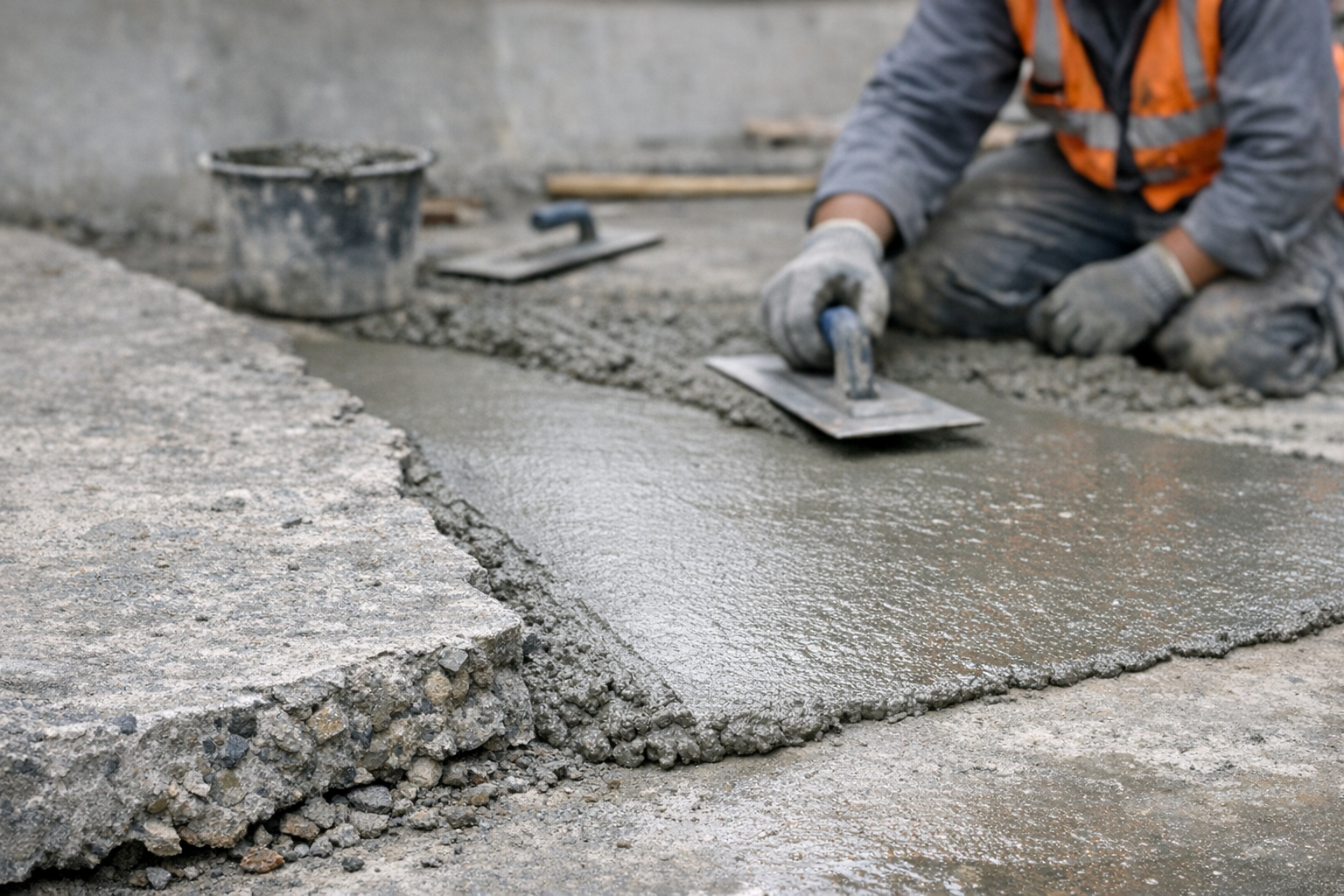
Concrete on concrete is a common project in both residential and commercial construction. Whether you are pouring a new slab over an existing one, applying a concrete overlay, or patching damaged areas, the success of the job depends on proper preparation and the right bonding approach. Concrete can perform well on top of concrete, but only when the surface is sound, clean, and ready to accept the new material.
What Does Concrete on Concrete Mean?
The phrase concrete on concrete usually refers to placing a new layer of concrete over an existing concrete surface. This can happen in several situations:
- Repairing cracked or worn slabs
- Leveling uneven floors or driveways
- Installing a decorative overlay
- Adding thickness to a slab for structural or functional reasons
In some cases, the new concrete is bonded directly to the old surface. In other cases, it is separated by a membrane, insulation, or reinforcement system. The right method depends on the condition of the existing slab and the purpose of the project.
Can You Pour Concrete Over Existing Concrete?
Yes, you can pour concrete over existing concrete, but it is not as simple as placing fresh mix on top and letting it harden. New concrete does not naturally bond well to old concrete unless the surface is properly prepared. If the existing slab is unstable, cracked, dirty, or moving, the new layer may fail by separating, cracking, or flaking.
For a successful application, the old concrete should be:
- Structurally sound
- Free of dust, grease, paint, sealers, and loose particles
- Rough enough to allow mechanical bonding
- Properly moistened or treated with a bonding agent, depending on the method used
If the existing concrete is badly damaged or continues to shift, replacement may be a better long-term solution than overlaying it.
When Is Concrete on Concrete a Good Idea?
Using concrete on concrete makes sense in several situations. It is often an efficient way to extend the life of a slab without removing the entire structure.
Repairing Surface Damage
Light to moderate wear, minor spalling, and shallow cracks can often be repaired with a bonded concrete overlay or patching compound. This is common for garage floors, patios, sidewalks, and warehouse surfaces.
Raising the Surface Level
If a floor or slab needs to be built up for drainage, leveling, or a new finish, a new concrete layer may be applied over the existing base. In these cases, proper thickness and reinforcement are important to avoid future cracking.
Improving Appearance
Decorative overlays can refresh old concrete without full replacement. Homeowners and property managers often use this method to create a cleaner, more modern look with stamped, stained, or textured finishes.
How to Prepare Existing Concrete for a New Layer
Preparation is the most important part of any concrete-on-concrete project. Skipping prep almost always leads to poor performance.
1. Clean the Surface Thoroughly
Remove dirt, oil, curing compounds, paint, sealers, and any other contaminants. Pressure washing, degreasing, and grinding are common methods. The goal is to expose a clean, receptive surface.
2. Repair Major Defects
Large cracks, potholes, hollow spots, and broken edges should be repaired before applying a new layer. If the base is failing, the overlay will likely fail too.
3. Create a Bonding Profile
New concrete needs something to grip. Surface profiling through grinding, shot blasting, or scarifying creates the texture needed for a stronger bond. A smooth slab is usually too slick for reliable adhesion.
4. Apply a Bonding Agent if Needed
Some projects require a bonding slurry, epoxy, or latex-modified agent to help the new mix adhere to the old surface. The product should match the project type and manufacturer instructions.
5. Control Moisture
Concrete can absorb or release moisture, which affects bonding. Some methods require pre-wetting the slab to a damp condition, while others call for a dry surface. Always follow the specifications for the chosen overlay system.
Common Problems with Concrete on Concrete
Even when the project looks straightforward, several issues can affect the outcome.
Bond Failure
If the new layer does not bond properly, it may separate from the old slab. This can happen because of contamination, poor surface prep, or using the wrong product.
Cracking
Concrete shrinks as it cures, so cracking can occur if the layer is too thin, too thick, or not reinforced correctly. Movement in the existing slab can also transfer cracks to the new surface.
Height and Transition Issues
Adding a new layer changes the finished elevation. This can create problems at doorways, drains, thresholds, and adjoining surfaces if the height is not planned carefully.
Drainage Problems
When concrete is added over concrete outdoors, poor slope design can lead to standing water. Water pooling shortens the life of the slab and increases the risk of surface damage.
Best Uses for Concrete Overlays
Concrete overlays are one of the most practical ways to use concrete on concrete. They work well for surfaces that are sound but unattractive, worn, or slightly uneven. Common applications include:
- Patios
- Garage floors
- Pool decks
- Walkways
- Retail or commercial floors
For thin decorative systems, specialized overlay products are often used instead of standard concrete mix. These products are designed for better adhesion, smoother finishes, and improved durability in thin sections.
When to Avoid Pouring Concrete Over Concrete
There are times when putting concrete on concrete is not the right choice. Avoid overlaying if the existing slab is:
- Severely cracked or crumbling
- Heaving due to soil movement
- Continuously wet or poorly drained
- Covered with contamination that cannot be removed
- Too unstable to support a new layer
In these cases, the best solution may be demolition, replacement, or a more specialized repair approach.
Final Thoughts
Concrete on concrete can be a smart, cost-effective solution when done correctly. The key is to evaluate the existing slab carefully, prepare it properly, and choose the right overlay or bonding method for the job. With good planning and the right materials, a new concrete layer can restore strength, improve appearance, and extend the life of the surface for years to come.