Introduction
Your driveway does more than provide a place to park. It shapes your home’s curb appeal, supports daily traffic, and helps protect your property from water damage and wear. Over time, even the best driveway can crack, fade, or settle unevenly. That is where professional driveway services come in.
Whether you are dealing with small surface damage or considering a full replacement, understanding your options can help you make a smart, cost-effective choice. This guide covers the most common driveway services, when each one makes sense, and how to choose the right solution for your property.
What Are Driveway Services?
Driveway services include the installation, repair, maintenance, resurfacing, and replacement of driveways made from materials such as asphalt, concrete, pavers, gravel, and more. These services are designed to restore function, improve appearance, and extend the life of your driveway.
Some projects are simple, such as sealing a surface or filling cracks. Others are more involved and may require excavation, grading, drainage correction, or a complete rebuild. A reliable contractor can assess the condition of your driveway and recommend the best approach based on the type of damage, the age of the surface, and your budget.
Common Types of Driveway Services
Driveway Installation
If you are building a new home or replacing an old driveway entirely, installation is the first step. This service typically includes site preparation, grading, base material installation, and laying the chosen driveway surface. Proper installation is crucial because a well-built base helps prevent settling, cracking, and drainage problems later on.
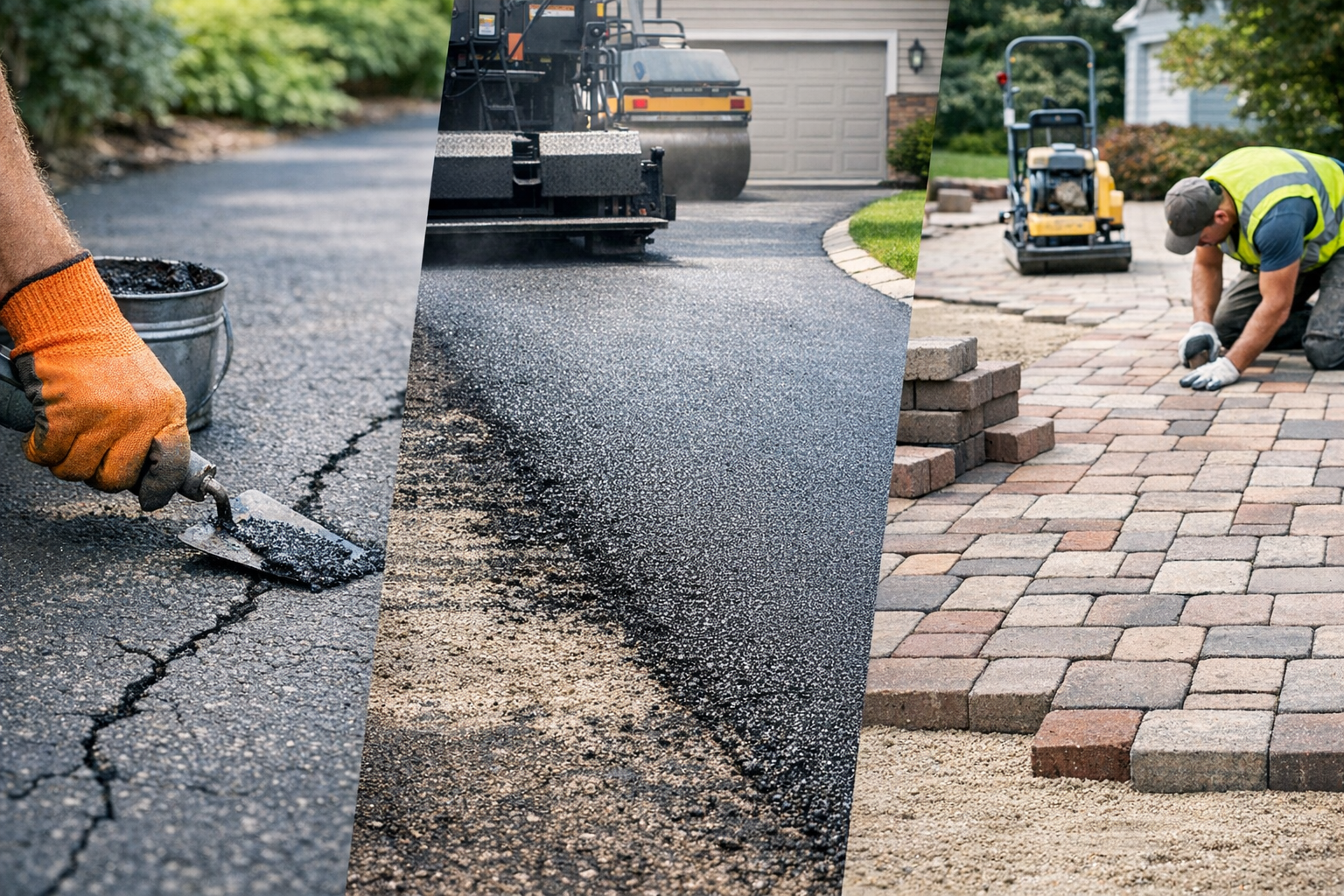
Material choice is an important part of installation. Asphalt is durable and cost-effective, concrete offers a clean and long-lasting finish, and pavers provide a decorative look with easy spot repairs. Gravel is often the most affordable option, especially for rural or lower-traffic properties.
Driveway Repairs
Repair services address specific problems without replacing the entire driveway. Common repairs include patching potholes, filling cracks, leveling sunken sections, and fixing edge breakdown. These repairs are ideal when the damage is limited and the underlying structure is still in decent condition.
Addressing damage early can prevent bigger issues. For example, a small crack can allow water to seep in, freeze, and expand, turning a minor problem into a major one. Timely repairs can save money and keep your driveway safer and more attractive.
Driveway Resurfacing
Resurfacing, sometimes called overlaying, involves placing a new surface layer over the existing driveway. This service works well when the base is still stable but the top layer has become worn, stained, or lightly damaged. It can give your driveway a fresh appearance without the cost of a full replacement.
Resurfacing is commonly used on asphalt driveways, though some concrete driveways can also be resurfaced depending on the condition of the slab. It is a smart option when the driveway has surface-level flaws but does not have major structural failure.
Driveway Sealing
Sealing is a preventative service that protects the driveway surface from water, UV rays, oil, and everyday wear. Asphalt driveways benefit especially from periodic sealing, which helps maintain flexibility and reduces the risk of cracking and oxidation. Concrete driveways may also benefit from sealers that help resist stains and moisture penetration.
Regular sealing can extend the lifespan of your driveway and keep it looking better for longer. It is usually recommended every few years, depending on the material and climate conditions.
Driveway Replacement
When a driveway has widespread cracking, drainage issues, or severe structural failure, replacement may be the best choice. This service involves removing the old driveway and installing a new one from the ground up. While it is the most expensive option, it also provides a clean slate and a chance to correct long-standing problems.
Replacement is often the right solution if the driveway is beyond repair or if repeated patching has become too frequent and costly. It is also a good opportunity to upgrade the layout, improve drainage, or choose a more durable material.
Signs You May Need Driveway Services
Some driveway problems are easy to spot, while others develop gradually. Common warning signs include visible cracks, potholes, pooling water, sinking areas, loose gravel, fading color, and crumbling edges. If vehicles begin to bottom out or water runs toward your garage, the problem may be more serious than it appears.
It is a good idea to schedule an inspection if you notice your driveway is no longer draining properly or if damage is spreading from one season to the next. Catching issues early can help you avoid larger repairs and protect surrounding structures.
How to Choose the Right Driveway Service
The right service depends on the condition of your driveway, the type of material, and your long-term goals. If the damage is minor and localized, repairs may be enough. If the surface is worn but the base is solid, resurfacing could be the most practical choice. If the driveway is structurally unsound, replacement may offer the best value over time.
It is also wise to consider how much maintenance you are willing to handle, the look you want for your property, and how long you plan to stay in your home. A contractor can evaluate the driveway and help you compare short-term savings with long-term performance.
What to Expect From a Professional Contractor
A professional driveway contractor should begin with a thorough assessment of the site. This often includes checking the base, drainage, slope, material condition, and any signs of hidden damage. From there, they should explain your options clearly and provide a written estimate.
Good contractors also use quality materials, proper equipment, and proven installation methods. They should be willing to answer questions about timelines, maintenance, and warranty coverage. Choosing a qualified professional helps ensure the work is safe, durable, and built to last.
Maintaining Your Driveway After Service
Once your driveway has been repaired, resurfaced, or replaced, regular maintenance will help protect your investment. Keep the surface clean, remove standing water when possible, and address small cracks quickly. Avoid heavy loads on newly installed driveways until the material has fully cured.
For asphalt driveways, periodic sealcoating is a key part of maintenance. For concrete, prompt crack repair and proper drainage can help prevent premature deterioration. No matter the material, routine care can significantly extend the life of your driveway.
Conclusion
Driveway services cover everything from simple repairs to full replacement, giving homeowners flexible ways to restore safety, appearance, and durability. By understanding the condition of your driveway and choosing the right service at the right time, you can protect your property and avoid unnecessary costs. A well-maintained driveway is a small investment that delivers lasting value.