Introduction
Job masonry is a skilled trade that blends craftsmanship, physical endurance, and attention to detail. Masonry workers build and repair structures made from brick, block, stone, and concrete, helping shape everything from homes and fireplaces to retaining walls and commercial buildings. If you are considering a hands-on career with strong demand and visible results, masonry can be a rewarding path.
This guide explains what job masonry involves, the main types of work, the skills you need, how to get started, and what to expect on the job. Whether you are exploring a first trade career or looking to understand the profession better, this overview will give you a solid foundation.
What Is Job Masonry?
Job masonry refers to the work performed by masons, who construct, repair, and maintain structures using materials such as brick, concrete block, natural stone, and mortar. The job can range from decorative projects to structural work, and it often requires both technical skill and physical strength. Masons may work on residential, commercial, or industrial sites, depending on their specialty.
Some of the most common tasks in job masonry include laying bricks, mixing mortar, cutting stone, installing block walls, repairing damaged surfaces, and reading construction plans. In many cases, masons also collaborate with general contractors, carpenters, and laborers to complete projects on schedule.
Common Types of Masonry Work
Brick Masonry
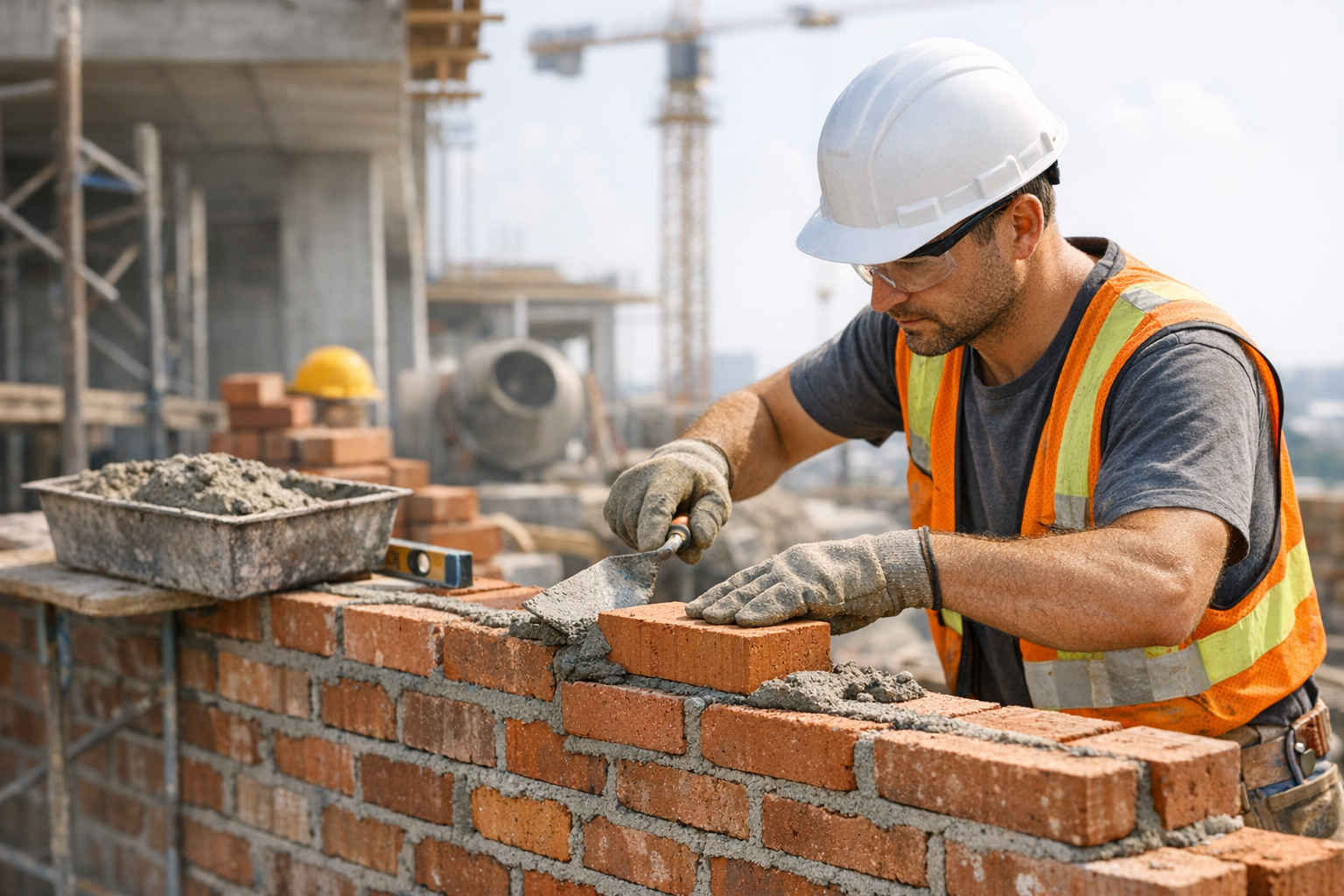
Brick masonry is one of the most recognizable forms of the trade. Brick masons install bricks in patterns using mortar to create walls, facades, chimneys, and decorative features. Accuracy matters because clean lines, consistent joints, and proper spacing all affect both appearance and durability.
Stone Masonry
Stone masonry involves shaping and setting natural or manufactured stone. This work is often used for exterior walls, patios, garden features, fireplaces, and restoration projects. Because stone can vary in size, shape, and texture, this type of masonry often requires a strong eye for detail and design.
Concrete Block Masonry
Concrete blocks are widely used in foundations, basements, retaining walls, and commercial construction. Block masonry is often valued for its speed, strength, and cost-effectiveness. Masons working with block must know how to align units properly and reinforce structures when required.
Restoration and Repair
Many masonry professionals specialize in restoration work, repairing aging walls, repointing mortar joints, replacing damaged bricks, and preserving historic structures. This type of work demands precision and respect for original materials and methods.
Skills Needed for a Masonry Job
A successful masonry career requires a mix of technical ability and practical soft skills. While some skills are learned on the job, others are essential from the start.
- Physical stamina: Masonry is labor-intensive and often involves lifting, bending, standing, and working outdoors in different weather conditions.
- Hand-eye coordination: Accurate placement of materials is key to creating level, durable structures.
- Math and measurement skills: Masons use measurements, angles, and calculations to ensure proper alignment and material use.
- Problem-solving: Site conditions can change, so masons need to adjust quickly and make sound decisions.
- Attention to detail: Small mistakes in mortar spacing, alignment, or cutting can affect the final result.
- Teamwork: Most masonry projects require close coordination with others on the job site.
Safety awareness is also critical. Masons use tools, scaffolding, and heavy materials, so following proper procedures helps prevent injuries and keeps the job running smoothly.
How to Get Started in Job Masonry
There are several ways to enter the masonry field, and many workers begin with an apprenticeship or entry-level labor position. These opportunities allow new workers to learn from experienced masons while earning a paycheck.
1. Finish High School or Earn an Equivalent Credential
Although a college degree is not usually required, a high school diploma or GED can help you qualify for training programs and apprenticeships. Classes in math, shop, and construction-related subjects can be especially useful.
2. Apply for an Apprenticeship
Apprenticeships are one of the best ways to learn masonry. They typically combine classroom instruction with hands-on experience. Apprentices learn how to read blueprints, mix materials, use tools, and perform masonry tasks safely and correctly.
3. Start in an Entry-Level Labor Role
Some workers begin as laborers on masonry crews. This path can help you gain site experience, understand tools and materials, and prove your reliability before moving into more advanced tasks.
4. Build Your Skills Over Time
As you gain experience, you can take on more complex jobs such as layout work, restoration, decorative masonry, or supervision. Many masons eventually specialize in a niche that matches their strengths and interests.
Tools and Equipment Used in Masonry
Job masonry depends on a range of hand tools and equipment. Common items include trowels, levels, jointers, hammers, chisels, masonry saws, plumb lines, and measuring tools. On larger projects, workers may also use mixers, scaffolding, and power cutters.
Knowing how to use and maintain these tools is part of being a dependable mason. Clean, well-kept tools make work more accurate and efficient, while proper handling reduces the risk of damage or injury.
Work Environment and Career Outlook
Masonry work is often physically demanding, but many people find it satisfying because they can see the results of their efforts every day. Jobs may take place on construction sites, in residential neighborhoods, at commercial properties, or at restoration sites. Work schedules can vary depending on project timelines, weather, and seasonal demand.
The career outlook for masonry can be encouraging, especially for workers who build strong skills and gain experience in specialized areas. Demand often comes from new construction, renovation, infrastructure projects, and the ongoing need to repair aging structures. Skilled masons who are reliable, efficient, and detail-oriented may find steady opportunities over time.
Tips for Success in a Masonry Career
If you want to do well in job masonry, focus on consistency and craftsmanship. Show up prepared, follow safety rules, and pay attention to instructions. Learning how to read plans, estimate materials, and work efficiently can also help you stand out.
It is also a good idea to keep improving your skills. Ask questions, observe experienced workers, and practice techniques carefully. The more knowledge and experience you gain, the more valuable you become on the job site.
Conclusion
Job masonry is a hands-on career that offers stability, skill development, and the satisfaction of building lasting structures. From brick and stone work to concrete block and restoration, masonry covers a wide range of opportunities for people who enjoy practical work and craftsmanship. With training, dedication, and attention to detail, a masonry job can lead to a strong and rewarding career.