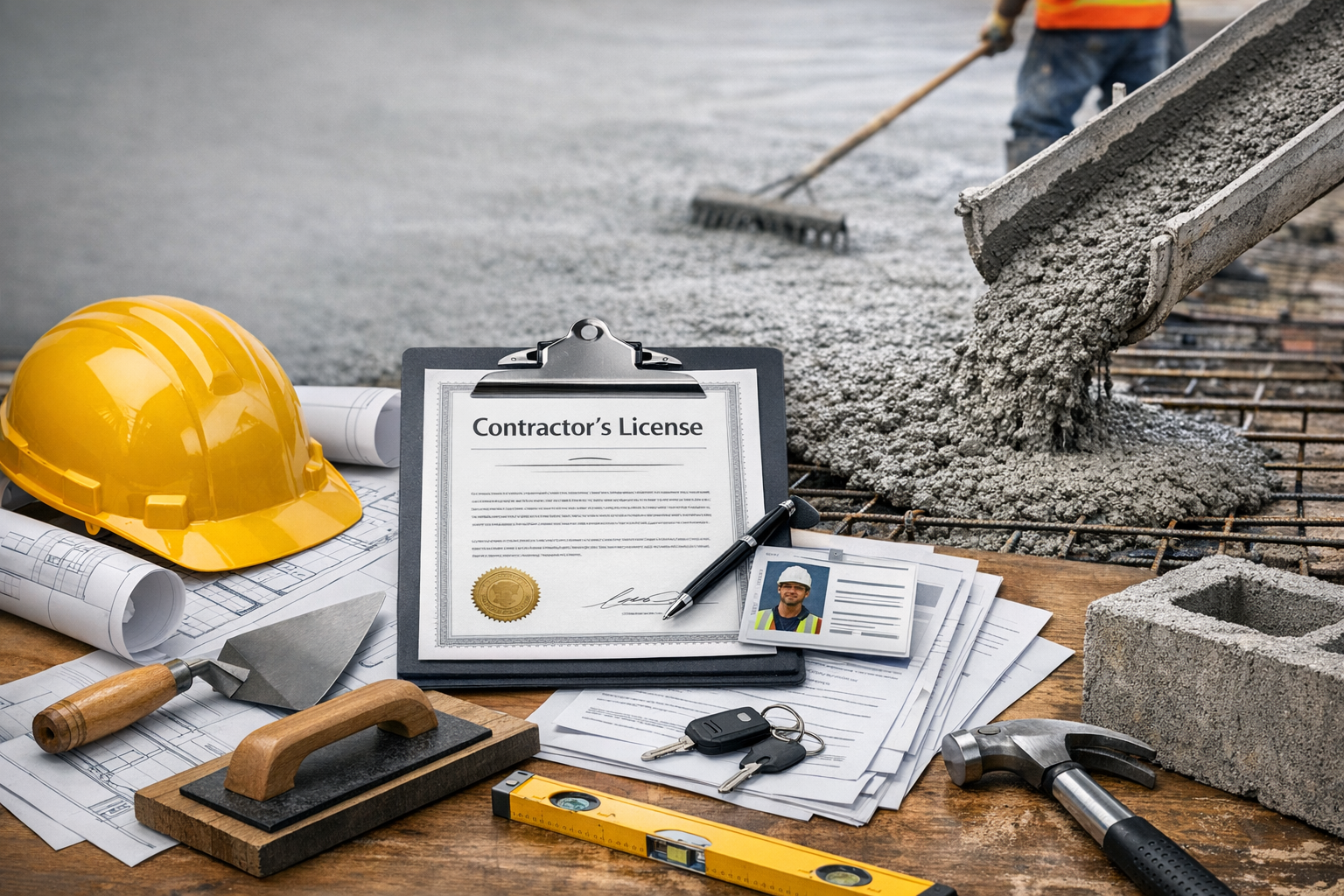
If you work in construction, contracting, or concrete installation, understanding a concrete license is essential. A concrete license shows that a contractor or business has met the legal, technical, and often financial requirements needed to perform concrete work in a specific state or city. While the exact rules vary by location, having the proper license helps protect customers, improves credibility, and keeps your business operating legally.
Whether you’re pouring driveways, laying foundations, building sidewalks, or handling commercial slab work, knowing how concrete licensing works can help you avoid costly penalties and win more jobs.
What Is a Concrete License?
A concrete license is a type of contractor license that authorizes an individual or company to perform concrete-related construction work. Depending on where you operate, this may fall under general contracting, specialty contracting, or a specific concrete contractor classification.
Concrete work can include a wide range of services such as:
- Pouring and finishing concrete slabs
- Installing driveways, patios, and walkways
- Repairing cracks, surfaces, and structural damage
- Constructing foundations and footings
- Forming and reinforcing concrete structures
Some states require a dedicated concrete license, while others require a general contractor’s license with concrete work listed as a permitted specialty. Because requirements differ, always check your state and local licensing board before beginning work.
Why a Concrete License Matters
Getting licensed is more than just a formality. It can affect your legal standing, business reputation, and growth opportunities.
1. Legal Compliance
In many areas, performing concrete work without a license is illegal. Unlicensed work can lead to fines, stop-work orders, and even lawsuits. A valid license helps you stay compliant with local laws and regulations.
2. Customer Trust
Clients are more likely to hire a licensed contractor because it signals professionalism and accountability. A concrete license reassures homeowners, builders, and developers that you meet industry standards.
3. Access to Better Jobs
Many commercial projects, government contracts, and larger residential jobs require proof of licensing and insurance. Without the right license, you may be shut out of higher-value work.
4. Business Protection
Licensing often goes hand in hand with insurance, bonding, and safety requirements. These protections can reduce financial risk if something goes wrong on a job site.
Common Requirements for a Concrete License
Licensing requirements vary by state, but most concrete contractors need to meet several common standards.
Work Experience
Many licensing boards require proof of hands-on experience in concrete construction. This may include several years of supervised work in residential or commercial concrete projects.
Education or Training
Some states require formal coursework, apprenticeships, or continuing education. Training may cover concrete mixing, reinforcement, finishing techniques, job site safety, and building codes.
Exams
Applicants may need to pass a trade exam, business and law exam, or both. These tests often cover topics such as estimating, project management, contract law, safety rules, and concrete construction methods.
Insurance and Bonding
General liability insurance and surety bonding are commonly required before a license is issued. These help protect clients and demonstrate that your business is financially responsible.
Financial Information
Some licensing agencies ask for proof of financial stability, including credit reports, tax records, or business bank statements. This is especially common for larger contractor classifications.
Business Registration
If you operate as an LLC, corporation, or partnership, you may need to register your business before applying for a license. You may also need an employer identification number and local business tax registration.
How to Get a Concrete License
The application process is usually straightforward, but it requires careful preparation.
Step 1: Check Local Requirements
Start by identifying the licensing authority in your state or municipality. Review the rules for concrete contractors, including work classifications, exam requirements, and insurance minimums.
Step 2: Gather Your Documents
Collect supporting materials such as proof of experience, educational certificates, insurance documents, business registration records, and identification. Having everything ready can speed up the approval process.
Step 3: Submit the Application
Complete the application form carefully and pay any required fees. Small mistakes or missing documents can delay processing, so double-check everything before submission.
Step 4: Prepare for the Exam
If your state requires testing, study the relevant code books, trade manuals, and business law materials. Many applicants also take prep courses or practice exams to improve their chances of passing.
Step 5: Maintain Your License
Once approved, keep your license active by renewing it on time and completing any continuing education requirements. You should also update your records if your business name, address, or ownership changes.
What Happens If You Work Without a License?
Unlicensed concrete work can create serious problems. Depending on your location, you could face fines, criminal penalties, civil liability, or difficulty getting paid for your work. In some cases, a court may not enforce contracts signed by an unlicensed contractor.
Beyond legal risks, operating without a license can damage your reputation and make it harder to build long-term client relationships. If you plan to grow your concrete business, licensing should be a top priority.
Tips for Building a Strong Concrete Contracting Business
Once you have your concrete license, focus on building a professional business that stands out.
- Keep your insurance and license current.
- Use detailed contracts and written estimates.
- Invest in quality tools and safety equipment.
- Document your work with photos and customer reviews.
- Stay updated on building codes and best practices.
These habits can help you earn referrals, reduce risk, and create a more reliable operation.
Conclusion
A concrete license is an important step for anyone serious about working in the concrete trade. It helps you stay compliant, build trust, and qualify for better projects. Since licensing rules vary by location, take the time to research your requirements and complete the process correctly. With the right license in place, you’ll be better positioned to grow a safe, professional, and successful concrete business.