Stone Work Masonry: An Introduction
Stone work masonry is one of the oldest and most respected forms of construction. It uses natural stone, carefully shaped or laid in its raw form, to build walls, facades, retaining structures, fireplaces, pathways, and decorative features. Known for its strength, beauty, and longevity, stone masonry continues to be a popular choice in both traditional and modern design.
From historic monuments to contemporary homes, stone work masonry brings a sense of permanence and craftsmanship that few other materials can match. It can be highly structural, purely decorative, or a blend of both, depending on the project. Whether you are a homeowner planning an exterior upgrade or a builder looking for reliable material options, understanding the basics of stone masonry is the first step toward making informed decisions.
Types of Stone Masonry
Stone masonry generally falls into two broad categories: rubble masonry and ashlar masonry. Each type has distinct characteristics, visual appeal, and construction requirements.
Rubble Masonry
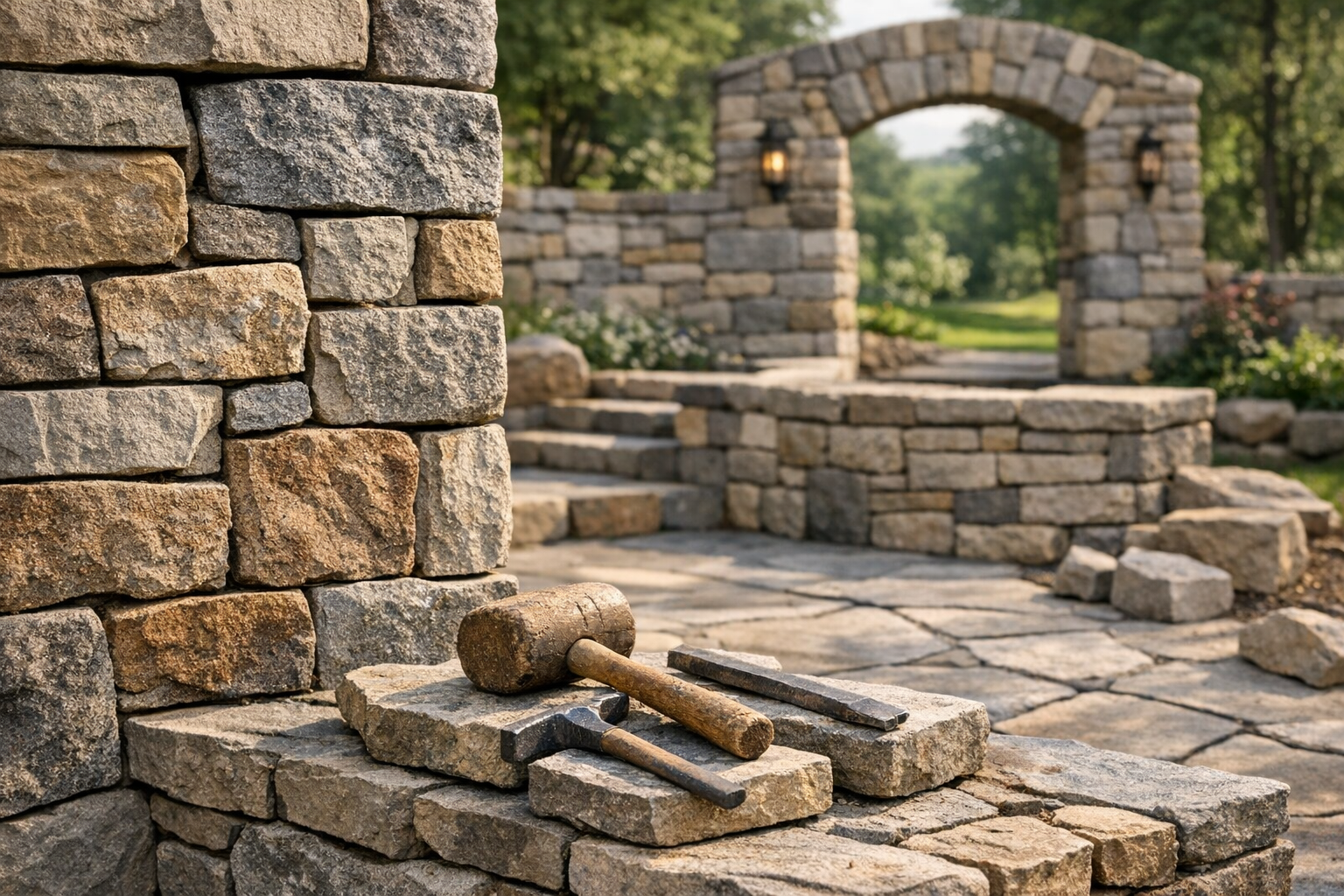
Rubble masonry uses stones that are irregular in shape and size. These stones may be roughly dressed, or they may be left mostly natural. Because the stones are not perfectly cut, rubble masonry often has a more rustic and organic appearance. It is commonly used for garden walls, retaining walls, boundary walls, and certain load-bearing applications.
There are several variations of rubble masonry, including random rubble and coursed rubble. Random rubble masonry features stones laid without a regular pattern, while coursed rubble arranges stones in more level rows for improved consistency.
Ashlar Masonry
Ashlar masonry is made from stones that are cut, shaped, and finished to precise dimensions. This creates a neat, uniform appearance with tight joints and clean lines. Ashlar is often used in high-end architecture, facades, columns, and structures where a refined look is desired.
Because of the accuracy required in shaping the stones, ashlar masonry typically involves more labor and higher costs than rubble masonry. However, the visual result is elegant, durable, and highly polished.
Benefits of Stone Work Masonry
Stone work masonry offers a wide range of advantages that make it a standout choice for many building projects. One of the biggest benefits is durability. Natural stone is extremely strong and can last for generations when installed properly. Unlike some manufactured materials, it resists weathering, pest damage, and general wear very well.
Another major advantage is aesthetic appeal. Stone has a natural texture and color variation that adds depth and character to any structure. It can complement traditional homes, modern designs, rustic landscapes, and commercial buildings alike. No two stone installations look exactly the same, which gives each project a unique identity.
Stone masonry also offers excellent thermal performance. Thick stone walls can help regulate indoor temperatures by absorbing heat during the day and releasing it slowly over time. In addition, stone is low maintenance compared to many other materials. With proper sealing and occasional cleaning, it can remain attractive for decades.
Finally, stone is versatile. It can be used in structural applications, decorative accents, interior features, landscaping, and restoration work. This flexibility makes it a valuable material for both new construction and renovation projects.
Common Stone Masonry Techniques
Successful stone work masonry depends on technique as much as material. Skilled masons use different methods depending on the type of stone, the purpose of the structure, and the desired appearance.
Dry stone construction is one traditional technique where stones are stacked without mortar. The stones are carefully selected and arranged so they lock together through gravity and friction. This method is often used for retaining walls, terraces, and garden features.
Mortared stone masonry uses mortar to bind the stones together. This provides greater structural stability and is common in walls, foundations, fireplaces, and architectural facades. The mortar joints must be properly mixed and applied to ensure strength and weather resistance.
Stone veneer installation is another popular approach. In this method, thin stone pieces are attached to a structural backing, such as concrete or wood framing. Veneer provides the look of solid stone while reducing weight and installation complexity.
Choosing the Right Stone for Your Project
Selecting the right stone is essential for both performance and appearance. Granite is known for its strength and resistance to weather, making it a strong option for heavy-duty applications. Limestone offers a softer, more classic look and is often used in architectural work. Sandstone provides warm tones and natural texture, while slate delivers a layered appearance that works well in both indoor and outdoor settings. Fieldstone, with its irregular shapes and natural finish, is ideal for rustic designs.
When choosing stone, consider climate, intended use, budget, and style. Outdoor projects require stones that can handle moisture, temperature changes, and freeze-thaw cycles. Interior features may focus more on color, texture, and decorative impact. It is also important to source stone from a reputable supplier to ensure quality and consistency.
Maintenance and Longevity
One of the reasons stone work masonry remains so popular is its long lifespan. Still, even the strongest stone structures benefit from basic care. Regular inspections can help identify cracked mortar joints, loose stones, moisture issues, or surface staining before they become major problems.
Cleaning should be done gently, using methods appropriate for the specific type of stone. Harsh chemicals or abrasive tools can damage the surface and weaken the masonry over time. In some cases, sealing may be recommended to reduce water absorption and protect against stains, especially on porous stone.
Proper drainage is another key factor in longevity. Water that collects around a stone wall or foundation can eventually cause damage, so good construction planning is essential. When stone masonry is installed correctly and maintained with care, it can remain structurally sound and visually impressive for decades or even centuries.
Why Stone Work Masonry Remains a Top Choice
Stone work masonry combines craftsmanship, functionality, and timeless appeal. It stands apart because it is both practical and beautiful, offering unmatched durability while enhancing the character of a property. Whether used in a historic restoration, a custom home, or a landscape feature, stone masonry adds lasting value.
As design trends come and go, stone continues to hold its place as a trusted building material. Its natural strength, versatility, and classic look make it a smart investment for anyone seeking long-term performance and distinctive style.
Conclusion
Stone work masonry is more than a building method—it is a craft that brings together strength, texture, and timeless design. With the right stone, skilled installation, and proper maintenance, it can create structures that are as enduring as they are beautiful.