
Introduction
Masonry installation is one of the most durable and attractive ways to build or improve a property. From brick walls and stone veneers to concrete block structures, masonry adds strength, texture, and long-lasting value. Whether you are planning a new project or repairing an existing one, understanding the basics of masonry installation can help you make smarter choices and achieve better results.
Because masonry work depends on precision, material quality, and proper technique, even small mistakes can affect the finished look and structural performance. In this guide, we’ll walk through the essentials of masonry installation, including common materials, preparation, the installation process, and tips for long-term care.
What Is Masonry Installation?
Masonry installation is the process of building structures or surfaces using individual units such as bricks, stones, concrete blocks, or manufactured veneers. These units are typically set in mortar, which bonds the pieces together and helps distribute weight evenly. Masonry can be structural, decorative, or both, depending on the project.
One of the biggest advantages of masonry is its versatility. It can be used for homes, retaining walls, fireplaces, patios, chimneys, walkways, and exterior facades. It is also known for its fire resistance, weather resistance, and timeless appearance.
Common Masonry Materials
Brick
Brick is a classic masonry material valued for its uniform size, durability, and traditional appearance. It works well for walls, chimneys, and decorative exterior features. Brick requires careful alignment and consistent mortar joints for a polished finish.
Natural Stone
Natural stone offers a more organic, high-end look. Materials like limestone, granite, slate, and fieldstone are often chosen for their unique color and texture. Stone installation can be more labor-intensive because each piece may need to be shaped and fitted individually.
Concrete Block
Concrete masonry units, or CMUs, are commonly used in foundations, retaining walls, and commercial construction. They are affordable, strong, and efficient to install. Though often hidden behind finishes, concrete block provides excellent structural support.
Stone Veneer and Manufactured Veneer
Veneer products create the appearance of solid stone or brick without the same weight and cost. These materials are often used for decorative walls, fireplaces, and exterior upgrades. Proper backing and moisture control are especially important with veneer installation.
Preparing for Masonry Installation
Good preparation is essential for a successful masonry project. Before installation begins, the site should be measured, cleaned, and checked for level and stability. Any structural issues, drainage concerns, or foundation problems should be addressed first.
Materials should also be selected with the environment in mind. For example, exterior masonry in areas with freeze-thaw cycles must be durable enough to withstand moisture and temperature changes. Matching mortar type to the masonry material is equally important, since the wrong mix can lead to cracking or poor bonding.
Planning the layout is another critical step. Installers often use string lines, levels, and reference marks to keep rows straight and joints even. Taking time during this stage helps prevent costly corrections later.
The Masonry Installation Process
1. Surface Preparation
The base or wall surface must be clean, stable, and ready to support the masonry. In some cases, a concrete footing or moisture barrier may be required. For veneer applications, a proper substrate and lath system may be installed first.
2. Mixing Mortar
Mortar is mixed to the correct consistency so it can hold the masonry units firmly without becoming too dry or too wet. A proper mix improves bonding, workability, and long-term strength. Many projects also benefit from using mortar that matches the color and performance requirements of the material.
3. Laying the Units
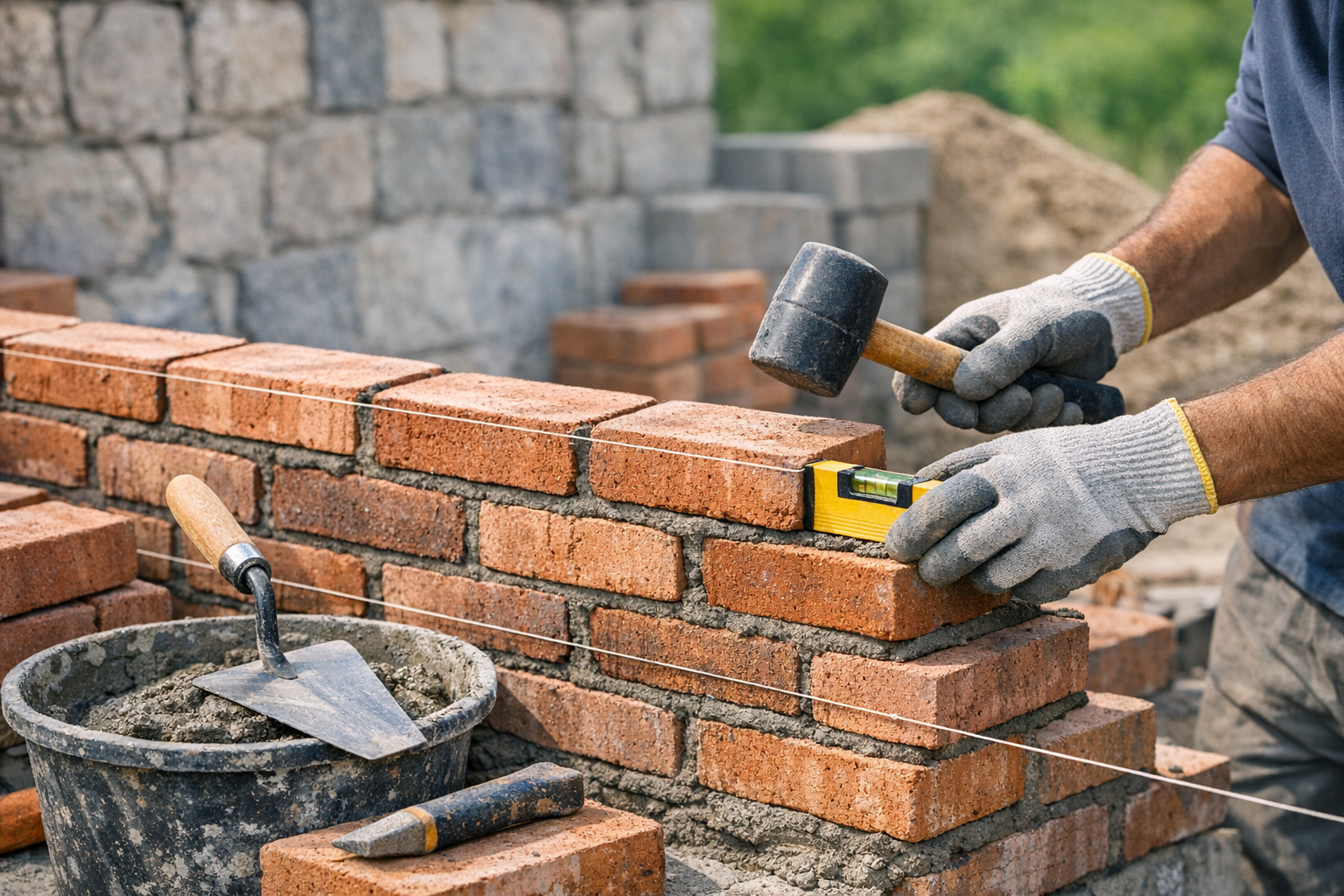
Masonry units are placed one at a time, starting with corners and reference points. Installers spread mortar, set each unit in position, and tap it gently to align with the surrounding pieces. Joint thickness, spacing, and leveling are monitored closely to keep the finished surface uniform.
4. Cutting and Fitting
Some projects require units to be cut for corners, edges, or custom shapes. Precision cutting helps maintain a clean design and proper fit. Skilled installers use the right tools to minimize waste and reduce the risk of cracking.
5. Finishing the Joints
Once the masonry is in place, the joints are tooled or finished to create the desired appearance and improve weather resistance. Joint style can influence the overall look of the project, from smooth and subtle to more pronounced and decorative.
Factors That Affect Quality and Durability
The success of masonry installation depends on several factors. Weather conditions matter, since extreme heat, cold, or moisture can affect mortar curing and adhesion. Workmanship is equally important, because proper alignment, consistent joints, and correct mortar application all contribute to a better result.
Drainage and moisture management also play a major role. Water is one of masonry’s biggest long-term challenges, especially when it gets behind walls or freezes inside small cracks. Flashing, weep holes, sealants, and proper grading can help reduce these risks.
Finally, the foundation must be strong enough to support the masonry load. Settling or shifting over time can lead to cracks, uneven surfaces, or separation between materials.
Maintenance Tips for Masonry
Although masonry is low maintenance compared to many other materials, it still benefits from routine care. Inspect walls, joints, and surfaces regularly for cracks, loose mortar, stains, or moisture damage. Small repairs caught early are much easier and less expensive to fix.
Cleaning should be done gently, using methods appropriate for the material. Harsh chemicals or high-pressure washing can damage mortar or surface finishes. In addition, repointing aging mortar joints and resealing certain surfaces can help extend the life of the installation.
Why Professional Installation Matters
While some small masonry repairs can be handled by experienced DIYers, larger projects usually require professional installation. Masonry demands accuracy, physical skill, and a strong understanding of materials and building conditions. Professionals can help ensure the work meets structural needs, looks consistent, and lasts for years.
A well-installed masonry project can improve curb appeal, boost property value, and provide long-term performance with minimal upkeep. Choosing quality materials and proper installation techniques is the best way to protect your investment.
Conclusion
Masonry installation combines craftsmanship, planning, and durable materials to create structures that stand the test of time. By understanding the process, selecting the right materials, and focusing on proper preparation and care, you can achieve results that are both functional and beautiful. Whether it’s brick, stone, or block, quality masonry brings lasting value to any property.