Masonry is one of the oldest and most reliable building trades, combining craftsmanship, strength, and attention to detail. From brick walls and stone facades to chimneys, patios, and retaining walls, masonry work shapes both the structure and character of a property. If you are considering hiring a mason or starting a masonry job yourself, it helps to understand what the work involves, which skills matter most, and how a project typically comes together.
What Is a Masonry Job?
A masonry job involves building, repairing, or restoring structures made from materials such as brick, stone, concrete block, and mortar. Unlike framing or carpentry, masonry focuses on durable, non-wood materials that are designed to last for decades when installed correctly.
Masons work on a wide range of projects. These can include exterior walls, fireplaces, steps, walkways, chimneys, garden borders, foundations, and decorative stone features. Some jobs are highly structural, while others are mostly aesthetic, but all require precision and an understanding of how materials interact over time.
Common Types of Masonry Work
Not every masonry job is the same. Some of the most common types include:
- Brick masonry: Used for walls, chimneys, patios, and decorative accents.
- Stone masonry: Includes natural or manufactured stone for a classic, durable look.
- Concrete block masonry: Often used in foundations, retaining walls, and commercial buildings.
- Restoration and repair: Repointing mortar, replacing damaged bricks, and fixing cracks or water damage.
Skills Needed for a Masonry Job
Masonry is a trade that depends on both physical ability and technical knowledge. A good mason must understand materials, measurements, tools, and safety practices while also delivering clean, consistent results.
Technical Skills
Accuracy is essential in masonry. Masons must know how to mix mortar to the right consistency, lay units in proper alignment, cut materials cleanly, and ensure that structures are level, plumb, and stable. Even small mistakes can affect the appearance and durability of the finished work.
Physical Strength and Stamina
Masonry jobs are physically demanding. Workers often lift heavy blocks or stones, spend long hours standing, and work outdoors in changing weather conditions. Good endurance and hand strength are important, as is the ability to work carefully while managing physically repetitive tasks.
Attention to Detail
The best masonry work looks clean, even, and intentional. Whether it is matching mortar color during a repair or lining up bricks for a new wall, details matter. A skilled mason pays close attention to spacing, symmetry, texture, and finish.
Tools and Materials Used in Masonry
Every masonry job requires the right combination of tools and materials. While project needs vary, most masons rely on a core set of equipment to complete work efficiently and safely.
Basic Masonry Tools
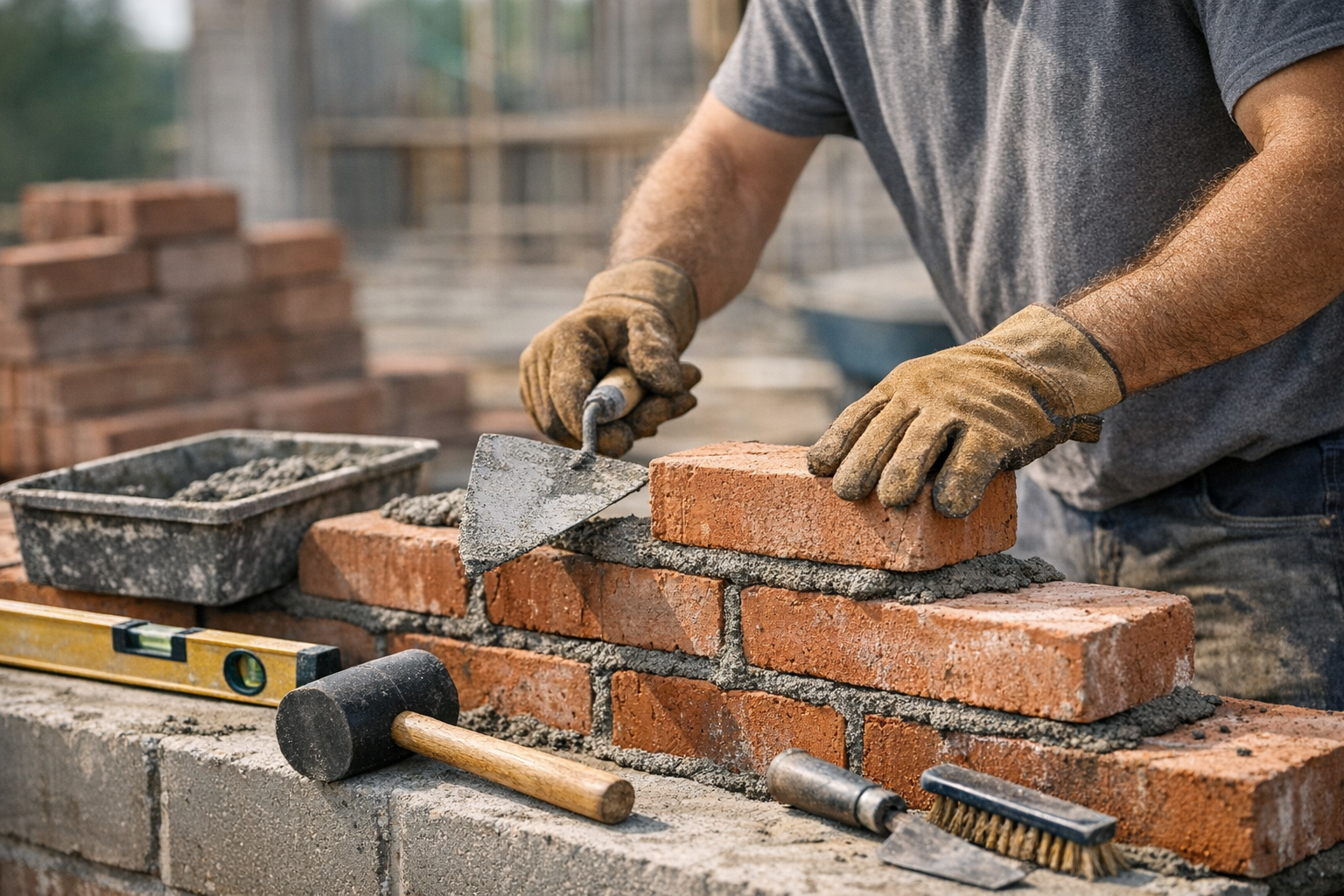
- Trowels for spreading and shaping mortar
- Levels and plumb lines for alignment
- Hammers and chisels for cutting or shaping materials
- Mixing tools for mortar and concrete
- Brushes, joint tools, and measuring equipment
Power tools may also be used for cutting brick, stone, or block, especially on larger or more complex jobs.
Common Masonry Materials
The most common materials include clay brick, natural stone, concrete block, cement, lime, sand, and mortar mixes. The choice of material depends on the project’s purpose, location, budget, and design style. For example, a retaining wall may use concrete block for strength, while a front walkway may use brick or stone for appearance.
How a Masonry Job Typically Works
Most masonry projects follow a similar process, even though the details vary depending on the scope of work. Understanding the steps can help homeowners and contractors plan more effectively and set realistic expectations.
1. Planning and Evaluation
The first step is assessing the site and defining the project goals. A mason may examine existing damage, measure the area, check the foundation or base, and recommend the best materials. For repair work, this stage often includes identifying the cause of cracks, leaks, or deterioration.
2. Preparation
Before the actual build begins, the work area must be prepared. This may involve removing old materials, cleaning surfaces, setting forms, or leveling the ground. Proper preparation is critical because masonry depends on a stable base.
3. Installation or Repair
During installation, the mason lays brick, stone, or block in the planned pattern, applying mortar between each piece and checking alignment continuously. In repair work, damaged sections are removed and replaced, or deteriorated mortar is cut out and repointed.
4. Finishing and Curing
Once the masonry is in place, the joints are finished and the surface is cleaned. The materials then need time to cure properly. This curing stage is important because it allows mortar and concrete to gain strength and helps prevent future cracking.
Why Quality Matters in Masonry
High-quality masonry is about more than appearance. A well-done masonry job protects a building from moisture, supports structural loads, and adds long-term value. Poor workmanship, on the other hand, can lead to leaning walls, cracked joints, water intrusion, and costly repairs.
That is why hiring an experienced mason matters. Skilled professionals understand how to balance strength, durability, and visual appeal. They also know how to account for drainage, weather exposure, and material expansion, all of which affect performance over time.
Choosing the Right Mason for the Job
If you are hiring for masonry work, look for experience, references, and examples of past projects. A reliable mason should be able to explain the process clearly, provide a detailed estimate, and answer questions about materials, timelines, and maintenance.
It is also smart to ask whether the contractor specializes in the type of work you need. A mason with strong experience in restoration may be ideal for historic brick repair, while someone who focuses on hardscaping may be a better fit for patios and retaining walls.
Conclusion
A masonry job combines craftsmanship, strength, and precision to create structures that last for years. Whether you are planning a new build or repairing an existing feature, understanding the work involved helps you make better decisions and achieve better results. With the right materials, tools, and skilled hands, masonry remains one of the most dependable and attractive ways to improve any property.