
Why Choose a Concrete Driveway?
A concrete driveway is one of the most popular choices for homeowners who want a surface that looks clean, performs well, and lasts for decades. Compared with many other paving materials, concrete offers excellent strength, low maintenance, and a versatile appearance that can suit modern, traditional, and custom home styles.
Another major advantage is long-term value. While the upfront cost of concrete driveway installation can be higher than some alternatives, concrete often pays off through durability and fewer repairs over time. It can handle heavy vehicle loads, resist weather changes, and provide a smooth driving surface when installed correctly.
Concrete also gives you design flexibility. From simple broom finishes to decorative stamping, exposed aggregate, and coloring options, there are many ways to create a driveway that complements your home. If you want a functional upgrade that also boosts curb appeal, concrete is a strong choice.
Planning Your Driveway Installation
Good planning is the foundation of a successful concrete driveway project. Before work begins, think about how the driveway will be used, how much traffic it will handle, and how it should connect to your garage, street, or parking area.
Start by measuring the space and deciding on the driveway width and length. Standard single-car driveways are usually narrower than multi-car designs, but you may want extra room for turning, parking, or walking alongside the surface. It is also wise to check local building codes, permit requirements, and property line restrictions before moving forward.
Drainage is another critical part of planning. A driveway should slope slightly so water runs away from the house and does not pool on the surface. Poor drainage can lead to staining, cracking, and freeze-thaw damage over time. If your property has challenging grades or soggy soil, a professional may recommend drainage solutions such as channel drains or improved base preparation.
Finally, consider the finish and appearance you want. A basic brushed surface is practical and slip-resistant, while stamped or colored concrete creates a more decorative look. Choosing your design before installation helps ensure the final result matches your goals and budget.
Step-by-Step Installation Process
1. Site Preparation
The first step in concrete driveway installation is clearing the area of grass, roots, debris, and old pavement if necessary. The ground is then graded to create the proper slope and shape. This stage is essential because the driveway’s performance depends heavily on the stability of the soil underneath.
2. Building the Base
Once the site is prepared, workers install a compacted base layer, typically made from crushed stone or gravel. This base supports the concrete, improves drainage, and helps prevent shifting or cracking. A strong base is one of the most important parts of the entire project, so it should be evenly spread and thoroughly compacted.
3. Forming the Driveway
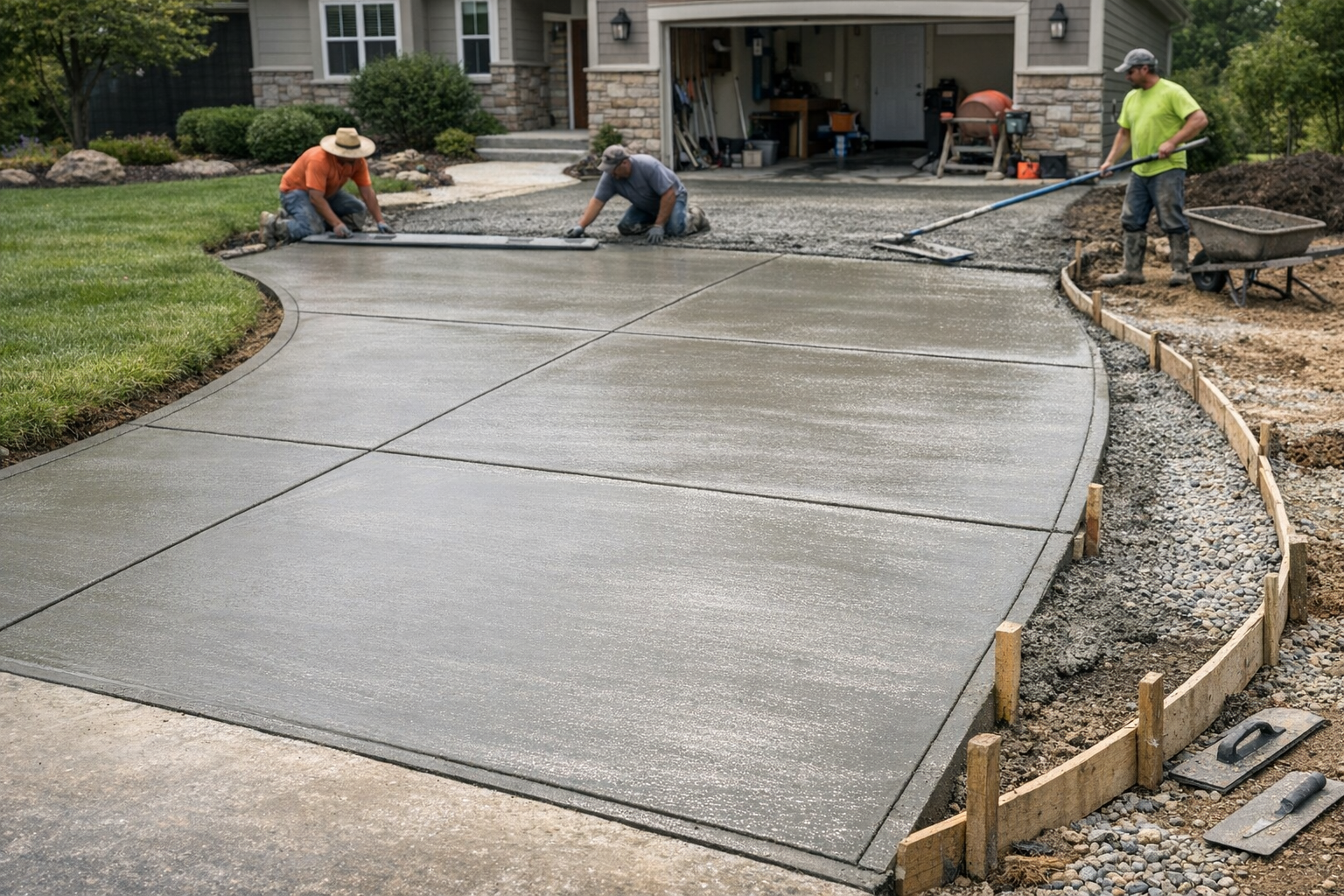
Forms are placed along the edges to define the driveway’s shape and hold the concrete in place while it cures. These forms must be set precisely, since they determine the width, edges, and final alignment of the driveway. Expansion joints and control joints are also planned at this stage to help manage cracking.
4. Pouring the Concrete
After the forms are ready, the concrete is mixed and poured into the prepared area. Workers spread it evenly, then use tools to level and smooth the surface. Depending on the design, the concrete may also be colored or textured at this stage.
5. Finishing the Surface
The finish you choose affects both appearance and safety. A broom finish is one of the most common options because it adds traction. Decorative finishes may require stamping, edging, or special surface treatments. The installer must complete this step before the concrete begins to set too firmly.
6. Curing and Sealing
Concrete does not reach full strength immediately. It needs time to cure properly, which can take several days to several weeks depending on conditions. During this time, it should be protected from heavy traffic and extreme weather. A quality sealer may be added after curing to help resist moisture, stains, and surface wear.
Common Mistakes to Avoid
Even a high-quality concrete driveway can fail early if the installation is rushed or poorly planned. One common mistake is skipping proper base preparation. Without a stable foundation, the driveway may settle unevenly or crack under pressure.
Another issue is pouring concrete without enough control joints. Concrete naturally expands and contracts with temperature changes, and joints help guide any cracking that occurs. Without them, cracks may appear in random, unattractive places.
Improper drainage is also a frequent problem. If water collects on the driveway or near the garage, it can damage both the surface and surrounding structure. Likewise, finishing the concrete too early or too late can affect durability and appearance.
Finally, avoid using the driveway before it has cured enough. Driving on it too soon can leave permanent marks or weaken the surface. Following the recommended cure time is one of the simplest ways to protect your investment.
How to Maintain a Concrete Driveway
Concrete driveways are low maintenance, but they still benefit from regular care. Sweeping away dirt and debris helps keep the surface looking clean and prevents buildup that can trap moisture. It is also a good idea to wash the driveway occasionally with mild soap and water.
Sealing the surface every few years can help protect against stains from oil, rust, and road salt. In colder climates, this is especially helpful because freeze-thaw cycles can stress the concrete. If cracks appear, seal them early to prevent water from entering and making the damage worse.
Try to avoid using harsh chemicals or de-icing products that may damage the surface. When possible, choose concrete-safe products and remove snow with plastic shovels or snow blowers instead of metal blades. With simple upkeep, a concrete driveway can stay attractive and functional for a very long time.
When to Hire a Professional
Although some homeowners are comfortable tackling smaller concrete projects, driveway installation is usually best left to experienced professionals. A driveway must support vehicle weight, drain correctly, and cure evenly, all of which require careful planning and skill.
A professional installer can assess soil conditions, recommend the right base depth, and ensure the concrete mix is appropriate for your climate and intended use. They can also handle grading, forming, finishing, and joint placement more efficiently than most DIY projects.
Hiring a pro is especially important if your driveway is large, sloped, decorative, or connected to complex drainage issues. In these cases, professional workmanship can help you avoid costly repairs and achieve a better long-term result.
Conclusion
Concrete driveway installation is a smart investment when you want durability, curb appeal, and reliable performance. With proper planning, a strong base, careful finishing, and regular maintenance, your driveway can serve your home well for many years. Whether you prefer a simple functional surface or a decorative upgrade, concrete offers a proven solution that adds lasting value.