
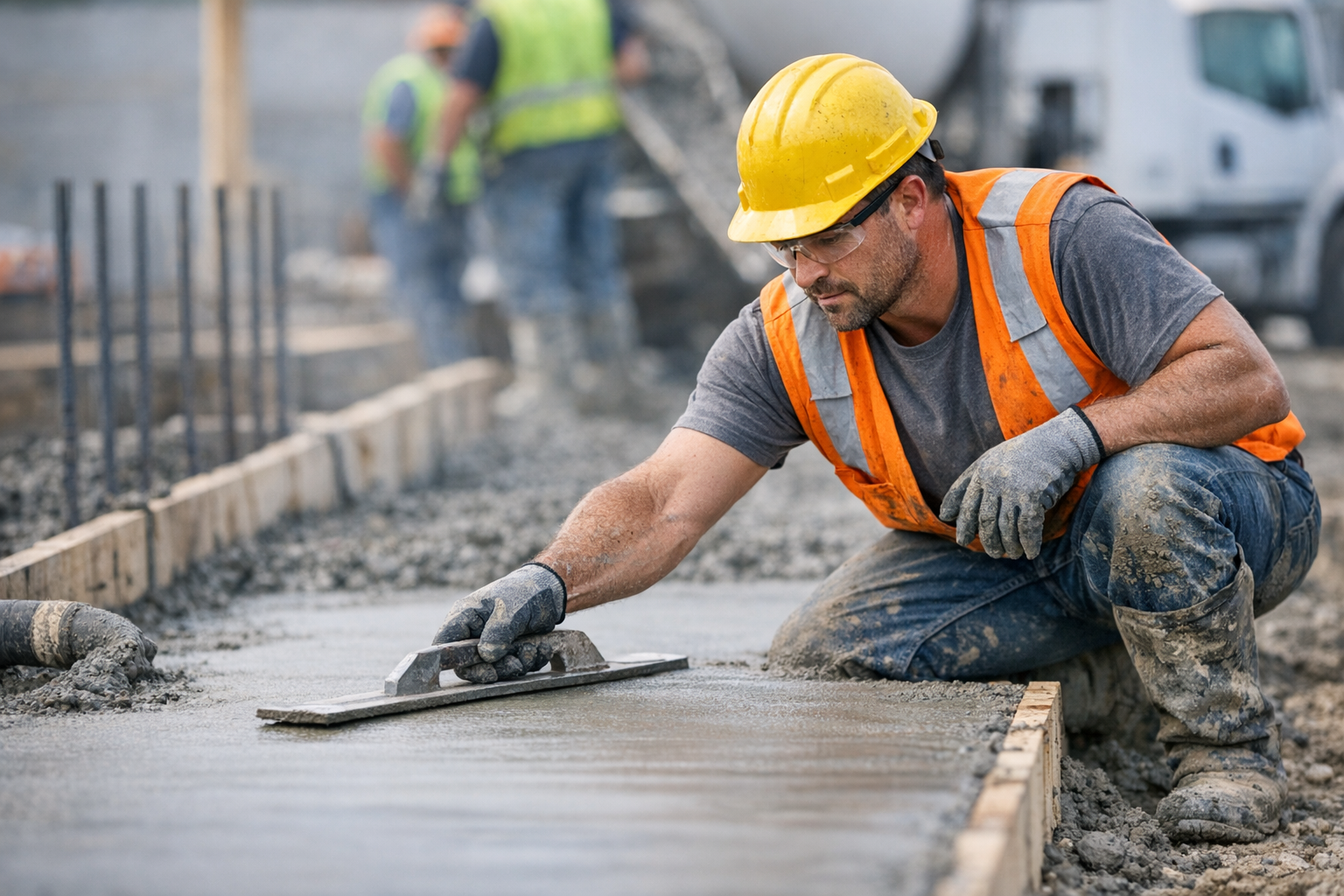
Concrete workers play a vital role in construction, shaping the foundations, sidewalks, driveways, walls, and structures that support our homes, roads, and cities. From pouring and leveling fresh concrete to finishing surfaces so they are strong and durable, these professionals help turn blueprints into lasting physical structures. If you have ever walked on a smooth sidewalk or driven over a sturdy bridge, a concrete worker likely helped make it possible.
What Does a Concrete Worker Do?
A concrete worker, sometimes called a cement mason or concrete finisher, works with concrete from the moment it is mixed until it hardens into its final form. Their job is hands-on, physically demanding, and highly technical. Concrete workers prepare job sites, set forms, pour and spread concrete, use tools to level and smooth surfaces, and apply finishing techniques to create the desired texture or appearance.
They may work on a wide range of projects, including:
- House foundations
- Sidewalks and curbs
- Driveways and patios
- Roads and bridges
- Floors, slabs, and warehouse surfaces
- Decorative concrete features
Depending on the project, concrete workers may also place reinforcement materials such as rebar or wire mesh, check measurements, and ensure the surface cures properly.
Key Responsibilities of a Concrete Worker
Concrete work involves much more than pouring a mixture into a form. The quality of the finished product depends on careful preparation, timing, and attention to detail. Some of the most common responsibilities include:
- Preparing the site: Clearing debris, setting forms, and making sure the area is ready for concrete placement.
- Mixing and transporting concrete: Ensuring the concrete has the right consistency and is delivered before it begins to set.
- Pouring concrete: Spreading concrete into forms or designated areas evenly and efficiently.
- Leveling and finishing: Using screeds, trowels, floats, and other tools to smooth the surface and create the proper finish.
- Applying textures or patterns: Creating decorative or slip-resistant surfaces when needed.
- Monitoring curing: Protecting concrete as it hardens to prevent cracking, weakness, or surface defects.
In many cases, concrete workers must also read plans, follow building codes, and coordinate with other construction trades to keep the project on schedule.
Essential Skills for Concrete Workers
Successful concrete workers need a combination of technical knowledge, physical strength, and problem-solving ability. Since concrete begins setting soon after it is mixed, workers must move quickly while still maintaining precision.
Important skills include:
- Physical stamina: The work involves lifting, bending, standing, and working outdoors in different weather conditions.
- Attention to detail: Small mistakes in leveling or finishing can affect the strength and appearance of the final structure.
- Math and measurement skills: Accurate calculations are necessary for slopes, dimensions, and material quantities.
- Tool handling: Concrete workers must know how to use hand tools, power tools, and finishing equipment safely and correctly.
- Teamwork: Most concrete jobs require close coordination with supervisors, laborers, and other construction professionals.
- Problem-solving: Weather changes, timing issues, or material inconsistencies often require quick decisions on the job site.
Workers who develop these skills can become more efficient, more reliable, and more valuable on construction teams.
Training and Career Path
There are several ways to start a career as a concrete worker. Some people enter the field through on-the-job training, while others begin with apprenticeships or technical school programs. Apprenticeships are especially valuable because they combine classroom instruction with hands-on experience.
During training, workers may learn about:
- Concrete mixing and placement
- Finishing methods and surface textures
- Blueprint reading
- Formwork and reinforcement
- Safety practices and equipment use
- Concrete curing and repair techniques
As concrete workers gain experience, they may move into more specialized roles such as foreman, concrete finisher, estimator, or construction supervisor. Some also choose to focus on decorative concrete, industrial flooring, or repair and restoration work.
Tools and Equipment Used by Concrete Workers
Concrete workers use a variety of tools to achieve a strong and attractive finish. The exact tools depend on the project, but common items include:
- Screeds and straightedges
- Floats and trowels
- Edgers and groovers
- Power trowels
- Concrete vibrators
- Wheelbarrows and buckets
- Levels and measuring tools
- Protective gear such as gloves, boots, goggles, and knee pads
Using these tools properly is essential. For example, a screed helps level the surface, while a trowel creates a smoother finish. On larger jobs, power equipment can speed up the process and improve consistency.
Work Environment and Safety
Concrete workers often work outdoors and may face heat, cold, rain, or wind. They may also work in tight spaces, around heavy machinery, or on elevated surfaces. Because of these conditions, safety is a major part of the job.
Common safety practices include wearing protective clothing, handling tools carefully, lifting properly, and following site rules. Concrete itself can also be hazardous if it contacts the skin for too long, since wet concrete is highly alkaline and can cause burns or irritation. That is why gloves, long sleeves, and waterproof boots are important.
In addition, concrete workers must stay alert around equipment, vehicles, and other workers. Good communication and hazard awareness help prevent injuries and keep projects moving smoothly.
Why Concrete Workers Matter
Concrete workers are essential to modern construction because concrete is one of the most widely used building materials in the world. It provides strength, stability, and long-term durability for everything from residential patios to major infrastructure projects. Without skilled concrete workers, many of the structures people rely on every day would not be possible.
Their work affects both function and appearance. A properly finished surface not only lasts longer but also improves safety and usability. In this way, concrete workers contribute to projects that serve communities for decades.
Conclusion
Concrete workers are skilled professionals who combine physical effort, technical knowledge, and craftsmanship to build durable structures. Whether they are shaping a foundation, smoothing a sidewalk, or finishing a decorative surface, their work supports the spaces people live and work in every day. For anyone interested in hands-on construction, a career as a concrete worker can offer steady opportunities and the satisfaction of building something that lasts.