
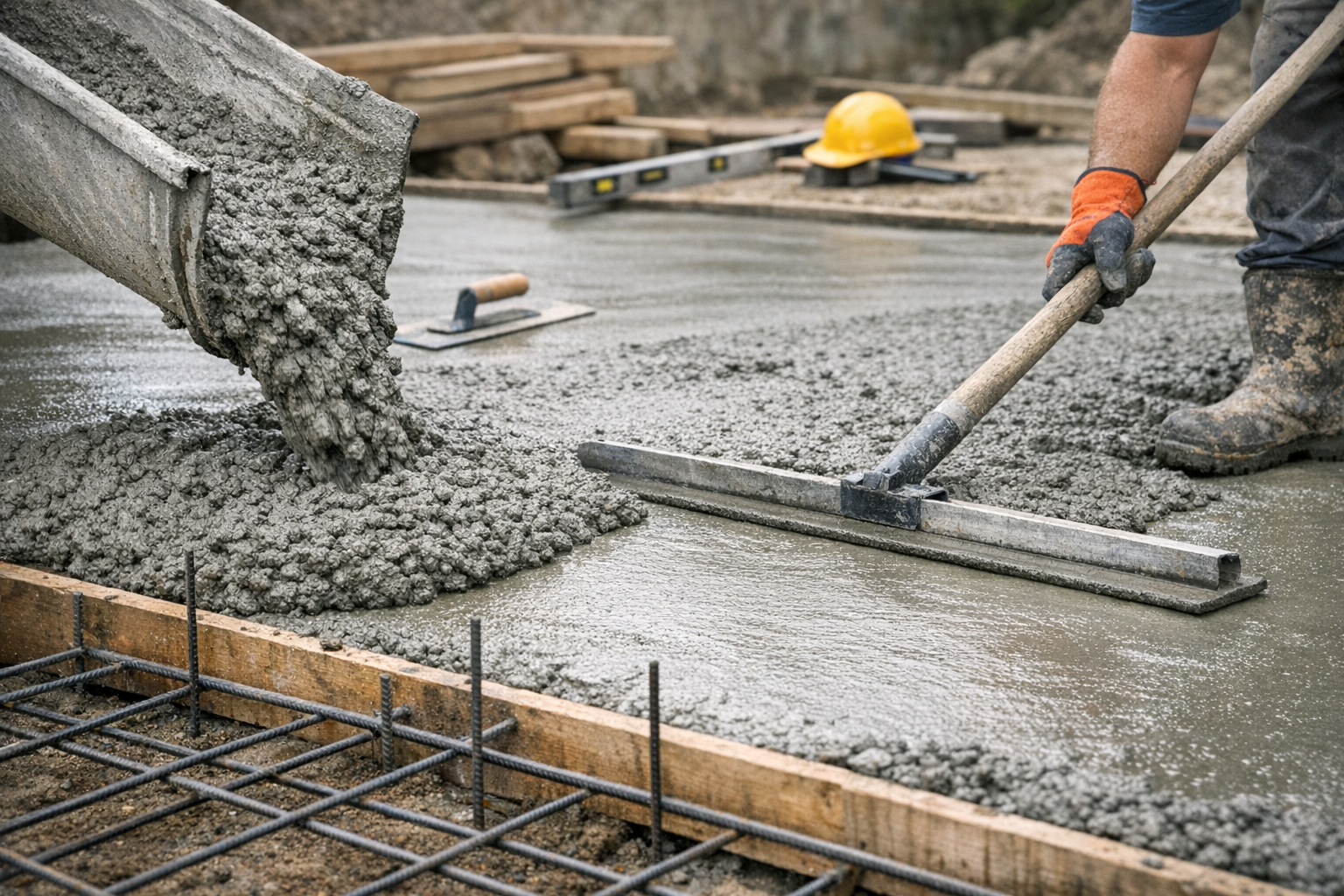
Concrete work is the foundation of many residential, commercial, and industrial projects. From driveways and sidewalks to foundations, patios, and slabs, concrete offers the strength, durability, and versatility needed for structures that last. When done correctly, it creates a clean, stable surface that can handle heavy use and changing weather conditions for years.
Whether you are planning a new installation or repairing an existing surface, understanding the basics of concrete work can help you make better decisions. In this guide, we’ll cover the main types of concrete work, the process involved, key factors that affect quality, and why professional workmanship matters.
What Is Concrete Work?
Concrete work refers to the planning, preparation, pouring, finishing, and curing of concrete for a wide range of construction applications. It includes both structural and decorative uses, depending on the project goals.
At its core, concrete is a mixture of cement, water, sand, and aggregate. Once combined and poured, it hardens into a strong material that can support weight and resist wear. Concrete work goes beyond simply pouring the mix into a form. It requires proper site preparation, accurate measurements, timing, finishing techniques, and curing methods to achieve a durable result.
Common Types of Concrete Work
Concrete is used in many different ways, including:
- Foundations: Supporting homes, garages, and other structures
- Driveways: Providing a durable surface for vehicles
- Sidewalks and walkways: Creating safe, level footpaths
- Patios: Building outdoor living spaces
- Slabs: Serving as a base for sheds, additions, or floors
- Retaining walls and steps: Adding both function and structure
- Decorative concrete: Including stamped, stained, or colored finishes
The Concrete Work Process
Successful concrete work follows a clear process. Each step matters, and skipping one can affect the final strength and appearance of the surface.
1. Planning and Preparation
Every project begins with planning. The site must be evaluated for size, slope, drainage, soil conditions, and intended use. Proper planning ensures the concrete will perform well over time and meet the needs of the property.
Preparation may include grading the ground, removing old materials, compacting the base, and setting up forms. A stable base is essential because concrete needs solid support beneath it. If the ground shifts or settles later, cracking and uneven surfaces can develop.
2. Forming and Reinforcement
Forms are temporary structures that hold the wet concrete in place while it sets. They define the shape, thickness, and edge of the finished surface. Accurate forms are critical for clean lines and proper dimensions.
Depending on the project, reinforcement may also be added. Rebar or wire mesh can help improve structural strength and reduce the risk of cracking. While concrete is naturally strong in compression, reinforcement helps it perform better under tension and load changes.
3. Mixing and Pouring
The quality of the mix affects the durability of the finished product. The ratio of water to cement must be carefully controlled because too much water can weaken the concrete. Once mixed, the concrete needs to be poured efficiently before it begins to set.
During pouring, the material is spread evenly and worked into all areas of the form. Air pockets and gaps should be removed to create a dense, uniform surface. Proper handling at this stage helps prevent weak spots and surface flaws.
4. Finishing the Surface
Finishing is where concrete work begins to take its final form. Depending on the intended use, the surface may be smoothed, brushed, textured, or decorated. A broom finish is often used on outdoor surfaces for better traction, while a smooth finish may be ideal for some interior slabs or decorative applications.
Timing is important during finishing. Concrete must be worked while it is still manageable, but overworking the surface can bring excess water to the top and weaken it. Skilled finishing helps produce both a functional and visually appealing result.
5. Curing
Curing is one of the most important steps in concrete work, yet it is often overlooked. Concrete does not simply dry; it cures through a chemical process that gives it strength. Keeping the surface at the right moisture level during this period helps it harden properly.
Depending on the project and weather conditions, curing may involve water spraying, plastic coverings, or curing compounds. Proper curing reduces cracking, improves durability, and enhances long-term performance.
Factors That Affect Concrete Quality
Several factors influence the success of a concrete project. Paying attention to these details can make the difference between a surface that lasts and one that fails early.
Weather Conditions
Temperature, wind, and moisture all affect how concrete sets and cures. Hot weather can cause concrete to dry too quickly, while cold weather can slow curing or create freeze-thaw issues. Rain, if it arrives too soon, can damage the surface before it hardens.
Base Preparation
A well-prepared base helps concrete remain level and stable. Poor compaction or weak soil can lead to sinking, cracking, or shifting over time. For this reason, base work is just as important as the pour itself.
Proper Thickness
The thickness of the slab should match the intended use. A walkway may require less thickness than a driveway or foundation. If the concrete is too thin for the load it carries, it may crack or wear out prematurely.
Workmanship
Experience and attention to detail matter in concrete work. From setting forms to finishing the surface, each stage requires skill and precision. Good workmanship improves appearance, strength, and long-term reliability.
Why Professional Concrete Work Matters
While some small concrete projects may seem manageable, larger jobs are best left to experienced professionals. Concrete is time-sensitive, and mistakes can be expensive or difficult to fix once the material begins to set.
Professional concrete contractors bring the right tools, knowledge, and techniques to handle the job efficiently. They understand how to prepare the site, mix and place concrete correctly, and finish it for the best possible outcome. In addition, they can help you choose the right type of concrete work for your goals and budget.
Hiring a professional can also save time and reduce stress. Instead of worrying about cracks, uneven surfaces, or drainage problems, you can feel confident that the project will be completed with quality in mind.
Conclusion
Concrete work is a valuable part of construction and property improvement. When handled properly, it delivers strength, stability, and lasting performance for a wide range of applications. By understanding the process and the factors that affect quality, you can make smarter choices and achieve better results. For projects that need durability and precision, professional concrete work is an investment that pays off over time.