
Introduction
Concrete work is one of the most important parts of construction. From foundations and slabs to columns, sidewalks, and retaining walls, concrete provides the strength and stability that buildings and infrastructure depend on. When concrete is mixed, placed, and cured correctly, it can last for decades with minimal maintenance. When it is handled poorly, however, problems like cracking, uneven surfaces, and premature deterioration can show up quickly.
Whether you are a homeowner planning a project, a contractor managing a job site, or simply learning how construction works, understanding concrete work helps you make better decisions. In this guide, we’ll cover the main steps of concrete work in construction, the factors that affect quality, and the best practices that lead to strong, long-lasting results.
What Is Concrete Work in Construction?
Concrete work refers to all the tasks involved in preparing, placing, finishing, and curing concrete structures. Concrete is a mixture of cement, water, sand, and aggregates such as gravel or crushed stone. Once mixed, it forms a workable material that can be shaped into almost any form before it hardens.
In construction, concrete is used for many applications, including:
- Building foundations
- Floor slabs and driveways
- Sidewalks and curbs
- Columns and beams
- Retaining walls
- Parking lots and bridges
Because concrete can be poured into molds and reinforced with steel, it offers both flexibility and strength. This makes it a core material in residential, commercial, and infrastructure projects.
The Main Steps of Concrete Work
Good concrete work follows a clear process. Each step matters, and skipping even one can affect the final quality of the structure.
1. Planning and Site Preparation
Before any concrete is poured, the site must be prepared carefully. This includes measuring the area, checking soil conditions, and making sure the base is stable. Proper grading and compaction help prevent settling later on.
Formwork is also installed at this stage. Forms are temporary molds that hold the concrete in place until it hardens. Accurate formwork is essential because it determines the shape, size, and alignment of the finished structure.
2. Reinforcement Installation
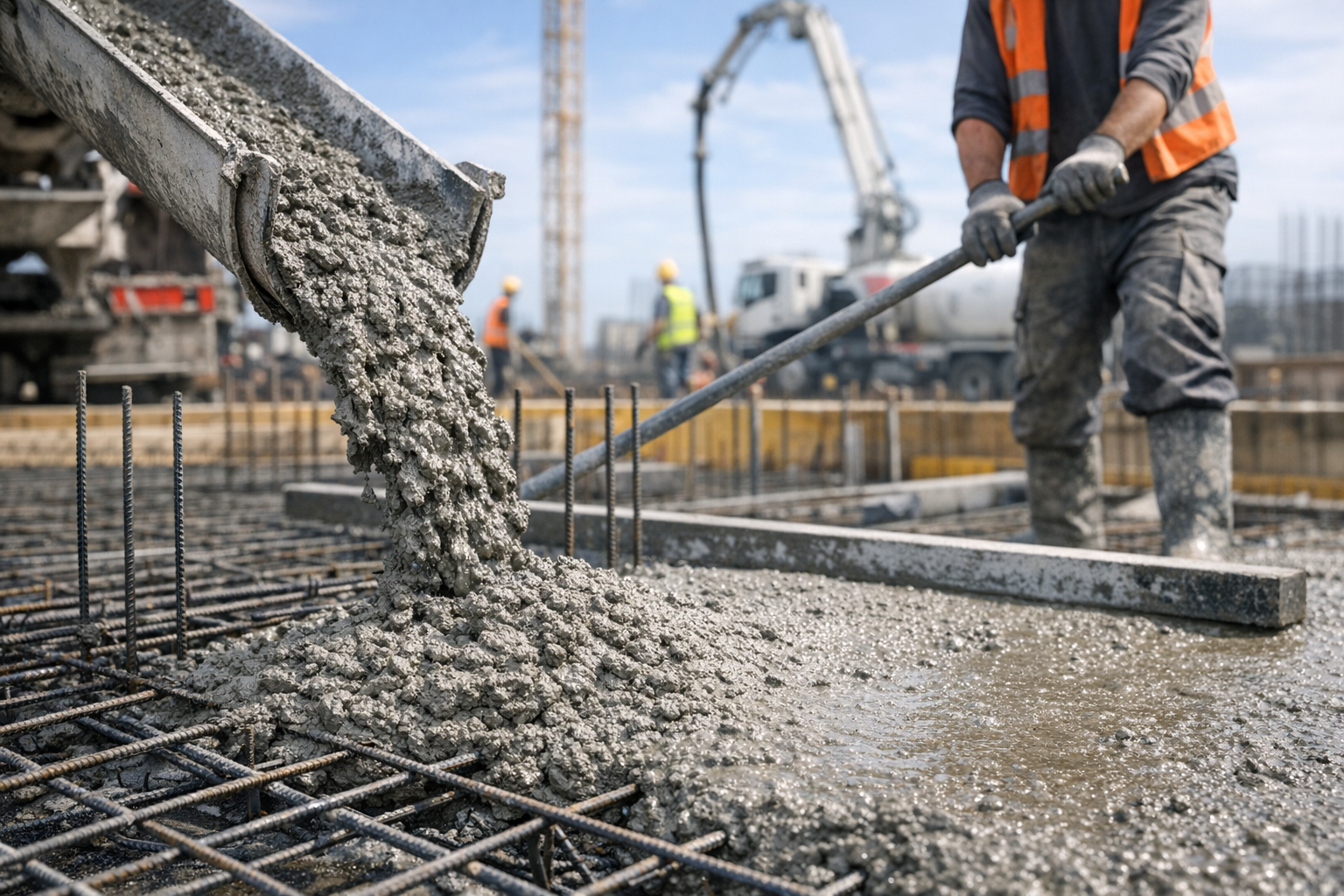
Many concrete projects use reinforcement such as rebar or wire mesh. Reinforcement helps concrete resist tension, reduce cracking, and improve structural performance. Workers place steel according to engineering plans, ensuring proper spacing and coverage.
This step is especially important in foundations, beams, slabs, and other load-bearing elements. Without reinforcement, concrete can still be strong under compression, but it may be more vulnerable to cracking and failure under stress.
3. Mixing and Pouring
The quality of the mix has a huge impact on the finished product. The correct ratio of cement, water, and aggregates creates concrete that is workable during placement and durable after hardening. Too much water can weaken the mix, while too little water can make it difficult to place and finish.
Once mixed, the concrete is poured into the forms or onto the prepared surface. Timing matters, because concrete begins to set soon after mixing. Crews must work efficiently to place the material before it loses workability.
4. Consolidation and Finishing
After pouring, concrete needs to be consolidated to remove trapped air pockets and ensure the material fully fills the form. This is often done with vibration equipment or manual methods, depending on the project.
Finishing comes next. Depending on the intended use, workers may smooth the surface, create textures for slip resistance, or add joints to control cracking. A well-finished surface not only looks better but also performs better over time.
5. Curing
Curing is one of the most important parts of concrete work, yet it is often overlooked. Concrete does not simply dry; it cures through a chemical reaction called hydration. To gain strength properly, it must retain moisture and stay within a suitable temperature range.
Curing methods may include water spraying, wet coverings, curing blankets, or curing compounds. Proper curing helps reduce cracking, improve durability, and increase surface strength. In many projects, the difference between average and excellent concrete work comes down to how well the curing process is managed.
Factors That Affect Concrete Quality
Several factors influence how strong and long-lasting concrete will be. Understanding them can help avoid costly mistakes and improve project outcomes.
Weather Conditions
Temperature, humidity, wind, and rain can all affect concrete placement and curing. Hot weather may cause concrete to dry too quickly, while cold weather can slow curing and increase the risk of freezing. Rain can damage fresh concrete if it is not protected.
Water Content
Water is necessary for hydration, but excess water weakens the mix. The water-cement ratio must be carefully controlled to balance workability and strength.
Subgrade Preparation
A strong concrete structure depends on a stable base. If the soil or base layer is poorly compacted, the concrete may crack or settle unevenly over time.
Workmanship
Even the best materials can fail if the workmanship is poor. Accurate measurements, proper placement, careful finishing, and correct curing all contribute to success.
Common Problems in Concrete Work
Concrete is durable, but it is not immune to problems. Some of the most common issues include:
- Cracking: Often caused by shrinkage, movement, or poor curing.
- Honeycombing: Voids or rough patches caused by inadequate consolidation.
- Surface scaling: Damage to the top layer from freeze-thaw cycles, de-icing salts, or weak finishing.
- Uneven settlement: Usually linked to poor base preparation or soil movement.
- Discoloration: Can result from inconsistent mixing, curing, or finishing methods.
Most of these issues are preventable with proper planning, quality materials, and experienced labor. When problems do occur, addressing them early can reduce repair costs and help preserve structural integrity.
Best Practices for Better Concrete Work
High-quality concrete work comes from attention to detail at every stage. Here are a few best practices to follow:
- Use the correct mix design for the job.
- Prepare and compact the subgrade properly.
- Install reinforcement exactly as specified.
- Place concrete promptly and avoid unnecessary delays.
- Consolidate the mix to remove air pockets.
- Finish the surface according to its intended use.
- Cure concrete thoroughly to maximize strength and durability.
- Plan joints to help control cracking.
It also helps to work with experienced crews and follow project specifications closely. Small mistakes during concrete work can lead to major problems later, so careful execution is always worth the effort.
Why Concrete Work Matters in Construction
Concrete work is more than just pouring a mix into a form. It is a critical part of creating safe, stable, and long-lasting structures. Good concrete supports the weight of buildings, resists weather and wear, and provides a reliable base for many types of construction.
In addition, quality concrete work can save money over the life of a project. Fewer repairs, less maintenance, and a longer service life all add value. That is why builders, engineers, and property owners pay such close attention to concrete quality from the start.
Conclusion
Concrete work in construction combines planning, precision, and proper technique. From site preparation and reinforcement to pouring, finishing, and curing, each step plays a major role in the final result. When done well, concrete delivers strength, durability, and long-term performance. For any construction project, investing in quality concrete work is one of the smartest decisions you can make.