
Concrete Masonry Work: An Overview
Concrete masonry work is one of the most reliable methods used in residential, commercial, and industrial construction. It involves building with concrete masonry units, commonly called CMUs or concrete blocks, to create walls, foundations, partitions, retaining structures, and other load-bearing or non-load-bearing elements. Known for strength, versatility, and cost-effectiveness, concrete masonry remains a popular choice for projects that need long-term performance.
What makes concrete masonry especially valuable is its ability to combine structural durability with design flexibility. It can be used on its own or paired with steel reinforcement, insulation, and finishing materials to improve appearance and performance. Whether the goal is to build a new structure or complete a repair, understanding the basics of concrete masonry work helps property owners and builders make better decisions.
What Is Concrete Masonry Work?
Concrete masonry work refers to the construction process of assembling concrete blocks or masonry units with mortar to form walls and other structural components. The blocks are manufactured from a mixture of cement, aggregates, and water, then shaped and cured to create strong, uniform units. Because the blocks are consistent in size and shape, they are easier to install than many natural materials and allow for efficient construction.
This type of masonry is commonly used for foundation walls, basement walls, exterior walls, fire-rated partitions, boundary walls, and retaining walls. In many cases, the blocks are reinforced with steel bars and grout to increase strength and stability. The result is a building system that can resist heavy loads, moisture, fire, and daily wear.
Key Benefits of Concrete Masonry Work
One of the main reasons concrete masonry is so widely used is its impressive performance over time. It offers a strong balance of structural strength, affordability, and practicality.
1. Durability
Concrete blocks are built to last. They can withstand harsh weather, moisture exposure, and everyday impact better than many other wall materials. When installed correctly, concrete masonry structures can serve reliably for decades.
2. Fire Resistance
Concrete masonry is naturally fire-resistant, which makes it a smart choice for buildings where safety is a priority. This quality can help slow the spread of fire and protect structural integrity longer than combustible materials.
3. Energy Efficiency
When paired with insulation, concrete masonry can contribute to better energy performance. Its thermal mass helps regulate indoor temperatures, which can reduce heating and cooling demands in certain climates.
4. Versatility
Concrete masonry can be used in many ways, from structural walls to decorative facades. Blocks are available in different sizes, finishes, and styles, making it possible to achieve both functional and aesthetic goals.
5. Cost-Effectiveness
Compared with some building systems, concrete masonry offers a strong return on investment. The materials are generally affordable, and the long lifespan of the finished structure helps reduce maintenance and replacement costs.
Common Applications in Construction
Concrete masonry work appears in many types of projects. In homes, it is often used for basements, garage walls, foundations, and exterior barriers. In commercial buildings, it may be used for load-bearing walls, stairwells, elevator shafts, and fire-rated enclosures. Industrial facilities often rely on concrete masonry for security walls, equipment rooms, and storage areas.
Retaining walls are another common use. These structures must resist soil pressure and moisture, so concrete masonry is a practical choice when designed and built correctly. It is also frequently used in landscaping projects, such as garden walls, planters, and decorative enclosures.
The Concrete Masonry Construction Process
While the exact process varies by project, concrete masonry work generally follows a series of important steps. Careful planning and accurate installation are essential for creating a strong, stable result.
1. Planning and Layout
The process begins with site assessment, measurements, and design planning. Builders determine wall dimensions, load requirements, reinforcement needs, and drainage considerations. Proper layout ensures the finished structure fits the project specifications.
2. Foundation Preparation
A strong foundation is essential. The footing must be level, properly sized, and capable of supporting the weight of the masonry structure. Any weakness at this stage can lead to cracking or settlement later.
3. Laying the Blocks
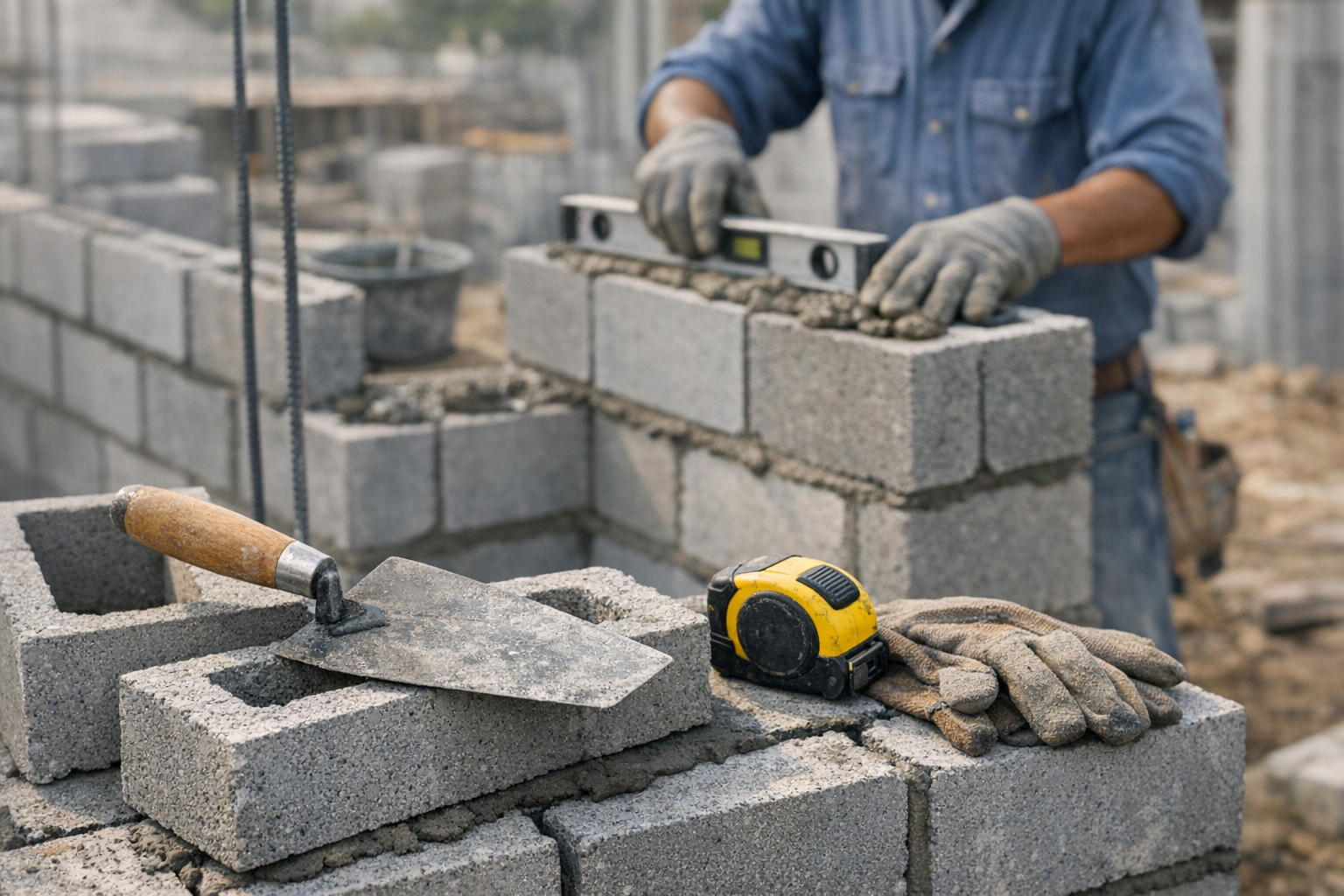
Blocks are installed one course at a time using mortar to bond them together. Builders check alignment, spacing, and level throughout the process to maintain accuracy. Openings for doors, windows, and utilities are incorporated as needed.
4. Reinforcement and Grouting
In many structural applications, steel reinforcement is placed inside selected block cores and filled with grout. This improves the wall’s ability to handle tension, wind loads, and other stresses.
5. Finishing and Curing
Once the wall is complete, the surface may be left exposed, painted, sealed, or covered with another finish. Proper curing allows mortar and grout to gain strength and helps the structure perform as intended.
Materials and Tools Used in Concrete Masonry Work
Successful masonry work depends on having the right materials and tools. Common materials include concrete blocks, mortar, grout, steel reinforcement, waterproofing products, and sealants. The specific materials used depend on whether the project is structural, decorative, interior, or exterior.
Typical tools include trowels, levels, masonry hammers, jointers, mixing equipment, and measuring tools. For larger projects, block saws, scaffolding, and lifting equipment may also be required. Precision matters in masonry, so quality tools help improve both speed and accuracy.
Maintenance and Longevity
Although concrete masonry is known for its durability, regular maintenance helps preserve its condition. Property owners should look for cracks, moisture intrusion, mortar deterioration, and signs of movement. Small issues are often easier and less expensive to fix when addressed early.
Sealing exterior surfaces, maintaining drainage systems, and repairing damaged joints can extend the life of a masonry structure. In climates with freezing and thawing cycles, protecting the wall from excess moisture is especially important. With proper care, concrete masonry can remain strong and attractive for many years.
Conclusion
Concrete masonry work offers a dependable solution for building strong, safe, and versatile structures. From foundations and retaining walls to commercial enclosures and decorative features, it continues to be a trusted choice across many construction projects. With proper planning, skilled installation, and routine maintenance, concrete masonry can deliver lasting value and performance.