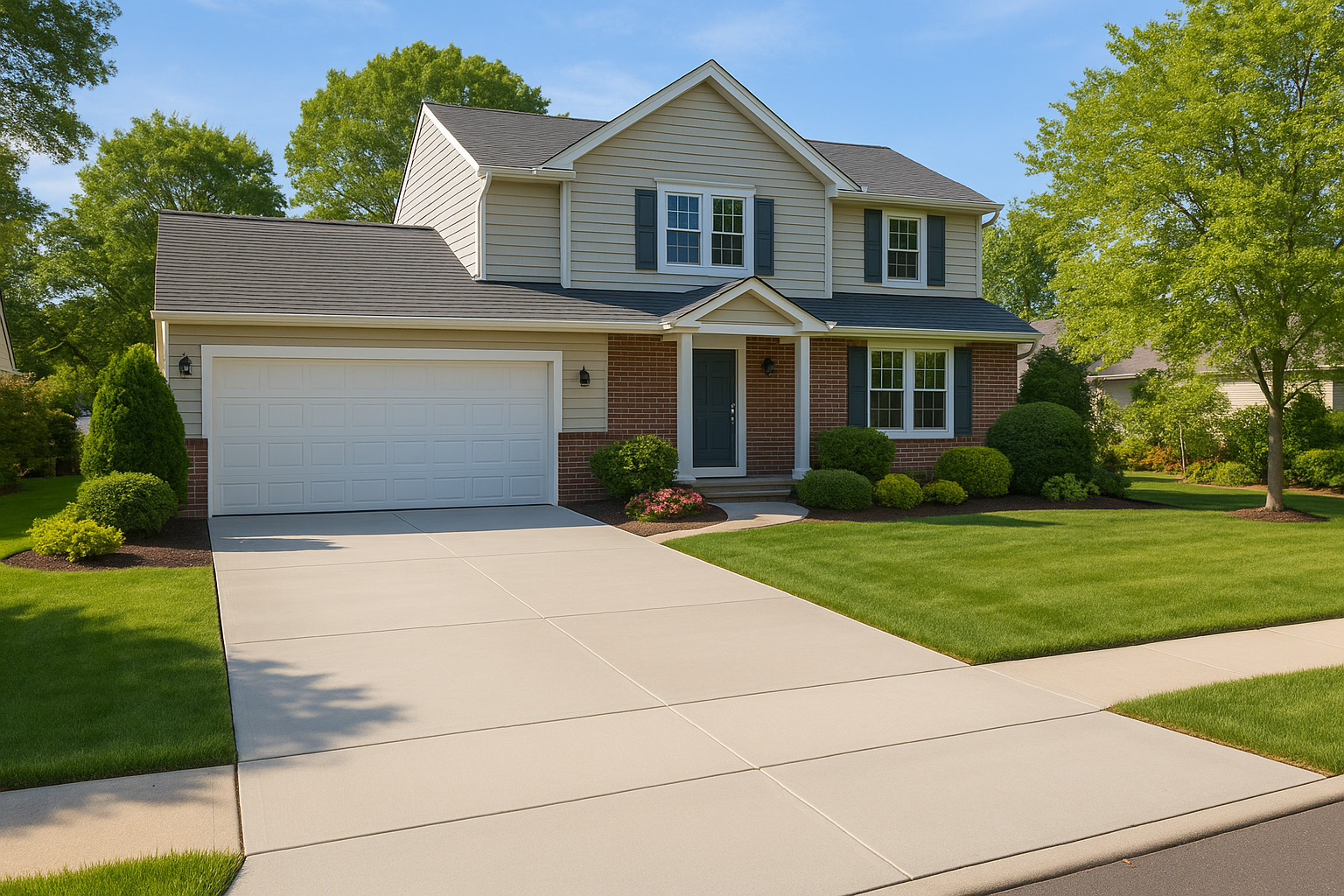
A concrete driveway can last for decades when it is designed and installed properly, but the price depends on more than the amount of concrete in the slab. Size, site preparation, thickness, reinforcement, finishing choices, and local labor rates all affect the final bill. Learning how to build a realistic concrete driveway estimate can help you set a budget and compare contractor quotes with confidence.
Start With the Driveway’s Size
Area is the foundation of any estimate. Measure the driveway’s length and width in feet, then multiply them to find the square footage. For a rectangular driveway, the calculation is simple:
Length × width = driveway area in square feet
For example, a driveway that is 20 feet wide and 40 feet long has an area of 800 square feet. If the shape is irregular, divide it into smaller rectangles, calculate each area, and add them together. Include parking pads, aprons, or widened sections if they are part of the project.
Estimate the Concrete Volume
Concrete is commonly ordered by the cubic yard. To estimate volume, multiply the area by the planned slab thickness in feet, then divide by 27:
Square feet × thickness in feet ÷ 27 = cubic yards
A four-inch slab is one-third of a foot thick. An 800-square-foot driveway at that thickness needs about 9.9 cubic yards before allowing for waste or uneven ground. Contractors typically account for a small extra amount to reduce the risk of running short. A supplier or installer can confirm the quantity based on the site and mix specifications.
Understand Typical Concrete Driveway Costs
As a broad U.S. planning range, a standard poured concrete driveway may cost about $6 to $15 per square foot installed. Basic finishes and easy-to-access sites tend to fall toward the lower end, while complex layouts, higher-cost regions, or upgraded finishes can cost more. Decorative concrete, such as stamped or colored work, may run roughly $12 to $25 or more per square foot.
These figures are starting points, not guaranteed quotes. Prices vary by location, season, contractor, concrete mix, and project scope. A small driveway may also have a higher per-square-foot price because delivery, setup, and crew costs are spread over less area. Ask contractors for an itemized estimate based on your property rather than relying on a national average.
Account for the Main Cost Factors
Removal and Site Preparation
If an existing driveway must be demolished, removal and disposal can add substantially to the total. The same applies to excavation, grading, soil correction, or drainage work. A stable, well-compacted base helps support the slab; pouring over poorly prepared ground can lead to settling and cracks. Ask whether the quote includes removing old material, hauling debris, base gravel, compaction, and shaping the site so water drains away from the home.
Slab Thickness and Reinforcement
Many residential driveways use a slab around four inches thick, but the right design depends on soil conditions, local requirements, and expected loads. Regular parking for heavier vehicles may call for a thicker slab or additional reinforcement. Contractors may recommend wire mesh, reinforcing bars, or fibers. These options can add cost, and reinforcement is not a substitute for a properly prepared base or correctly placed control joints.
Concrete Mix and Finish
Standard concrete is usually the most economical choice. Costs can rise for higher-strength mixes, special additives, exposed aggregate, integral color, borders, or stamped patterns. A broom finish is a common practical option because its texture can provide traction. Decorative finishes may need additional labor, materials, sealing, or future maintenance, so include those expenses when comparing designs.
Access, Drainage, and Local Requirements
Limited access can make it harder to deliver and place concrete, potentially requiring extra equipment or labor. Sloped sites, retaining features, drainage channels, and work near garages or public sidewalks can also affect the scope. Depending on your area, permits or inspections may be required. Check local rules and confirm who is responsible for obtaining approvals.
Build a Practical Estimate
Use the following checklist to organize your budget:
- Measure the full driveway area, including any apron or parking extension.
- Choose a preliminary thickness and finish, then ask a contractor to confirm they suit your use and site.
- Request separate prices for demolition, excavation, base preparation, concrete, reinforcement, finishing, and cleanup.
- Ask whether the estimate includes delivery, forms, control joints, sealing, taxes, and permit fees.
- Set aside a contingency for unexpected soil or drainage issues.
For a rough first calculation, multiply the driveway’s square footage by a local installed price per square foot. Then add any work that the rate excludes, such as demolition or drainage improvements. Treat this as a budgeting tool only: the contractor’s site assessment and written scope should determine the actual price.
Compare Quotes Before Choosing a Contractor
Get at least two or three written estimates. Check that each contractor is pricing the same dimensions, thickness, finish, reinforcement, and preparation work. A lower number may leave out important tasks, while a higher quote may include a more complete base or drainage plan. Ask how the crew will handle weather, when the driveway can be walked on or driven on, and what warranty applies.
Also confirm the payment schedule, project timeline, insurance, and responsibility for cleanup. Make sure changes to the design or site conditions are documented in writing. Clear terms help prevent misunderstandings once work begins.
Conclusion
A dependable concrete driveway estimate starts with accurate measurements and a clear understanding of the work beneath and around the slab. Use per-square-foot pricing for an initial budget, then compare detailed, like-for-like contractor quotes. Planning for preparation, drainage, and the right finish can help you avoid surprises and get a driveway built for long-term use.