Concrete is one of the most widely used building materials in the world, and most people see only the finished surface. But what happens inside concrete is what gives it strength, durability, and long-term performance. From the mix design to curing and reinforcement, the internal structure of concrete determines how well it holds up under pressure, weather, and time.
What Is Inside Concrete?
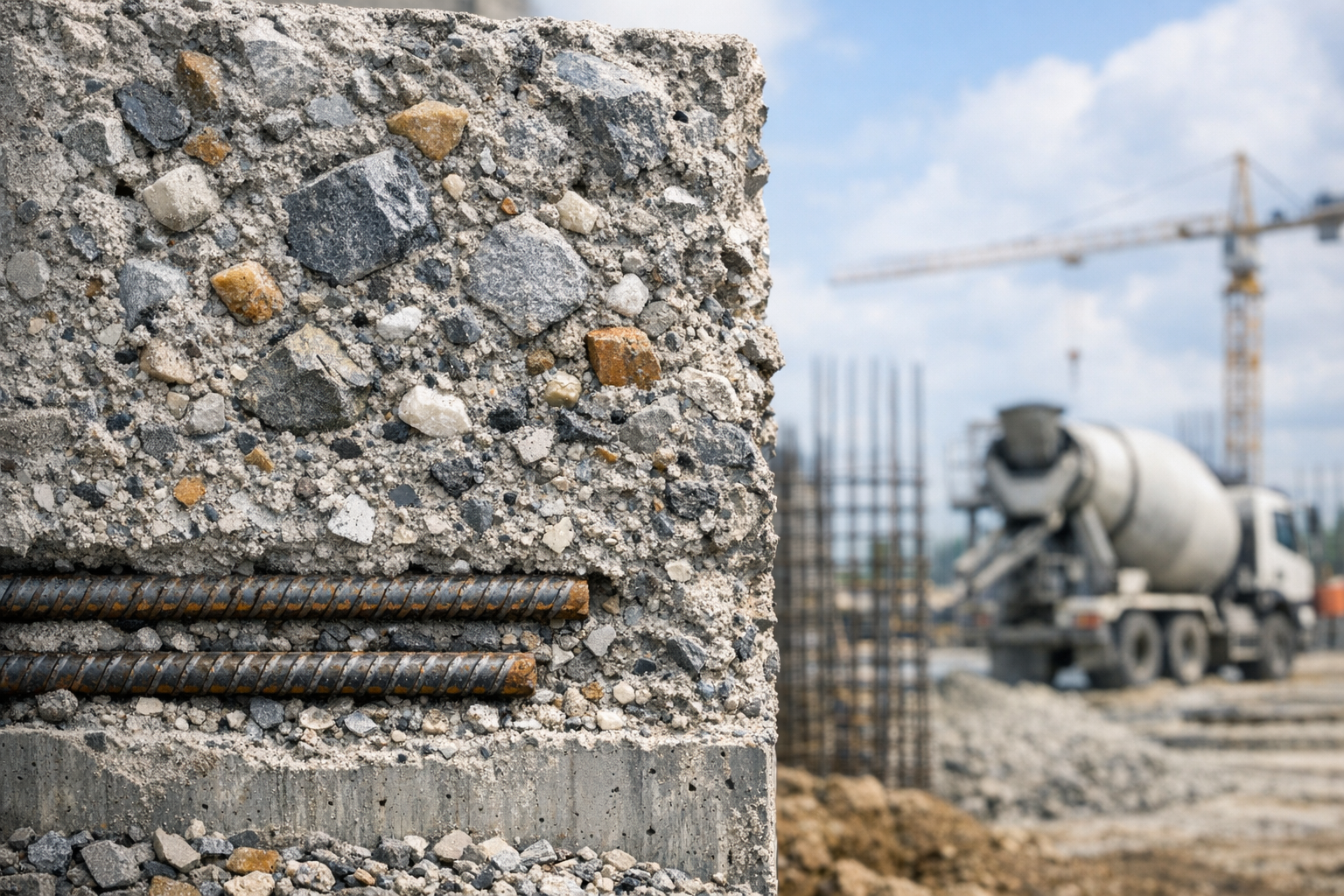
Inside concrete, you’ll find a carefully balanced combination of cement, water, sand, gravel or crushed stone, and sometimes special admixtures. When these ingredients are mixed, a chemical reaction begins called hydration. This reaction transforms the paste into a hard, stone-like material that binds everything together.
The interior of concrete is not perfectly solid. It contains tiny pores, capillaries, and microscopic air pockets. These small spaces affect strength, permeability, freeze-thaw resistance, and overall durability. In high-quality concrete, the internal structure is dense and well-bonded, helping reduce water penetration and cracking.
The Main Components Inside Concrete
Cement Paste
Cement paste is the glue inside concrete. It is formed when cement and water combine, creating a hardened matrix that coats the aggregate. The quality of the paste has a major impact on the final strength and durability of the concrete.
Aggregates
Aggregates make up most of the volume inside concrete. Fine aggregates, such as sand, fill gaps between larger pieces of stone or gravel. Coarse aggregates add bulk and help concrete resist compression. Well-graded aggregates create a tighter internal structure, improving performance and reducing voids.
Water
Water is essential for hydration, but too much water can weaken the internal structure. A high water-to-cement ratio often leads to more pores and lower strength. The right amount of water helps concrete remain workable while still producing a dense, durable interior after curing.
Admixtures and Additives
Admixtures are ingredients added to improve specific properties inside concrete. These may include air-entraining agents, plasticizers, set accelerators, or water reducers. Each one changes the internal behavior of the mix in a different way, helping contractors control workability, strength, and resistance to environmental damage.
How Concrete Hardens From the Inside
Concrete does not dry out in the usual sense. Instead, it hardens from the inside through hydration, a chemical process that continues over time. As water reacts with cement particles, crystals form and interlock throughout the mixture. These crystals gradually build strength and transform the material into a solid mass.
This process happens from the inside outward, which is why curing is so important. If concrete loses moisture too quickly, hydration slows down and the interior may not fully develop. Proper curing helps ensure the inside concrete reaches its intended strength and durability.
Why the Internal Structure Matters
The inside of concrete affects almost every performance characteristic. A dense, well-cured interior can handle heavy loads, resist cracking, and stand up to moisture exposure. On the other hand, a weak or porous internal structure can lead to spalling, scaling, corrosion of reinforcement, and premature failure.
Key factors influenced by the internal structure include:
- Strength: Stronger internal bonding improves compressive performance.
- Durability: A tighter structure resists weathering and chemical attack.
- Permeability: Less porosity means less water and salt intrusion.
- Crack resistance: Good mix design and curing reduce internal stress.
Inside Reinforced Concrete
Many concrete structures contain steel reinforcement inside concrete to improve tensile strength. While concrete is excellent at resisting compression, it is weaker under tension. Steel bars, wire mesh, or fibers help carry those tensile loads and reduce cracking.
When placed correctly, reinforcement works together with the concrete around it. The bond between the steel and the hardened concrete is essential. If moisture reaches the reinforcement and causes corrosion, the expanding rust can damage the surrounding material from the inside. That is why proper cover depth, mix quality, and curing are so important in reinforced structures.
Common Problems Found Inside Concrete
Voids and Honeycombing
Voids are empty spaces inside concrete that can form when the mix is poorly consolidated or placed incorrectly. Honeycombing is a visible type of void-related defect that weakens the structure and leaves aggregate exposed.
Cracks
Cracks may begin inside concrete long before they appear on the surface. They can result from shrinkage, thermal movement, overload, or poor curing. Small internal cracks can grow over time and affect the overall integrity of the structure.
Segregation
Segregation occurs when the heavier aggregate separates from the cement paste during placement. This creates an uneven internal composition and can lead to weak zones, poor finish quality, and reduced strength.
Corrosion Around Rebar
In reinforced concrete, corrosion often starts deep inside the structure where moisture, oxygen, and chlorides reach the steel. Once corrosion begins, it can expand and break apart the surrounding concrete from within.
How to Improve What’s Inside Concrete
Improving the quality of concrete starts before it is poured. A well-designed mix, proper material selection, and careful placement all contribute to a better internal structure. Here are some practical ways to improve inside concrete:
- Use a low water-to-cement ratio without sacrificing workability.
- Choose properly graded aggregates for better packing density.
- Compact the mix thoroughly to remove trapped air and voids.
- Allow adequate curing time so hydration can fully develop.
- Use admixtures when needed to enhance performance.
- Protect reinforcement with correct cover and quality control.
Moist curing, curing compounds, and temperature control all play a role in helping the internal structure develop properly. The better the conditions during the first few days, the stronger and more durable the concrete will be over its lifetime.
Inspecting Inside Concrete
Professionals often use non-destructive testing methods to understand what is happening inside concrete without damaging it. Techniques such as ground-penetrating radar, ultrasonic pulse velocity, and core sampling can reveal voids, reinforcement location, moisture issues, and internal defects.
These inspections are useful for new construction as well as older structures. By identifying problems inside concrete early, engineers can recommend repairs before small issues become major structural concerns.
Conclusion
What lies inside concrete is just as important as what you see on the surface. Its internal mix, hydration process, reinforcement, and curing all work together to create strength and durability. When the inside concrete is well designed and properly maintained, the result is a structure that performs reliably for years.