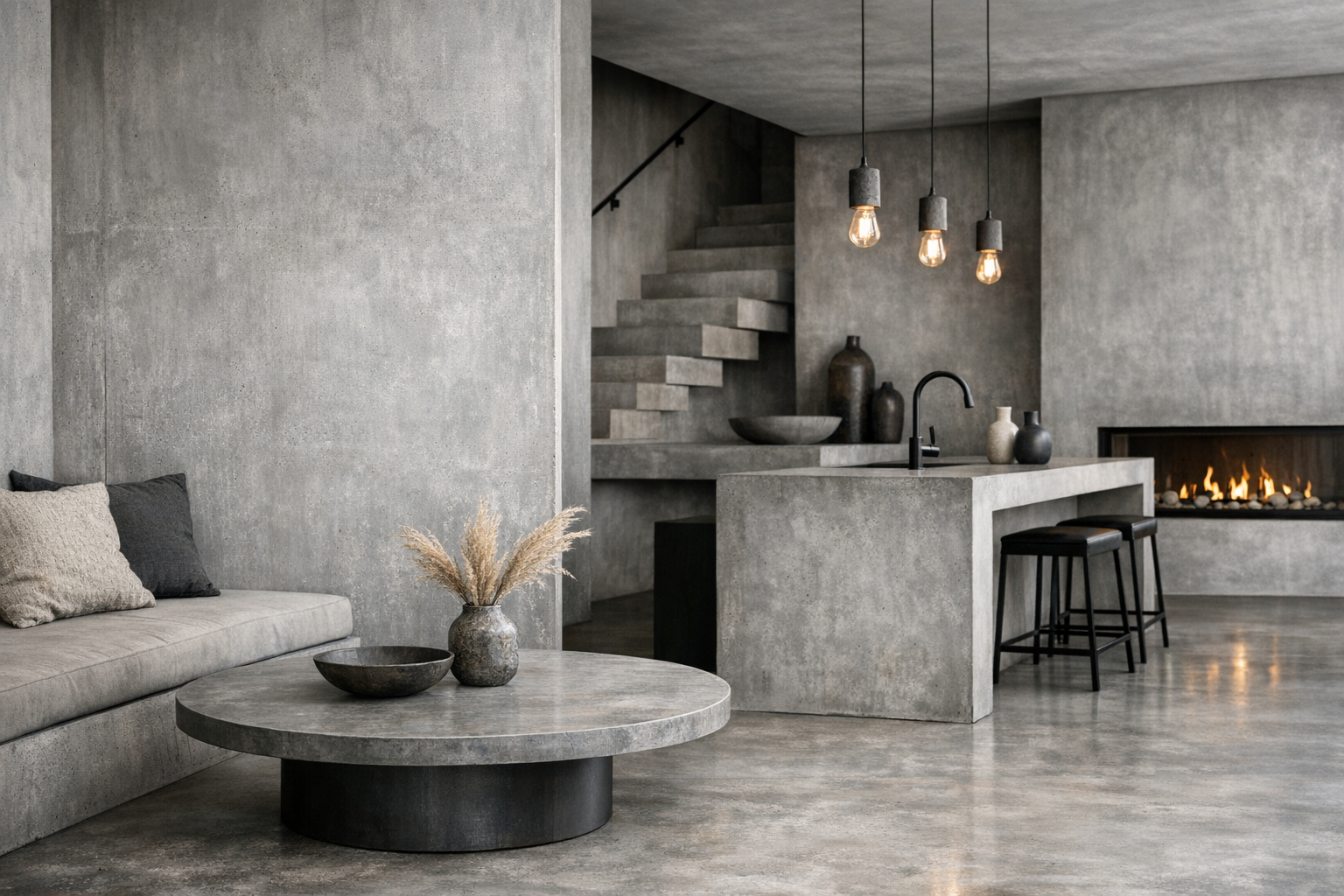
Concrete inside the home is no longer limited to basements, garages, or industrial lofts. Today, it is a popular interior finish for floors, countertops, walls, stairs, and decorative accents. Homeowners and designers value concrete for its clean look, long lifespan, and versatility. Whether you want a modern minimal style or a warm, textured finish, concrete can be adapted to fit many interiors.
What Does Concrete Inside Mean?
When people talk about concrete inside, they usually mean using concrete as an interior surface or design element. This can include polished concrete floors, concrete countertops, feature walls, fireplace surrounds, vanities, and even furniture pieces. Unlike traditional materials that are hidden behind finishes, interior concrete is often left visible and styled as part of the design.
Concrete inside works especially well in homes that want a balance of durability and design. It offers a solid, timeless feel while still allowing plenty of customization through color, texture, polish level, and shape.
Benefits of Using Concrete Inside
One of the biggest reasons concrete is used indoors is its durability. It resists heavy foot traffic, holds up well over time, and can be easier to maintain than many other materials. This makes it a smart choice for busy households, commercial spaces, and open-plan interiors.
Another major benefit is design flexibility. Concrete can be smooth and sleek, matte and industrial, or warm and handcrafted. It can be stained, stamped, polished, tinted, or sealed to create very different looks. It also pairs well with wood, glass, metal, and stone, making it easy to mix into a range of interior styles.
Concrete inside can also help create a sense of continuity. Large floors or repeated design elements in concrete can make a space feel more open and unified. In addition, polished concrete can reflect light, which may brighten rooms and reduce the need for additional visual clutter.
Popular Uses for Concrete Indoors
Concrete Floors
Polished concrete floors are one of the most common interior applications. They are durable, easy to clean, and suitable for modern homes, apartments, offices, and retail spaces. They work particularly well in kitchens, living areas, and basements. With the right sealant, concrete floors can resist stains and moisture while maintaining a refined appearance.
Concrete Countertops
Concrete countertops are a stylish alternative to granite, quartz, or laminate. They can be custom-formed to fit specific dimensions and design preferences. Homeowners often choose them for kitchens, bathrooms, laundry rooms, and bar areas. Because concrete is highly customizable, edges, embedded materials, and pigments can all be tailored to match the overall interior.
Concrete Walls and Feature Surfaces
Interior concrete walls can create a bold architectural statement. Whether used as a full accent wall or a smaller feature behind a fireplace or television, concrete adds texture and depth. It can be cast in place, applied as a decorative overlay, or installed using concrete panels, depending on the project.
Stairs, Sinks, and Furniture
Concrete stairs, sinks, tables, and shelving can bring a strong design identity to a room. These features often become focal points because they combine function with visual impact. A concrete sink in a bathroom or a custom concrete dining table can make a space feel distinctive and crafted.
Design Styles That Work Well with Concrete Inside
Concrete is often associated with industrial interiors, but it is far more adaptable than many people realize. In modern minimalist spaces, concrete provides a clean backdrop that emphasizes shape and light. In Scandinavian-inspired rooms, it can balance the softness of wood and textiles. In rustic interiors, concrete creates contrast when paired with reclaimed materials.
Concrete inside also works beautifully in contemporary luxury designs. When polished and sealed properly, it can look sophisticated and high-end. Colored concrete or concrete with a honed finish can soften the appearance and make it feel more welcoming. The key is to pair it thoughtfully with other finishes so the space feels intentional, not cold.
Things to Consider Before Choosing Concrete Inside
Although concrete is versatile, it is not the right choice for every room or every lifestyle. Hard surfaces can feel cool underfoot, so some homeowners prefer area rugs or radiant floor heating to improve comfort. Concrete can also develop hairline cracks over time, which may be part of its natural character but should still be considered in the design.
Maintenance is another factor. While concrete is durable, it should be properly sealed to protect against stains, moisture, and wear. Different finishes may require different levels of care. For example, a polished floor and a raw decorative wall will not have the same upkeep needs. It is important to discuss sealing, cleaning, and long-term maintenance before installation.
Weight and structural support should also be reviewed, especially for countertops, stairs, or large custom pieces. In some cases, a concrete-look finish may be a better choice than solid concrete if weight is a concern.
How to Keep Interior Concrete Looking Its Best
Regular care helps concrete inside stay attractive for years. Dusting and sweeping floors prevents grit from wearing down the finish. For most surfaces, mild soap and water are enough for routine cleaning. Harsh chemicals should be avoided unless recommended by the installer or manufacturer.
Sealed surfaces may need resealing over time, depending on use and exposure. Countertops, bathroom surfaces, and high-traffic floors may need more frequent attention than decorative walls. Using coasters, mats, and felt pads can also help protect concrete from unnecessary scratches or stains.
If a surface becomes dull or damaged, refinishing may restore its original appearance. This makes concrete a practical long-term investment for interiors that need to stay both beautiful and functional.
Is Concrete Inside Right for Your Home?
Concrete inside is a strong choice if you want a material that combines style, durability, and customization. It works well in contemporary homes, urban lofts, renovated industrial spaces, and anywhere a clean, architectural look is desired. It can be subtle or dramatic, depending on how it is finished and styled.
Before choosing concrete, think about how the room is used, how much maintenance you are comfortable with, and what mood you want the space to create. With the right planning, concrete can add both performance and personality to your interior.
Conclusion
Concrete inside offers more than just strength. It brings texture, character, and a modern sense of design to indoor spaces. From floors and countertops to walls and custom features, it is a flexible material that can transform the look and feel of a home. With thoughtful finishing and proper care, interior concrete can be a lasting and stylish choice.