Concrete Driveway Strength: What Affects It and How to Maximize It
A concrete driveway is one of the best long-term investments you can make for your home. It offers a clean look, strong performance, and reliable support for everyday vehicle traffic. But not all concrete driveways are created equal. The strength of a driveway depends on several factors, from the mix design to the way it is installed and maintained.
If you want a driveway that resists cracking, handles heavy loads, and lasts for decades, it helps to understand what actually contributes to concrete driveway strength. Below, we break down the main factors that matter and explain how to get the most durable result possible.
What Makes a Concrete Driveway Strong?
Concrete strength is usually measured in pounds per square inch, or PSI. For residential driveways, concrete is commonly poured at 3,000 to 4,000 PSI, though some projects may use higher-strength mixes depending on the expected load. Strength is not just about how much weight the surface can carry on day one. It also affects how well the driveway holds up against weather, moisture, freeze-thaw cycles, and long-term wear.
A strong driveway has enough compressive strength to resist crushing under vehicles, but it also needs good durability and proper reinforcement to limit cracking and movement over time. In other words, strength is more than just a number on the mix bag.
Concrete Mix Design
The mix itself is the foundation of driveway strength. A well-balanced mix includes cement, water, sand, gravel or crushed stone, and sometimes additives that improve performance. One of the biggest factors is the water-to-cement ratio. Too much water makes the concrete easier to place, but it also creates a weaker finished slab. A lower water-to-cement ratio generally improves strength and durability.
Aggregate quality matters too. Clean, well-graded aggregate helps concrete gain strength and resist shrinkage. Some mixes also include air-entraining agents, which create tiny air bubbles that help concrete stand up to freeze-thaw damage in colder climates.
Thickness of the Slab
Thickness plays a major role in driveway performance. A standard residential driveway is often 4 inches thick, which is usually enough for passenger vehicles. If the driveway will support heavier trucks, RVs, or frequent use by multiple vehicles, 5 to 6 inches may be a better choice.
Even strong concrete can fail if it is too thin for the load it carries. Thickness gives the slab more capacity to distribute weight and reduce stress points. If you are planning a new driveway, it is worth thinking beyond immediate needs and considering how your use may change over time.
Proper Base Preparation
The layer beneath the concrete is just as important as the slab itself. A driveway installed over soft, uneven, or poorly compacted soil is far more likely to crack or settle. A strong base typically includes compacted gravel or crushed stone that creates a stable, well-draining foundation.
Good base preparation helps prevent movement and reduces the chances of water pooling beneath the slab. Drainage is especially important because water weakens support over time and can lead to frost heave in cold regions. A driveway that starts with a solid base has a much better chance of staying strong for years.
Reinforcement
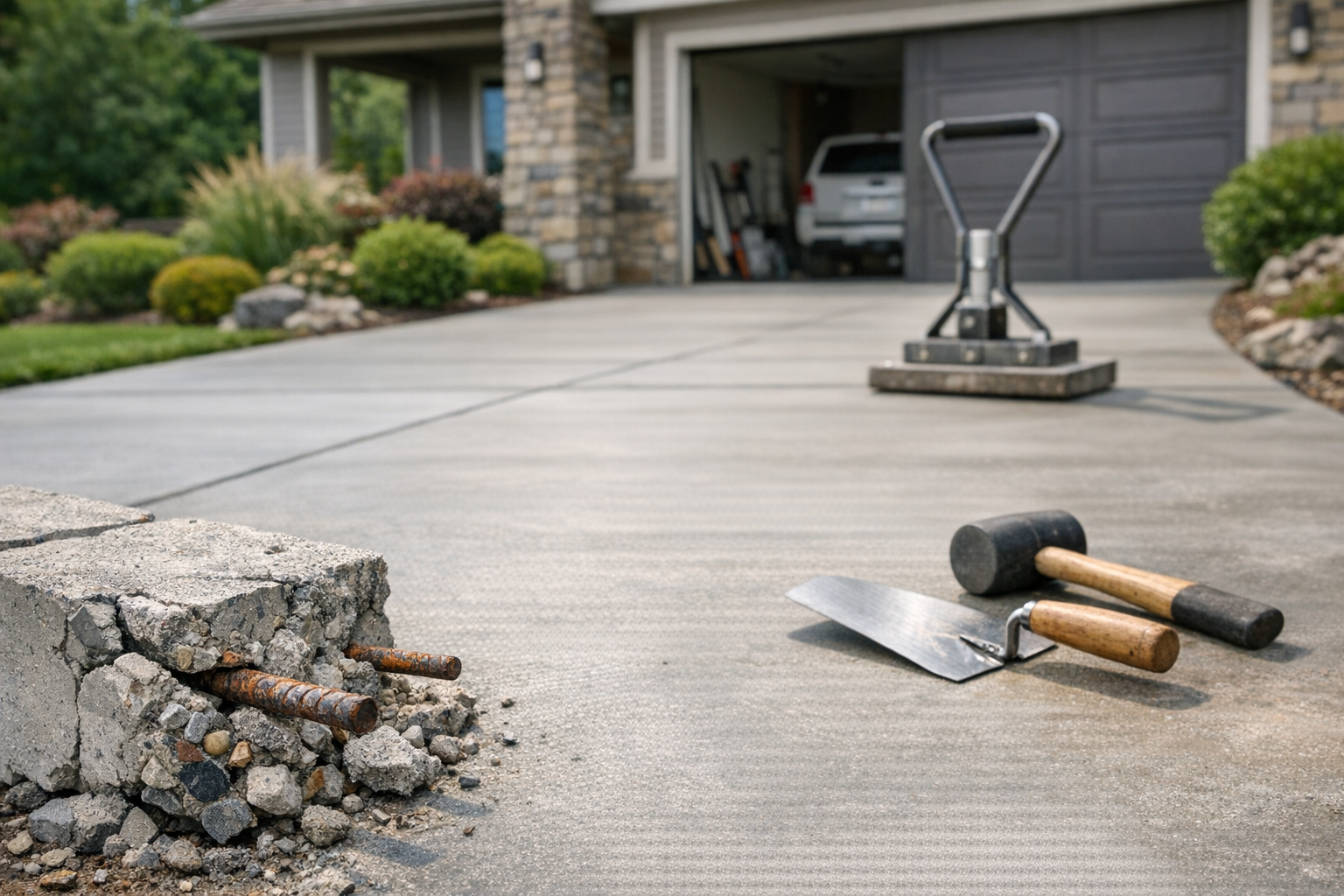
Reinforcement does not necessarily make concrete “harder,” but it does improve its ability to handle stress without failing. Steel rebar, wire mesh, or fiber reinforcement can help control cracking and improve overall structural performance. Rebar is especially useful for driveways that will carry heavier vehicles or deal with challenging soil conditions.
Reinforcement works by holding the slab together if cracks form, helping prevent minor issues from turning into major structural problems. While reinforcement is not a substitute for a proper mix or good base, it adds an important layer of protection.
Curing Time
Curing is one of the most overlooked parts of concrete driveway strength. Concrete gains strength gradually over time, and the first several days after pouring are especially important. If the surface dries out too quickly, it may not reach its full strength potential.
Proper curing usually involves keeping the surface moist or using a curing compound to retain water during the hardening process. While concrete may feel hard within a day or two, it can take about 28 days to reach much of its design strength. Rushing to drive on it too soon can compromise the final result.
How to Tell if a Driveway Is Strong Enough
A strong driveway should feel solid under normal use, resist visible cracking, and remain level over time. Small surface hairline cracks are common in concrete, but larger cracks, spalling, or sinking sections can indicate a problem with the mix, base, drainage, or installation.
If you are planning a new driveway, ask the contractor about the concrete PSI, slab thickness, reinforcement, and base preparation. Those details reveal a lot about how durable the finished product will be. If you are evaluating an existing driveway, signs like widespread cracking or uneven settling may mean the slab is underbuilt or has been damaged by moisture and movement.
How to Improve Concrete Driveway Strength
There are several practical ways to increase driveway strength and longevity:
- Choose a concrete mix designed for driveways, typically 3,000 to 4,000 PSI or higher if needed.
- Keep the water content controlled during mixing and placement.
- Make sure the base is compacted and properly graded for drainage.
- Use reinforcement when appropriate, especially for heavier loads.
- Allow full curing before regular vehicle traffic.
- Seal the surface periodically to help protect against water, stains, and surface wear.
These steps do not just make the driveway stronger at installation time; they also help it stay strong over the long term.
Why Strength Matters for Long-Term Value
Concrete driveway strength affects more than appearance. A driveway that is built correctly is less likely to crack, settle, or require major repairs. That means fewer maintenance costs and better curb appeal over time. It also improves safety by reducing tripping hazards and uneven surfaces.
For homeowners, investing in strength upfront often pays off in fewer headaches later. A driveway that is properly designed and installed can last for decades with routine care. When strength is prioritized from the beginning, the entire property benefits.
Conclusion
Concrete driveway strength depends on more than just the material itself. The mix design, slab thickness, base preparation, reinforcement, and curing process all play a major role in how well the driveway performs. By paying attention to these details, you can build a driveway that stands up to daily use and provides lasting value for your home.