
Why Concrete Quality Matters
Concrete is one of the most common building materials in the world, and for good reason. It is durable, versatile, and cost-effective when it is installed correctly. But concrete only performs as well as the materials, planning, and workmanship behind it. When concrete is done right, it can support driveways, patios, sidewalks, foundations, and commercial surfaces for decades with minimal issues.
When it is done poorly, the results can be frustrating and expensive. Cracking, scaling, uneven surfaces, poor drainage, and premature wear often point back to preventable mistakes. That is why understanding the basics of good concrete work matters whether you are a homeowner planning a project or a contractor aiming for reliable results.
Concrete done right is not about making the job look easy. It is about paying attention to details at every stage, from design and preparation to placement, finishing, and curing.
The Foundation of Success: Planning and Preparation
Every successful concrete project starts before the first batch is mixed. Planning determines whether the surface will perform well under real-world conditions. That means considering the intended use, the local climate, soil conditions, drainage, reinforcement needs, and the right concrete mix for the job.
Choose the Right Mix
Not all concrete mixes are the same. A driveway, for example, needs a different mix than a decorative patio or a structural foundation. Strength, workability, air content, and water ratio all play important roles. In many cases, adding too much water is one of the biggest mistakes because it weakens the final product and increases the risk of cracking.
Prepare the Subgrade
The ground beneath the concrete is just as important as the slab itself. A stable, compacted subgrade helps prevent settling and uneven surfaces. Poor soil preparation can lead to sinking, cracking, and drainage problems later on. Before pouring, the area should be properly graded, compacted, and built to support the planned load.
Plan for Drainage
Water is one of concrete’s biggest enemies when drainage is ignored. Standing water can damage surfaces over time, especially in freeze-thaw climates. Proper slope and drainage planning help move water away from the slab and protect the structure beneath it.
The Right Way to Pour and Finish Concrete
Once preparation is complete, the pouring stage must be handled with care. Timing, consistency, and technique all influence the final result. Even a well-designed project can fail if the placement and finishing are rushed or performed incorrectly.
Place Concrete Efficiently
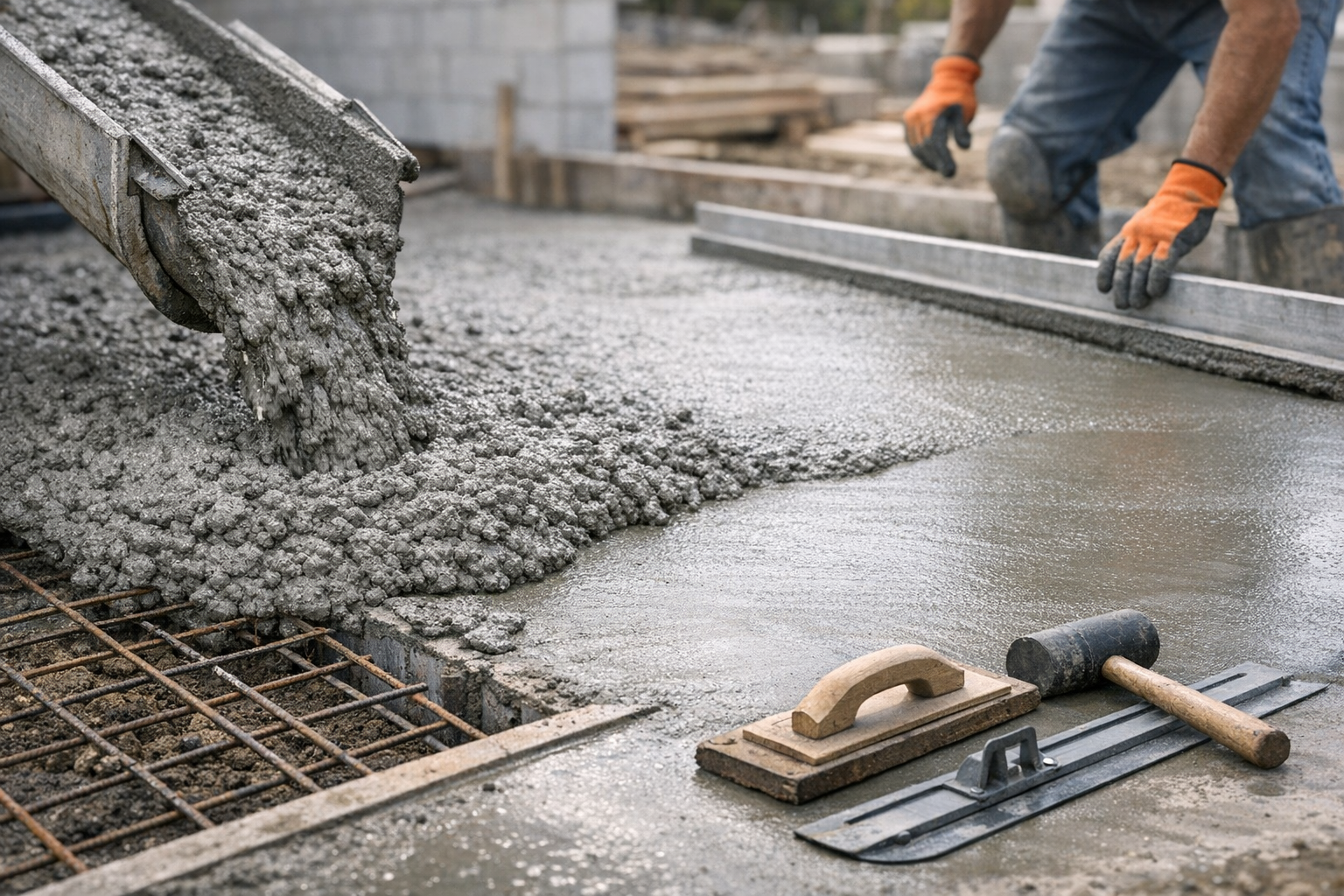
Concrete should be placed evenly and worked into position without unnecessary delays. Once it begins to set, it becomes harder to finish properly. Crews should avoid excessive handling and keep the process moving steadily to maintain consistency throughout the pour.
Use Proper Reinforcement
Reinforcement helps concrete resist tension and reduce cracking. Depending on the application, this may include rebar, wire mesh, or fiber reinforcement. While reinforcement does not prevent every crack, it helps control movement and improve long-term performance.
Finish Without Overworking the Surface
A smooth finish is desirable, but overworking the top layer can cause problems. Bringing too much water or paste to the surface may weaken the slab and create a dusty or flaky finish. The goal is to achieve the right texture and appearance without compromising strength.
For exterior surfaces, a finish should also provide traction. A broom finish, for example, is commonly used on sidewalks and driveways because it adds subtle texture that improves safety in wet conditions.
Curing: The Step That Makes the Difference
Curing is one of the most overlooked parts of concrete work, yet it is essential for strength and durability. Concrete does not simply dry; it cures through a chemical reaction that needs moisture and time. If the surface dries too quickly, the slab may become weaker and more prone to cracking.
Proper curing can be achieved through water curing, curing compounds, wet coverings, or plastic sheeting, depending on the project and weather conditions. The key is to keep moisture in the concrete long enough for the hydration process to develop strength properly. In many cases, the first several days are especially important.
Good curing may not be visible once the job is complete, but it has a major impact on how well the concrete performs over time. If there is one stage that should never be rushed, it is curing.
Common Mistakes to Avoid
Even experienced teams can make mistakes if they get too focused on speed or cost. Some of the most common errors include adding too much water, skipping proper compaction, ignoring drainage, finishing too early, and failing to cure correctly. Another frequent issue is cutting control joints too late or spacing them poorly, which can lead to random cracking.
Weather also matters. Pouring concrete in extreme heat, freezing temperatures, or during rain without the right precautions can affect strength and appearance. Good contractors adjust their methods based on conditions instead of relying on a one-size-fits-all approach.
Why Professional Craftsmanship Pays Off
Concrete done right saves time, money, and headaches in the long run. While shortcuts may lower upfront costs, they often lead to repairs, replacement, and avoidable disappointment. Professional craftsmanship means using the right materials, following proper methods, and respecting the details that protect the finished work.
Homeowners and property managers benefit most when they choose experienced concrete professionals who understand structural performance as well as appearance. A quality pour should look good on day one and continue performing well for years.
Conclusion
Concrete done right is the result of smart planning, proper preparation, careful placement, and patient curing. When each step is handled correctly, concrete becomes a reliable, long-lasting investment instead of a source of ongoing problems. Whether you are building a new driveway, patio, slab, or foundation, the difference between average work and excellent work is often found in the details.
If you want concrete that stands the test of time, focus on quality from the ground up.