
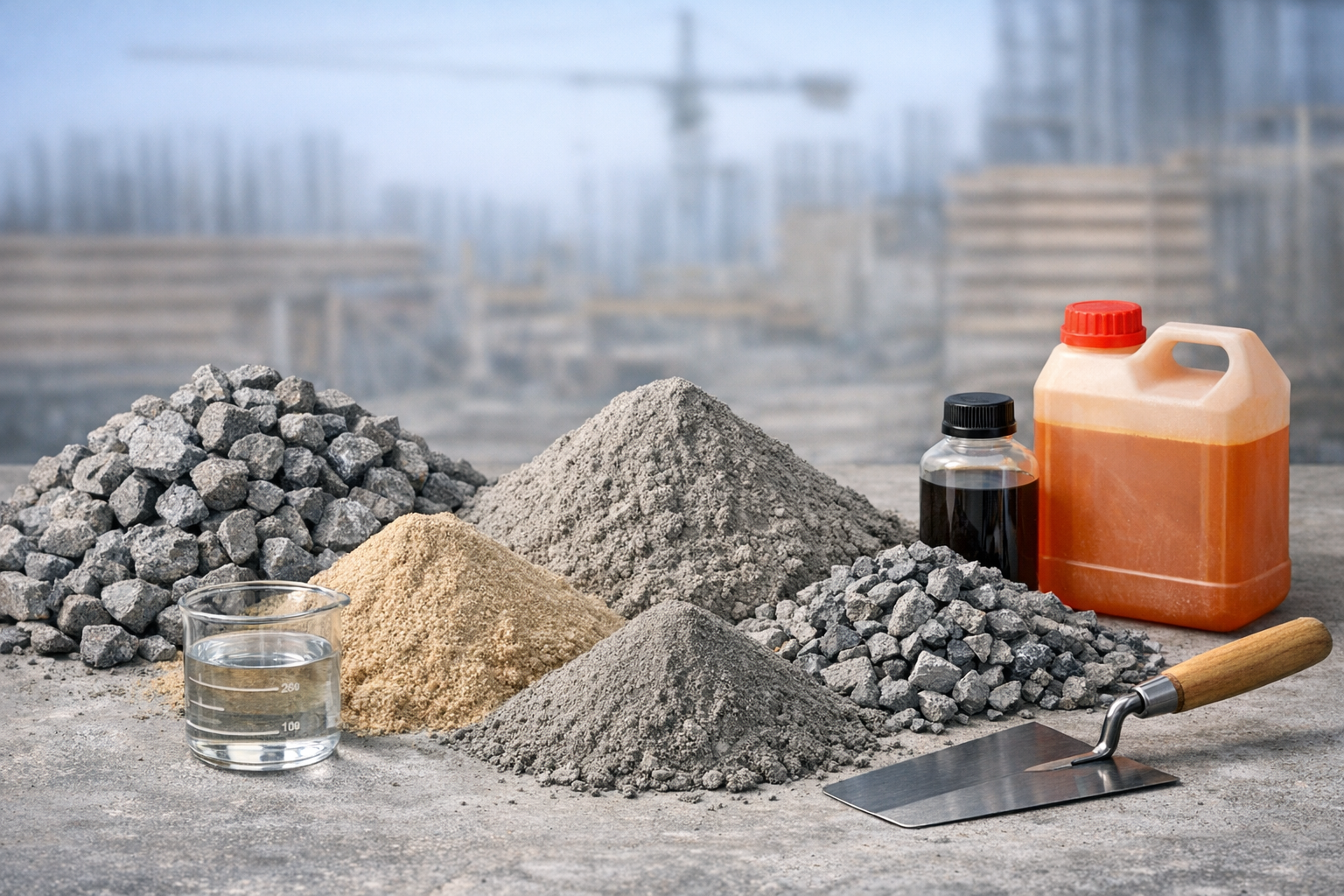
Concrete is one of the most widely used building materials in the world, but many people do not know what actually goes into it. The content of concrete refers to the materials that make up the mix and the way those materials work together. When combined in the right proportions, they create a strong, durable, and versatile material used for everything from sidewalks to skyscrapers.
What Is Concrete Made Of?
Concrete is a composite material made from a few basic ingredients. The standard mix includes cement, water, fine aggregate, and coarse aggregate. In many cases, additional materials are added to improve workability, strength, setting time, or durability.
At its core, concrete is not the same as cement. Cement is only one part of the mix. When cement and water react, they form a paste that binds the aggregates together. This chemical reaction is what gives concrete its strength over time.
Cement
Cement is the binder in concrete. The most common type is Portland cement, which is made by heating limestone, clay, and other materials at high temperatures. Once ground into a fine powder, it becomes the ingredient that reacts with water to harden and hold the mix together.
Although cement is essential, it usually makes up only a small portion of the total concrete content. Still, it plays the most important role in the chemical process that turns a wet mix into solid material.
Water
Water is necessary to activate the cement. Without it, the cement cannot hydrate, and the mix will not harden. The amount of water used in a concrete mix has a major effect on both strength and workability.
Too much water can weaken concrete and increase the risk of cracking or surface wear. Too little water can make the mix difficult to place and finish. For this reason, controlling the water content is one of the most important parts of concrete design.
Fine Aggregate
Fine aggregate usually means sand. It fills the spaces between larger stones and helps create a dense, workable mix. Fine aggregate contributes to the smoothness of the concrete and improves its overall structure.
The quality of sand matters. Clean, well-graded sand helps produce stronger concrete, while dirty or poorly sized sand can reduce performance. In some cases, manufactured sand or other fine materials are used instead of natural sand.
Coarse Aggregate
Coarse aggregate consists of larger stones, gravel, or crushed rock. This material gives concrete much of its bulk and strength. It also helps reduce the amount of cement paste needed, which can lower cost and shrinkage.
The shape, size, and type of coarse aggregate all influence the final concrete content and performance. Rounded gravel can improve workability, while crushed stone often creates stronger mechanical interlock.
How the Ingredients Work Together
The real strength of concrete comes from the interaction between its ingredients. Cement and water form a paste that coats the aggregates. As the cement hydrates, it hardens and binds the sand and stones into a solid mass.
Aggregates make up most of the volume of concrete, often around 60% to 80%. This means they are not just filler. They help control shrinkage, improve durability, and give concrete its structure. The paste fills the gaps and acts as the glue, while the aggregates provide stability and strength.
A good concrete mix must balance all these parts. If the paste content is too low, the mix may be harsh or difficult to compact. If the paste content is too high, the concrete may shrink more and become less economical. The right proportions depend on the intended use of the concrete.
Common Additives in Concrete
Beyond the basic ingredients, many concrete mixes include additives called admixtures or supplementary materials. These help tailor the concrete content for special performance needs.
Chemical Admixtures
Chemical admixtures are added in small amounts to change the properties of concrete. Some common examples include:
- Plasticizers: Improve workability without adding extra water.
- Retarders: Slow the setting time in hot weather or large pours.
- Accelerators: Speed up hardening in cold conditions.
- Air-entraining agents: Add tiny air bubbles to improve freeze-thaw resistance.
Supplementary Cementitious Materials
Materials such as fly ash, slag cement, silica fume, and calcined clay are often used to replace part of the cement. These materials can improve durability, reduce environmental impact, and sometimes increase long-term strength.
Using these materials changes the content of concrete in a beneficial way. They can make the mix more sustainable and improve resistance to harsh conditions, such as chemical exposure or repeated freezing and thawing.
Why Concrete Content Matters
The content of concrete directly affects its performance. A mix designed for a driveway will not be the same as one used for a bridge, foundation, or decorative surface. Each project needs a different balance of strength, workability, durability, and cost.
For example, high-strength concrete usually has a lower water-to-cement ratio and carefully selected aggregates. Concrete used in wet or cold environments may need special admixtures for durability. Decorative concrete may include color pigments or polished aggregates for appearance.
Understanding the content of concrete is also important for quality control. Builders, engineers, and contractors must ensure that each batch meets the required specifications. Even small changes in ingredient amounts can affect curing, strength, finish, and lifespan.
Conclusion
Concrete may seem simple, but its content is carefully balanced to achieve the desired results. Cement, water, sand, and stone form the base of the mix, while additives can enhance performance in specific situations. Knowing what is inside concrete helps explain why it is such a reliable and adaptable material. Whether for a small patio or a major infrastructure project, the right concrete content makes all the difference.