
Understanding Concrete Work Time
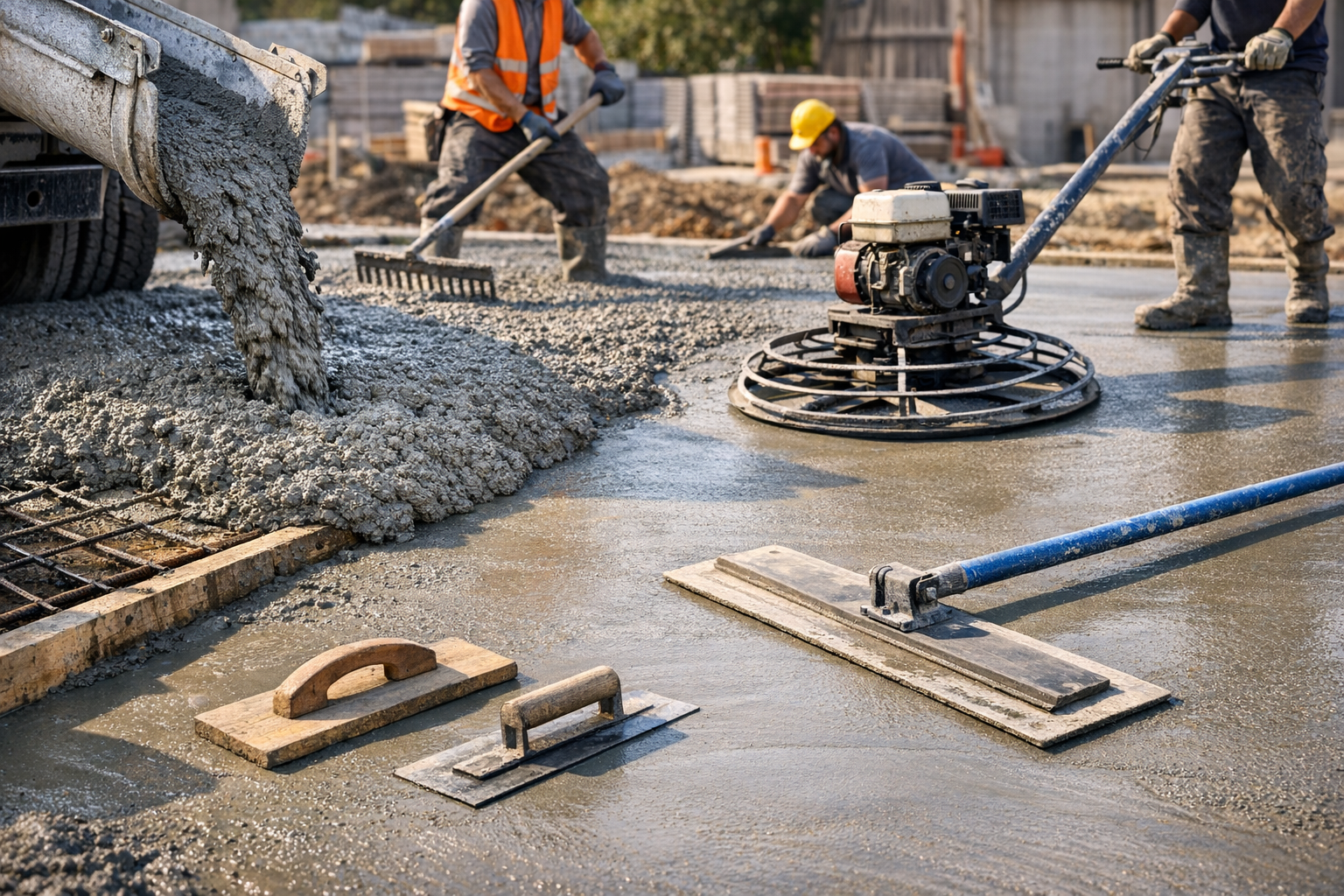
Concrete work time is the window you have to place, spread, level, and finish fresh concrete before it begins to stiffen too much to handle properly. For anyone planning a slab, driveway, walkway, patio, or foundation, understanding this timeline is essential. If you wait too long, the surface can become difficult to smooth, joints may not form cleanly, and the final result can suffer. If you move too fast without a plan, you may miss important finishing steps.
The exact work time depends on several factors, including mix design, temperature, humidity, wind, the amount of water in the mix, and whether admixtures are used. In general, freshly mixed concrete starts changing immediately after water meets cement, so the clock begins as soon as batching is complete.
What Affects Concrete Work Time?
Concrete does not stay workable for a fixed amount of time in every project. Conditions on the jobsite play a major role in how long you can safely and effectively work with it.
Temperature
Warm weather speeds up the chemical reaction that causes concrete to set. On hot days, work time can shrink quickly, making it harder to finish large pours. Cool weather usually extends work time, but it can also slow curing, so the project still needs proper planning.
Humidity and Wind
Low humidity and strong wind can dry the surface faster than expected. When the top layer loses moisture too quickly, finishing becomes more difficult and surface defects can form. In contrast, moderate humidity can help preserve workability a bit longer.
Mix Design
Different concrete mixes behave differently. A mix with more cement paste may feel more workable, while a stiffer mix may be harder to place but offer better strength for certain applications. The water-cement ratio also matters: too much water can make concrete easier to move but weaken the finished slab.
Admixtures
Chemical admixtures can significantly change concrete work time. Retarders slow setting and are often helpful in hot weather or for large pours. Accelerators speed setting and are useful when faster finishing or early strength is needed. Plasticizers can improve flow without adding excess water.
How Long Is Concrete Work Time?
Most standard concrete mixes offer roughly 30 minutes to 90 minutes of useful work time, but this is only a general guideline. Some mixes may stay manageable longer, especially in cooler weather or when retarders are added. Others may begin stiffening much sooner, especially in high heat.
It helps to think of concrete work time in stages:
- Placement phase: Concrete is poured, moved into place, and distributed evenly.
- Consolidation phase: The mix is vibrated or tapped to remove trapped air and fill voids.
- Initial finishing phase: The surface is screeded, floated, and leveled.
- Final finishing phase: Edges, joints, and texture are completed before the slab hardens further.
The key is not just how long the concrete remains wet, but how long it stays workable enough to complete each of these steps properly.
Signs That Concrete Is Losing Workability
Knowing when concrete is approaching the end of its workable period can help prevent mistakes. Here are common warning signs:
- It becomes harder to move and spread.
- The surface starts to resist screeding or troweling.
- Bleed water begins to disappear, and the finish no longer responds smoothly.
- Edges crumble or tear instead of forming clean lines.
- Tool marks remain visible rather than blending in.
When concrete reaches this stage, forcing it usually causes more harm than good. Overworking stiff concrete can lead to weak spots, dusting, cracking, or a rough finish.
Best Practices to Manage Concrete Work Time
Careful preparation is one of the best ways to make the most of your available work time. The more organized the pour, the less pressure you’ll feel once the concrete arrives.
Plan the Job Before the Truck Arrives
Have forms, tools, crews, and access routes ready ahead of time. A smooth workflow reduces delays and keeps the concrete moving from truck to placement without unnecessary waiting.
Choose the Right Mix
If the project is large or the weather is hot, talk to the supplier about a mix that offers more working time. A retarder or slump adjustment may be appropriate depending on the job requirements.
Control Weather Exposure
When possible, schedule pours for cooler parts of the day. Use sunshades, windbreaks, or surface evaporation retarders if conditions are drying the slab too quickly. These simple steps can extend usable work time and improve the surface finish.
Work in Sections
For larger projects, divide the work into manageable sections so you can place and finish concrete before it starts setting. This is especially useful for decorative slabs, patios, and other surfaces where appearance matters.
Avoid Adding Too Much Water
It may be tempting to add water to keep concrete easier to handle, but this can reduce strength and durability. Instead, rely on proper mix design and admixtures when extra workability is needed.
Concrete Work Time vs. Cure Time
It’s important to distinguish between work time and cure time. Work time is the period when concrete can be placed and finished. Cure time is the much longer process during which concrete gains strength and durability.
Concrete may be firm enough to walk on after a day or two, but it is not fully cured. Full strength development can take weeks, and in some cases, even longer. Proper curing helps reduce cracking, improve durability, and ensure the slab performs as intended.
Conclusion
Concrete work time is one of the most important factors in any successful pour. By understanding how temperature, mix design, weather, and admixtures affect workability, you can plan better and achieve a smoother, stronger finish. The best results come from preparation, timing, and a clear understanding of when to work quickly and when to let the mix do its job.