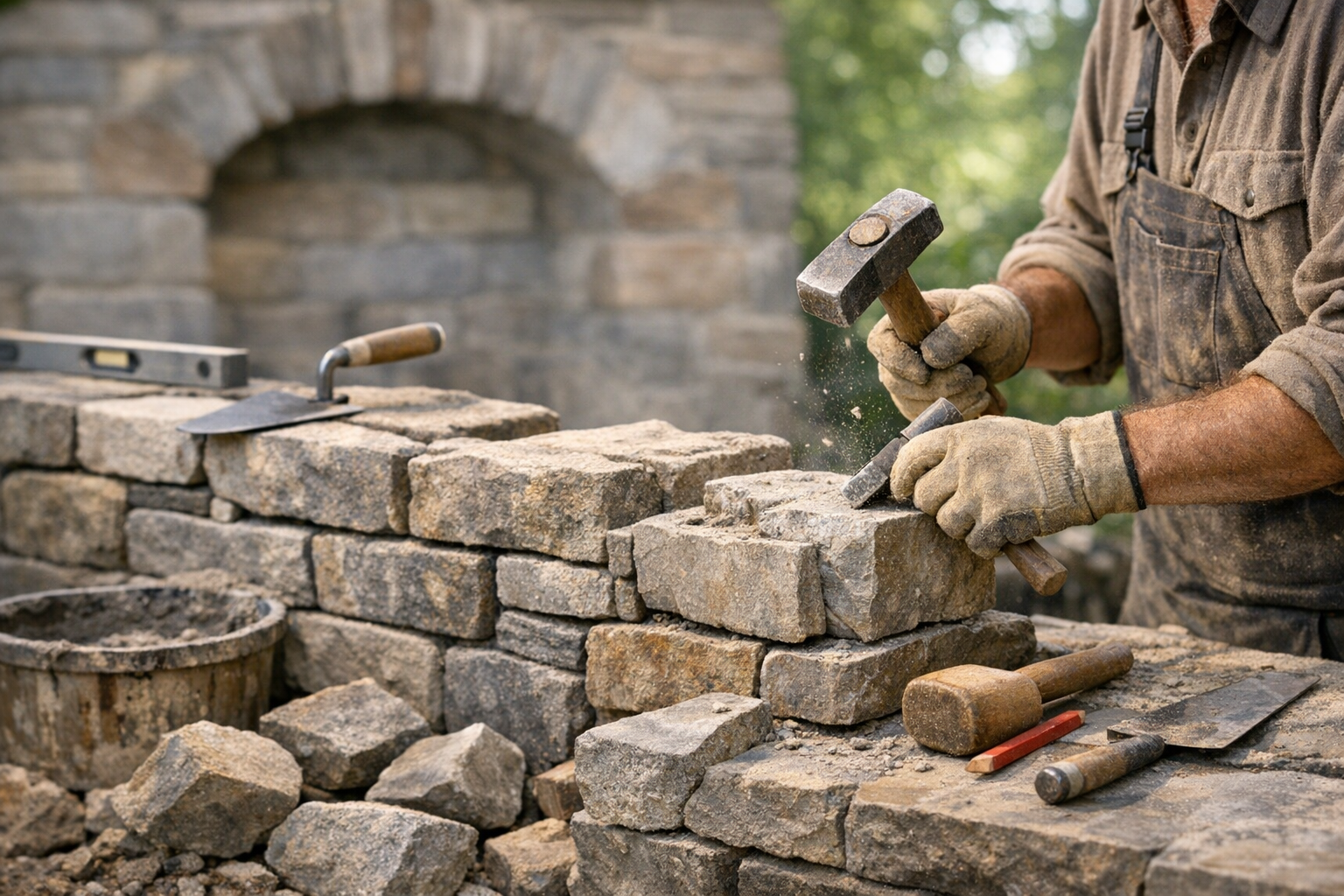
What Is Mason Stone Work?
Mason stone work is the craft of building, repairing, and shaping structures using natural stone and mortar. It combines skill, planning, and material knowledge to create walls, facades, fireplaces, chimneys, steps, retaining walls, and decorative features that are both durable and visually striking. Unlike many modern building methods, stone masonry often emphasizes texture, color variation, and long-term performance.
This type of work can be used in residential, commercial, and landscape projects. Some stone masonry is structural, meaning it supports weight and helps form the building itself. Other stone work is decorative, adding character to an entryway, garden wall, patio, or interior feature. In either case, the quality of the workmanship greatly affects the final result.
Types of Mason Stone Work
1. Ashlar Masonry
Ashlar masonry uses stones that are cut into uniform shapes and sizes. Because the stones fit tightly together, this style creates a clean, refined appearance. It is often chosen for formal buildings, entry features, and upscale exterior walls.
2. Rubble Masonry
Rubble masonry uses irregular, rough stones. This style has a more rustic look and is often less expensive than ashlar work because the stones require less shaping. It can be dry-stacked or laid with mortar, depending on the design and structural needs.
3. Veneer Stone Work
Stone veneer provides the appearance of full stone construction without the weight or cost. It is applied over another wall surface and is popular for fireplaces, exterior accents, and interior feature walls.
4. Dry Stone Construction
Dry stone construction relies on carefully stacked stones without mortar. The stones are fitted so they stay stable through gravity and interlocking placement. This method is traditional, attractive, and often used in garden walls, boundaries, and landscape features.
Materials Used in Stone Masonry
The choice of stone has a major impact on appearance, strength, and maintenance. Common materials include granite, limestone, sandstone, slate, marble, and fieldstone. Each type has its own characteristics. Granite is known for strength, limestone for its classic look, sandstone for warmth and workability, and slate for layered texture.
Mortar is also an important part of many stone masonry projects. It helps hold the stones in place, fill gaps, and improve stability. The correct mortar mix should match the stone type and the project’s environmental conditions. Using the wrong mortar can lead to cracking, moisture problems, or premature wear.
How Mason Stone Work Is Done
Stone masonry begins with planning and preparation. A mason studies the design, measures the space, and chooses the right materials. For load-bearing projects, proper footing and structural support are essential. The base must be level and strong enough to carry the weight of the stone.
Next, the stones are selected, sorted, and often cut or shaped to fit the pattern. During installation, the mason places each stone carefully, checking alignment, level, and spacing. In mortared work, the joints are filled and tooled for a clean finish. In dry stone work, the pieces must be locked together tightly for stability.
Finishing touches may include cleaning the surface, sealing the stone, or adjusting the joints. Because stone is a natural material, each project requires attention to detail and flexibility during the build.
Benefits of Mason Stone Work
Durability
Stone is one of the most durable building materials available. When installed correctly, it can last for decades or even centuries. It resists fire, weather, and daily wear better than many other materials.
Timeless Appearance
Stone has a classic look that never really goes out of style. It adds natural texture and visual depth to any property, whether used in a traditional or modern design.
Low Maintenance
Compared with many exterior finishes, stone requires relatively little upkeep. Occasional cleaning and routine inspection are usually enough to keep it in good condition.
Property Value
Well-executed stone work can improve curb appeal and increase property value. Buyers often appreciate the quality and permanence that stone brings to a home or building.
Common Uses for Mason Stone Work
Mason stone work appears in many parts of a property. Exterior walls and facades create a strong first impression. Retaining walls help manage slopes while adding structure to landscaping. Walkways, patios, and steps provide practical use with natural beauty. Fireplaces and chimneys bring warmth and character to indoor and outdoor living spaces.
Stone is also used for columns, garden borders, mailboxes, outdoor kitchens, and water features. Because the material works well in both large and small applications, it remains a favorite for homeowners, builders, and designers.
Maintenance and Repair Tips
Even though stone is highly durable, it still benefits from regular care. Check mortar joints for cracks or gaps, especially after harsh weather. Look for loose stones, signs of water damage, or shifting in retaining walls and steps. Addressing small problems early can prevent larger repairs later.
Cleaning should be done gently. Harsh chemicals and pressure washing can damage certain stones or mortar joints. A soft brush, mild cleaner, and water are usually the safest options. If sealing is recommended for your stone type, use a product designed specifically for masonry surfaces.
When repairs are needed, matching the original stone and mortar is important. Poorly matched repairs can stand out visually and may not perform as well over time. For structural issues, it is best to consult a qualified mason who understands stone behavior and load requirements.
Choosing the Right Mason for the Job
Quality stone work depends heavily on the mason’s experience. Look for a professional with a strong portfolio, good references, and proven experience with the specific type of stone project you need. Ask about their process, the materials they recommend, and how they handle drainage, support, and finishing.
A skilled mason will not only build the project correctly but also help you choose the best stone style for your budget and design goals. Clear communication and careful planning can make the difference between a standard result and a standout feature.
Conclusion
Mason stone work combines beauty, strength, and craftsmanship in a way few building materials can match. Whether you are planning a wall, fireplace, patio, or landscape feature, stone adds long-lasting value and timeless appeal. With the right materials and expert installation, stone masonry can become one of the most impressive and enduring parts of any property.