What Is a Masonry Step?
A masonry step is a step built from durable materials such as brick, stone, concrete block, or precast units. Unlike simple wood steps, masonry steps are designed to offer long-term strength, weather resistance, and a polished look that blends well with patios, porches, walkways, and garden spaces. They can be functional, decorative, or both, depending on the style of your home and landscape.
Because masonry is built to withstand heavy use and changing weather, it is a popular choice for exterior stairs. Whether you are replacing worn-out steps or planning a new entrance, masonry steps can add safety, value, and curb appeal.
Why Choose Masonry Steps?
Homeowners often choose masonry steps because they combine performance and appearance. They hold up well against rain, snow, sun, and freeze-thaw cycles when properly installed. They also create a solid, stable feel underfoot, which makes them ideal for front entries and backyard transitions.
Another advantage is design flexibility. Masonry steps can be finished in a wide range of colors, textures, and shapes. You can choose a classic brick look, a natural stone appearance, or a sleek concrete finish. This makes it easier to match the steps to existing hardscaping and the architectural style of the home.
Common Types of Masonry Steps
Brick Steps
Brick steps are a traditional option known for their timeless appearance. They work especially well with colonial, historic, and traditional homes. Brick can be arranged in decorative patterns and paired with stone or concrete accents for added interest.
Stone Steps
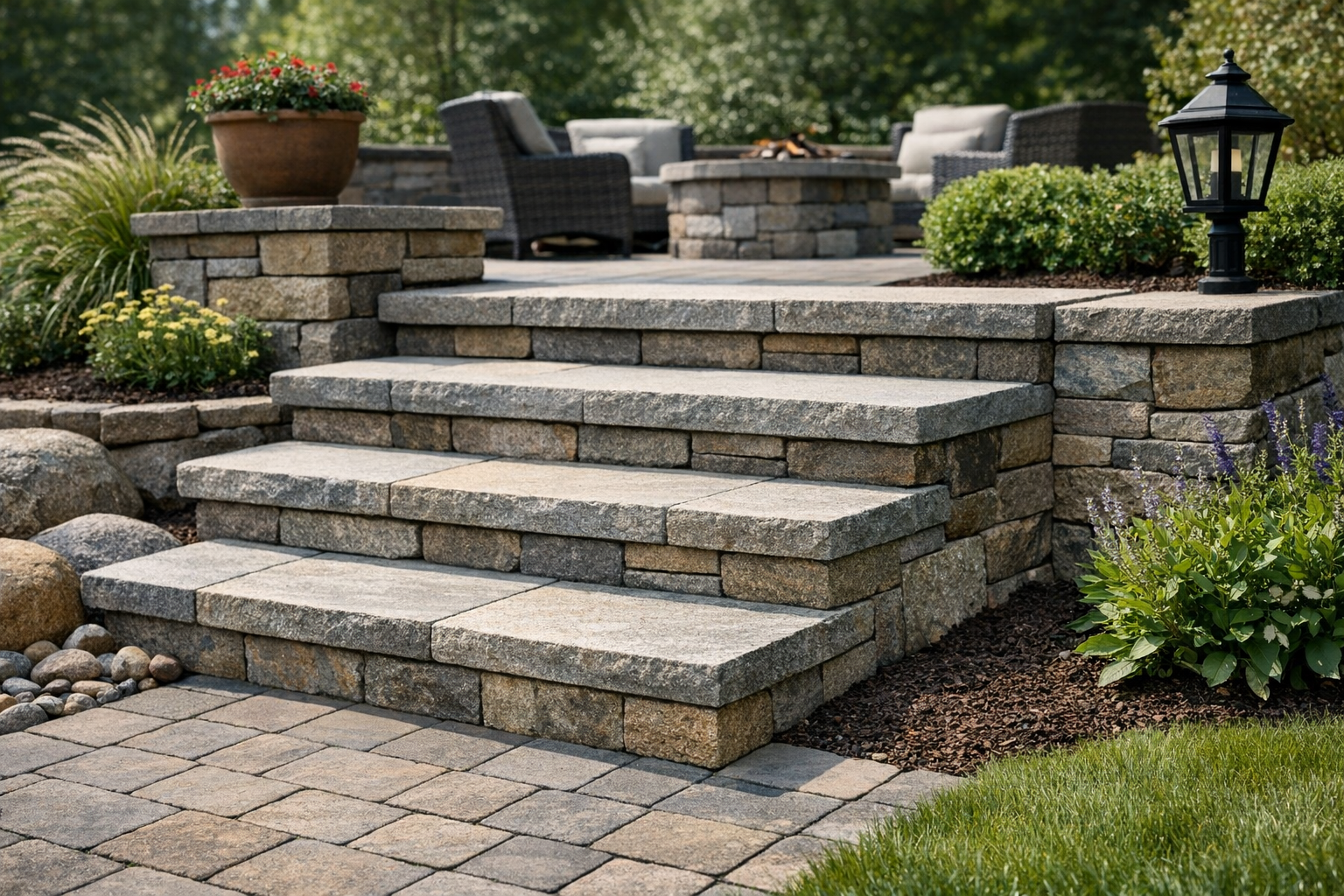
Stone steps offer a natural, elegant look. They may be made from cut stone, fieldstone, or veneer stone over a concrete base. Stone is often chosen for landscape features because it blends beautifully with gardens, retaining walls, and outdoor living areas.
Concrete Masonry Steps
Concrete steps are one of the most practical choices for durability and cost-effectiveness. They can be poured in place or built from concrete blocks and then faced with brick, stone, or tile. Concrete provides a strong foundation and can be customized to fit nearly any design.
Precast Steps
Precast masonry steps are manufactured off-site and installed as a finished unit. They are a convenient option for projects that need speed and consistency. While they may offer less customization than site-built steps, they are often reliable and efficient.
Planning a Masonry Step Project
Good planning is essential for a successful masonry step installation. Start by measuring the total height the steps need to cover. From there, determine the number of risers and the depth of each tread. Comfortable step dimensions are important for both safety and usability.
It is also important to consider drainage and soil conditions. Masonry steps need a stable base, often built on compacted gravel and a concrete footing, to prevent settling or shifting over time. If water pools near the steps, drainage improvements may be necessary before construction begins.
Think about how the steps will connect to nearby walkways, porches, or landings. A well-integrated design creates a smoother transition and improves the overall appearance of the space.
Key Materials and Tools
The exact materials for a masonry step project will depend on the design, but many projects include concrete, mortar, bricks or stones, gravel, rebar, and sealant. In some cases, a facing material is added to improve appearance while the structural base is made from concrete or block.
Essential tools may include a shovel, level, trowel, masonry saw, tape measure, rubber mallet, and safety gear. For larger or more complex projects, professional equipment and expertise may be necessary. Precision matters, especially when building steps that must be even, secure, and code-compliant.
Installation Basics
Masonry step installation usually begins with excavation and site preparation. The ground is removed to the proper depth, then compacted gravel is added to support the footing. A concrete foundation is poured or block base is built to create a strong structure.
After the base is set, the risers and treads are constructed carefully, checking each layer for level and alignment. Mortar is used to bond materials together and create a clean finish. Once the structure is complete, the surface may be capped with stone or brick, and joints are finished for added durability.
Because steps must safely carry foot traffic and resist weather damage, installation should be done with attention to detail. Small errors in height, slope, or drainage can lead to problems later.
Maintenance Tips for Masonry Steps
One of the best features of masonry steps is that they require relatively little maintenance. Still, regular care helps extend their life. Sweep away dirt and debris, check for loose mortar, and inspect for cracks after winter or heavy storms.
Cleaning can usually be done with water and a mild detergent. Avoid harsh chemicals that may damage the surface or surrounding landscaping. If you notice efflorescence, which appears as a white powdery residue, it can often be removed with proper cleaning methods.
Sealing may also help protect certain masonry surfaces from moisture and staining. Repointing mortar joints when needed will keep the structure strong and prevent water from penetrating into the step assembly.
Design Ideas for Better Curb Appeal
Masonry steps can do more than provide access; they can enhance the look of the entire property. Consider wide steps for a grand entrance, curved edges for softness, or contrasting materials for visual impact. Adding railings, planters, or low retaining walls nearby can further improve the design.
Lighting is another useful addition. Low-voltage lights along the sides of masonry steps can improve safety at night while highlighting the texture of brick or stone. Matching the step design to nearby hardscape features creates a cohesive, finished look.
When to Hire a Professional
While some small masonry projects can be handled by experienced DIYers, step construction is often best left to a professional. Steps must be structurally sound, properly sized, and built to local building codes. A contractor can help with design, material selection, and installation details that affect long-term performance.
If your project involves major grading, drainage issues, or a tall stair system, professional help becomes even more important. A well-built masonry step should be safe, attractive, and built to last for years.
Conclusion
A masonry step is a smart investment for homeowners who want durability, style, and long-term value. With the right materials, planning, and installation, masonry steps can improve access while elevating the look of your home’s exterior. Whether you prefer brick, stone, or concrete, a well-designed masonry step can make a lasting impression.