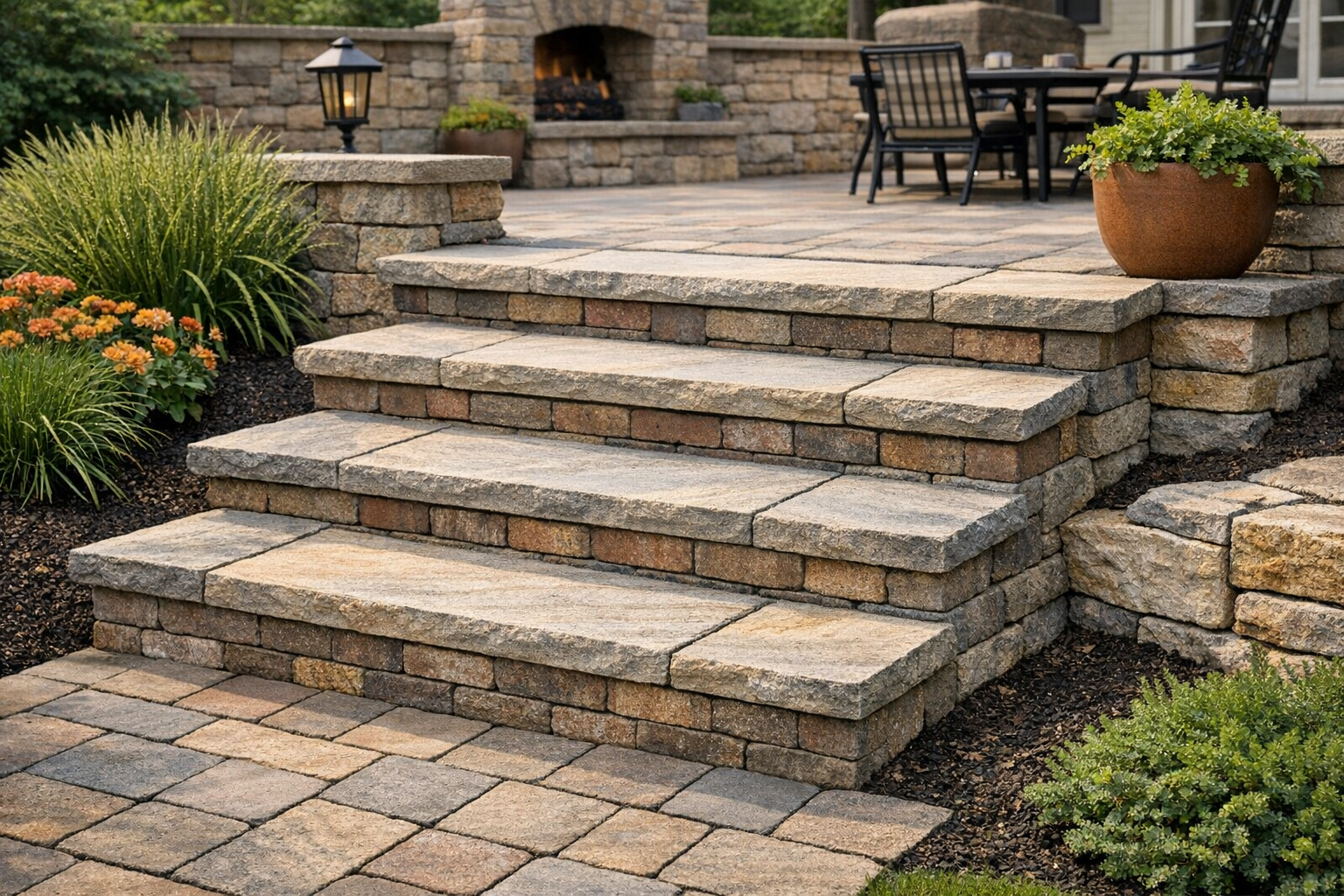
Masonry steps are a timeless way to add beauty, durability, and value to an outdoor space. Whether they lead to a front entry, a patio, a garden, or a sloped walkway, well-built masonry steps provide a clean, permanent solution that can handle heavy use and changing weather. Unlike wood or prefabricated materials, masonry offers strength, low maintenance, and a classic appearance that works with many architectural styles.
What Is a Masonry Step?
A masonry step is a step or staircase constructed from durable building materials such as brick, concrete block, stone, or pavers. These steps are typically built on a solid base and bonded with mortar or assembled as dry-laid systems, depending on the design. Masonry steps are commonly used outdoors because they resist rot, insect damage, and long-term wear better than many other materials.
They can be simple and functional or highly decorative, depending on the chosen material and finish. For example, brick steps can create a traditional look, while natural stone steps can add rustic character. Concrete masonry steps are often chosen for their strength and versatility.
Why Choose Masonry Steps?
Long-lasting durability
One of the biggest advantages of masonry steps is their lifespan. When properly installed, they can last for decades with minimal repairs. They are built to withstand freeze-thaw cycles, moisture, and frequent foot traffic.
Low maintenance
Masonry steps typically require less upkeep than wood steps. There is no need for regular staining or painting, and routine cleaning is usually enough to keep them looking good. Occasional sealing may help protect certain materials from staining or moisture absorption.
Design flexibility
Masonry offers a wide range of design choices. Homeowners can select from different colors, textures, shapes, and patterns to complement their home’s exterior. Steps can be built to match existing retaining walls, patios, walkways, or porch features for a cohesive look.
Improved property value
Well-designed masonry steps can improve curb appeal and create a polished first impression. Because they are both attractive and practical, they often add perceived value to a home or landscape.
Common Materials Used for Masonry Steps
Brick
Brick steps provide a traditional, classic appearance that works well with older homes and formal landscapes. They are durable and attractive, especially when paired with contrasting mortar or stone accents.
Natural stone
Stone steps offer a natural, elegant look. Materials such as granite, limestone, slate, and bluestone are popular for their strength and unique character. Because each stone is slightly different, the finished result often feels custom and timeless.
Concrete block
Concrete block is a practical choice for the structural base of masonry steps. It is strong, affordable, and easy to work with. In many cases, the blocks are faced with brick, stone veneer, or pavers to improve appearance.
Pavers
Paver steps are often used in landscape projects where matching hardscape surfaces are important. They can create a neat, coordinated look and are available in many shapes and colors.
How Masonry Steps Are Built
Planning and layout
Every successful masonry step project begins with careful planning. The size, rise, run, and placement of the steps should be determined before construction begins. Good layout is essential for safe, comfortable use and proper integration with nearby surfaces.
Preparing the foundation
A strong foundation is critical. The ground is usually excavated and compacted, then topped with gravel or another stable base material. In some projects, a reinforced concrete footing is installed to support the structure and prevent shifting.
Building the structure
The step structure is assembled using masonry units and mortar or another appropriate bonding method. Each layer must be level, aligned, and properly supported. For taller or more complex stairways, structural reinforcement may be required.
Finishing the surface
After the main structure is complete, the visible surfaces are finished with the selected material. This may involve laying brick, setting stone treads, installing caps, or adding a veneer. The final finish should be both attractive and slip-resistant where possible.
Design Tips for Better Masonry Steps
Match the style of the home
The best masonry steps feel like a natural extension of the property. Consider the color, texture, and shape of your home’s exterior when selecting materials. A coordinated design creates a more finished and intentional appearance.
Pay attention to proportions
Comfort and safety depend on proper step dimensions. Steps that are too tall, too shallow, or uneven can be difficult to use. Consistent height and depth improve both function and appearance.
Include drainage
Water management is essential. Poor drainage can lead to cracking, settling, or slippery surfaces. Masonry steps should be designed so water flows away from the structure rather than pooling around it.
Consider lighting and railings
For added safety and convenience, exterior masonry steps may benefit from built-in lighting or a railing. These features are especially useful for steep stairways or areas used at night.
Maintenance and Care
Although masonry steps are low maintenance, they still benefit from occasional attention. Regular sweeping removes dirt and debris that can trap moisture. Washing with a mild cleaner helps prevent buildup of algae or stains. Check mortar joints, edges, and surfaces periodically for cracks or loose pieces, especially after winter weather.
If the steps are sealed, reapply sealant according to the product instructions. Promptly repair any damage to prevent small issues from becoming larger structural problems. With routine care, masonry steps can remain strong and attractive for many years.
When to Hire a Professional
Simple landscape steps may seem like a manageable DIY project, but masonry construction often requires experience, precision, and the right tools. If the steps are attached to a foundation, include multiple risers, or must meet local building codes, hiring a professional is usually the safest choice. A qualified mason can ensure the steps are properly supported, level, and built to last.
Conclusion
Masonry steps are a durable, attractive, and practical addition to many outdoor spaces. With the right materials, proper construction, and thoughtful design, they can improve access while enhancing curb appeal. Whether you prefer brick, stone, or concrete, a well-built masonry step offers lasting value and timeless style.