
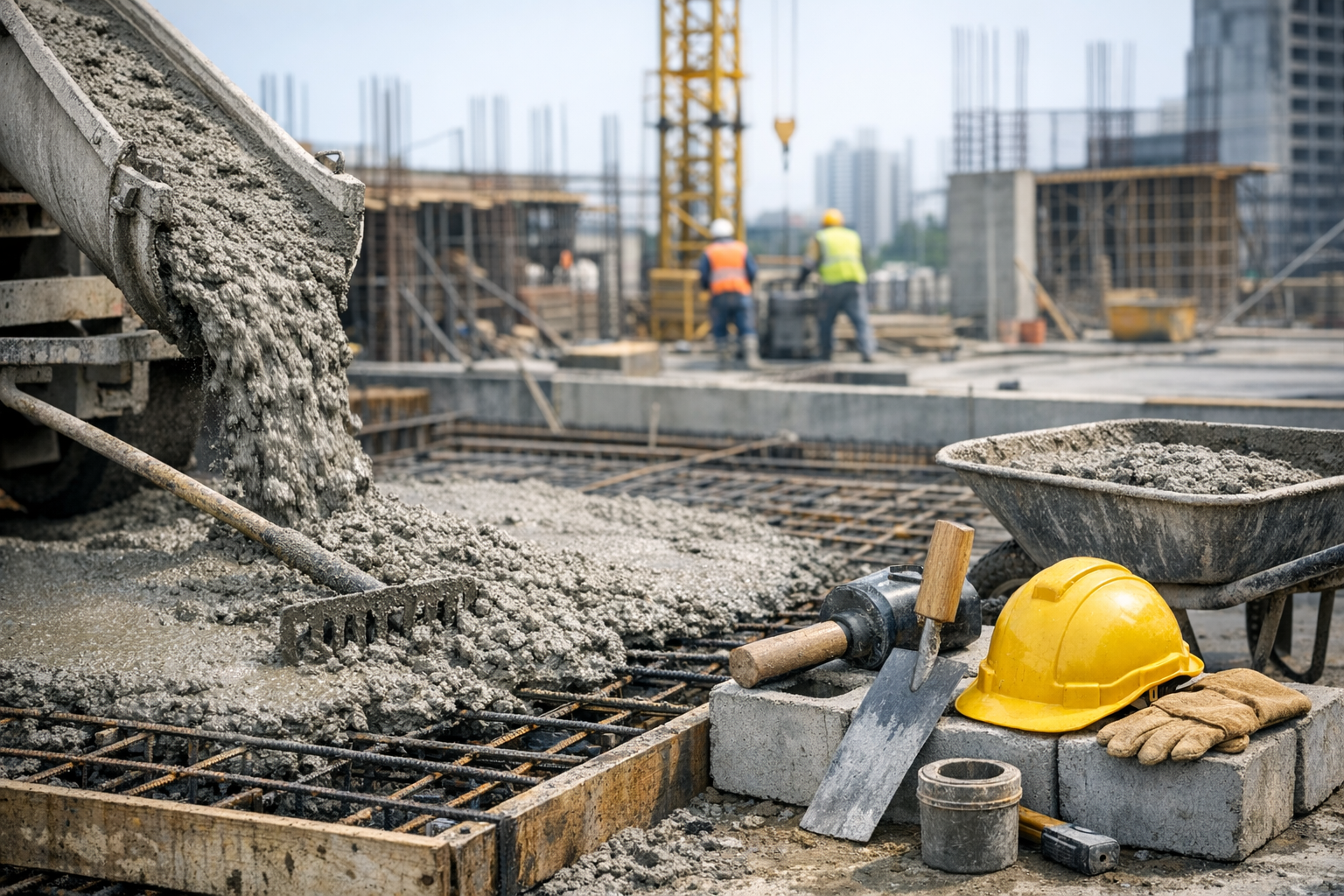
What Is Construction Concrete?
Construction concrete is one of the most widely used building materials in the world. It is made by combining cement, water, and aggregates such as sand, gravel, or crushed stone. When mixed correctly, these ingredients form a strong, durable material that can be poured into almost any shape and then harden into a solid structure.
Its popularity comes from its versatility. Concrete is used for foundations, slabs, sidewalks, driveways, walls, bridges, roads, and countless other applications. It can be reinforced, colored, textured, or engineered to meet specific performance requirements. Because of this flexibility, construction concrete remains a cornerstone of modern building projects.
Key Properties of Concrete
Concrete is valued for several important properties that make it suitable for both residential and commercial construction. One of the most important is compressive strength, which allows it to support heavy loads without crushing. It also offers long service life when properly designed and maintained.
Another major advantage is its resistance to fire, weather, and everyday wear. Concrete does not rust, and it can perform well in harsh environments when the right mix and finishing techniques are used. In addition, it has excellent thermal mass, helping regulate temperature in some buildings and structures.
However, concrete is strong in compression but relatively weak in tension. That is why many projects use steel reinforcement to improve overall performance. Understanding these properties helps builders choose the right mix and structural design for the job.
Common Types of Construction Concrete
Standard Concrete
Standard concrete is the most common type used in general construction. It is suitable for sidewalks, driveways, patios, and many structural applications. The mix is designed to provide a balance of strength, workability, and affordability.
Reinforced Concrete
Reinforced concrete includes steel bars or mesh embedded within the concrete to improve tensile strength. This type is widely used in beams, columns, slabs, and foundations where loads and structural stresses are significant.
Precast Concrete
Precast concrete is cast in a controlled factory environment before being transported to the job site. This method allows for better quality control, faster installation, and consistent results. It is commonly used for walls, panels, beams, and architectural elements.
High-Strength Concrete
High-strength concrete is engineered to achieve greater compressive strength than standard mixes. It is often used in high-rise buildings, bridges, and heavy-duty infrastructure projects where durability and load-bearing capacity are critical.
Ready-Mix Concrete
Ready-mix concrete is produced at a batching plant and delivered to the site in a mixer truck. This option saves time, reduces on-site mixing errors, and is ideal for projects that require a steady supply of fresh concrete.
How Concrete Is Used in Construction
Concrete serves a wide range of functions in construction. In residential projects, it is commonly used for foundations, basement walls, garage floors, patios, and driveways. Its strength and stability make it an excellent choice for supporting homes and improving outdoor surfaces.
In commercial and industrial construction, concrete is often used for structural frames, parking structures, warehouses, and flooring systems. It can handle heavy traffic and high loads while providing a durable surface that requires relatively little maintenance.
Infrastructure projects also rely heavily on concrete. Roads, tunnels, dams, bridges, sidewalks, and retaining walls all benefit from concrete’s strength and resilience. In many cases, it is the material that makes large-scale public works possible.
Benefits of Using Concrete
One of the biggest benefits of concrete is its durability. Properly installed concrete can last for decades, making it a cost-effective investment over time. It is also highly adaptable, allowing contractors to shape it into different forms and finishes to match the needs of the project.
Concrete is also relatively low maintenance compared with many other building materials. Once cured, it can withstand heavy use and environmental stress with minimal upkeep. It is also fire-resistant and can contribute to safer structures.
Another benefit is availability. The raw materials used to make concrete are widely accessible, which helps keep costs manageable. For many builders, this combination of strength, versatility, and affordability makes concrete an ideal choice.
Best Practices for Working with Construction Concrete
Successful concrete work starts with the right mix design. The proportions of cement, water, and aggregates should be selected based on the project’s strength requirements, exposure conditions, and finishing needs. Too much water can weaken the final product, while too little can make the mix difficult to place.
Proper site preparation is equally important. Forms should be secure, reinforcement should be placed correctly, and the subgrade must be compacted to prevent settling. Careful placement and consolidation help eliminate air pockets and ensure a dense, uniform finish.
Curing is another critical step. Concrete must retain moisture for a period after placement so it can gain strength properly. If it dries too quickly, it may crack or lose durability. Depending on the project, curing may involve water, curing compounds, or protective coverings.
Finally, quality control matters. Temperature, weather, timing, and finishing techniques can all affect performance. Experienced crews monitor these factors closely to help ensure the concrete meets design expectations and lasts as long as intended.
Common Challenges and How to Avoid Them
Even though concrete is dependable, problems can still occur if best practices are ignored. Cracking is one of the most common issues and may result from shrinkage, poor curing, or structural movement. Using proper control joints and maintaining the correct moisture balance can reduce the risk.
Another challenge is surface scaling or spalling, which can happen when concrete is exposed to freeze-thaw cycles, de-icing salts, or poor finishing practices. Choosing the right mix and protecting the surface can help prevent this type of damage.
Inconsistent mixing, improper reinforcement placement, and rushed finishing can also lead to weak spots or uneven results. Careful planning, skilled labor, and attention to detail are essential for high-quality concrete construction.
Conclusion
Construction concrete remains a foundational material in modern building because it offers strength, flexibility, and long-term value. Whether used for a home foundation, a commercial floor, or a major infrastructure project, the right concrete mix and installation methods make all the difference. With proper planning, placement, and curing, concrete can deliver reliable performance for many years.