Concrete and Masonry: Why They Matter in Construction
Concrete and masonry are two of the most trusted materials in building. They appear in homes, commercial buildings, sidewalks, retaining walls, patios, foundations, and countless other structures. Their popularity comes from a strong mix of durability, versatility, fire resistance, and long-term value. When properly designed and installed, concrete and masonry can last for decades with relatively low maintenance.
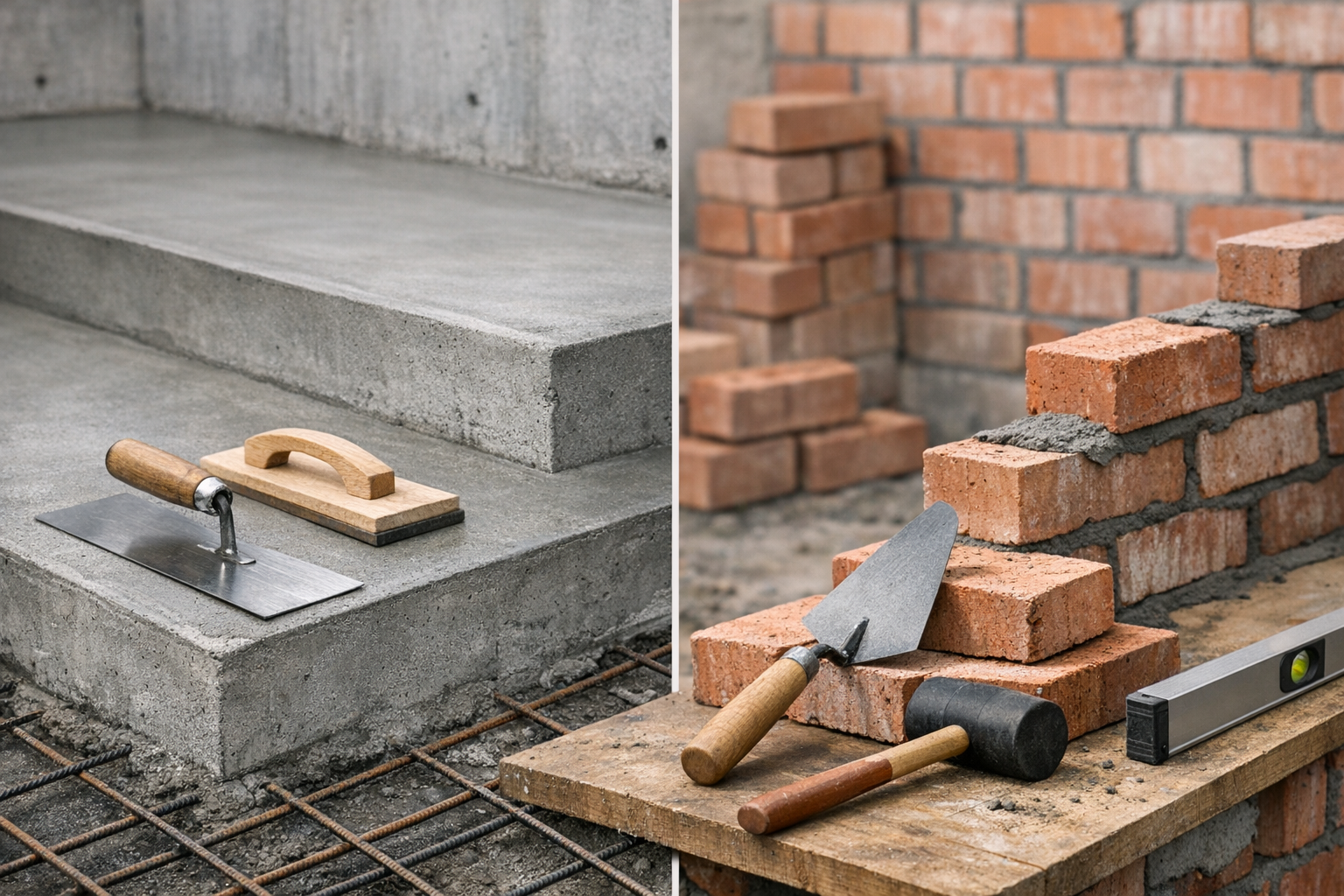
Although they are often mentioned together, concrete and masonry are not the same thing. Concrete is a composite material made from cement, water, sand, and aggregates. Masonry refers to building with units such as brick, stone, or concrete block, often joined with mortar. Together, they create structures that are both functional and attractive.
What Is Concrete?
Concrete is one of the most widely used construction materials in the world. It begins as a mix of cement, water, sand, and stone or gravel. Once the ingredients are blended, the mixture is poured into forms and allowed to cure. During curing, the concrete hardens and gains strength over time.
One of concrete’s biggest advantages is its ability to be shaped into nearly any form. It can be used for slabs, foundations, driveways, walkways, steps, and structural components. Modern concrete can also be finished in many ways, including smooth trowel finishes, broom finishes, stamped patterns, and colored surfaces.
Common Types of Concrete Applications
Concrete is used in a wide range of projects. For residential work, it often serves as the base for homes, garage floors, patios, and driveways. In commercial and industrial settings, it supports heavy loads in warehouses, parking lots, and infrastructure projects. Reinforced concrete, which includes steel bars or mesh, adds extra strength and helps the material handle tension and structural stress.
What Is Masonry?
Masonry is the craft of building with individual units, usually laid in patterns and bonded with mortar. Common masonry materials include brick, natural stone, concrete block, and manufactured stone veneer. These materials are prized for their appearance, strength, and weather resistance.
Masonry work is often chosen because it adds texture and character to a structure. A brick exterior can create a classic look, while stone can deliver a more natural or upscale appearance. Concrete block is commonly used for foundations, basement walls, and load-bearing structures because it is sturdy and cost-effective.
Types of Masonry Materials
Brick masonry is known for its timeless appearance and good durability. Stone masonry offers exceptional strength and a unique natural look. Concrete masonry units, often called CMUs or cinder blocks, are common in many modern buildings. Veneer systems use a thin layer of masonry material over a structural backup wall, giving the look of full masonry with less weight and cost.
Key Benefits of Concrete and Masonry
Concrete and masonry offer several important advantages that make them ideal for many building applications.
- Durability: These materials can withstand years of use and exposure to the elements.
- Fire resistance: Concrete and masonry do not burn, making them valuable for safety.
- Low maintenance: With proper installation, they usually require less upkeep than many other materials.
- Energy efficiency: Masonry walls can help regulate indoor temperatures by storing and slowly releasing heat.
- Design flexibility: They can be finished in many colors, textures, and patterns.
These benefits make concrete and masonry a smart investment for property owners who want lasting performance and curb appeal.
How Concrete and Masonry Are Used Together
Concrete and masonry often work side by side in the same project. For example, a home may have a concrete foundation, concrete basement walls, and a brick exterior veneer. A commercial building might use reinforced concrete for its structure and masonry for exterior walls or decorative accents. This combination provides strength, stability, and visual appeal.
In many projects, concrete acts as the structural base while masonry serves as the protective and decorative surface. This partnership allows builders to balance performance, cost, and design goals.
Maintenance and Care Tips
Even though concrete and masonry are durable, they still benefit from regular care. Small cracks, water infiltration, and surface wear can become bigger problems if left untreated. Routine inspection is a simple way to protect these materials over time.
For concrete surfaces, sealing can help reduce moisture penetration and staining. Driveways and patios should be kept clean and free of debris, oil, and standing water. In colder climates, avoiding excessive de-icing chemicals can help prevent surface damage.
Masonry structures should also be checked for cracked mortar joints, loose bricks or stones, and signs of moisture damage. Repointing, which involves replacing damaged mortar, can extend the life of a wall or chimney. Proper drainage around foundations is also important, since water is one of the biggest threats to both concrete and masonry.
When to Hire a Professional
Some small concrete and masonry projects may be suitable for experienced DIYers, but many jobs require professional knowledge. Structural work, foundation repairs, load-bearing walls, and major exterior installations should be handled by qualified contractors. These projects depend on proper materials, precise mixing, accurate layout, and a strong understanding of building codes.
Hiring a professional can also save time and reduce the risk of costly mistakes. A skilled contractor can recommend the best material for the job, ensure proper drainage and reinforcement, and deliver a finish that looks clean and professional.
Choosing the Right Material for Your Project
Deciding between concrete, masonry, or a combination of both depends on your goals. If you need a strong structural foundation or a large flat surface, concrete may be the best choice. If your project calls for texture, style, or a classic architectural look, masonry may be more appropriate. Many successful projects use both materials to get the best of each.
Before starting a project, consider the climate, budget, design preferences, and long-term maintenance requirements. Thinking through these factors early can help you choose a solution that performs well and enhances the value of your property.
Conclusion
Concrete and masonry remain essential building materials because they offer strength, beauty, and lasting value. Whether used separately or together, they can support everything from foundations to decorative finishes. With proper planning, installation, and maintenance, these materials can serve your property well for many years.