
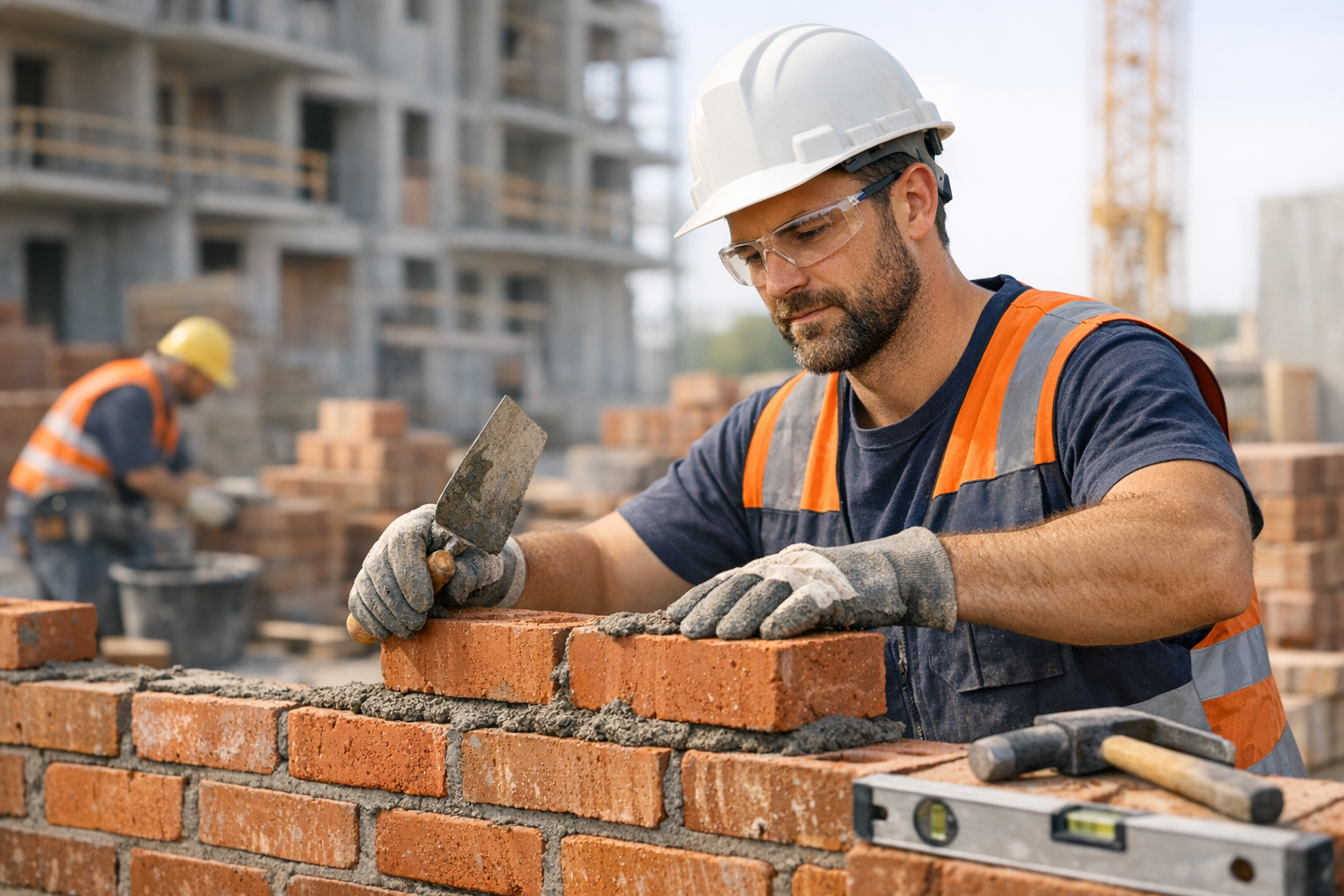
What Is a Masonry Worker?
A masonry worker is a skilled tradesperson who builds, repairs, and restores structures made from materials such as brick, stone, concrete block, and mortar. These professionals help create everything from home fireplaces and garden walls to retaining walls, chimneys, patios, and large commercial facades. Because masonry combines strength, precision, and craftsmanship, masonry workers play an important role in both construction and restoration projects.
The work requires more than stacking materials. A good masonry worker must understand structural integrity, read plans, measure accurately, and know how different materials behave in changing weather conditions. The result is durable, attractive work that can last for decades when done correctly.
What Does a Masonry Worker Do?
Masonry workers perform a wide range of tasks depending on the project. Some focus on new construction, while others specialize in repair or historic restoration. Typical duties include mixing mortar, laying brick or block, cutting stone, applying finishes, and ensuring walls and other structures are level and aligned.
Common Responsibilities
- Reading blueprints and project plans
- Measuring and laying out work areas
- Mixing and applying mortar or grout
- Setting brick, block, tile, or stone in place
- Cutting materials to fit around corners, windows, and openings
- Repairing cracked or damaged masonry
- Cleaning and sealing finished surfaces
- Following safety procedures on the job site
In many cases, masonry workers also prepare foundations and surfaces before construction begins. Accuracy matters at every step, because even a small error can affect the strength and appearance of the finished structure.
Key Skills Every Masonry Worker Needs
Successful masonry work depends on both physical ability and technical skill. Workers need steady hands, good depth perception, and the patience to complete detailed work carefully. Since many projects involve heavy materials and outdoor conditions, endurance and safety awareness are also essential.
Technical Skills
Masonry workers must know how to mix mortar to the right consistency, estimate materials, use trowels and cutting tools, and understand how to build stable structures. They also need to interpret construction drawings and follow building codes. These skills help ensure the work is both safe and visually appealing.
Soft Skills
Communication is important, especially when masonry workers collaborate with general contractors, laborers, electricians, or homeowners. Problem-solving is another valuable skill, since every job site presents unique challenges such as uneven surfaces, weather delays, or damaged materials. Attention to detail is critical because clean lines and consistent spacing are part of quality masonry.
Education and Training Requirements
Many masonry workers begin their careers through on-the-job training, apprenticeships, or vocational programs. A high school diploma or equivalent is often helpful, especially if the program includes math, construction, or shop classes. Apprenticeships are especially valuable because they combine classroom instruction with hands-on experience.
During training, aspiring masonry workers learn how to handle tools, work safely, and complete projects under the guidance of experienced professionals. Over time, they develop the confidence and efficiency needed to work independently. Some workers later earn certifications in specialized areas such as restoration, waterproofing, or commercial masonry.
Tools and Materials Used by Masonry Workers
Masonry workers rely on a variety of tools and materials to complete their jobs accurately and efficiently. Hand tools like trowels, hammers, chisels, jointers, and levels are used daily. Power tools such as saws and mixers help speed up more demanding tasks.
Common Materials
- Brick
- Natural stone
- Concrete block
- Mortar
- Grout
- Reinforcement materials
Each material has its own strengths and appearance. Brick is popular for its classic look and durability, while stone offers a natural and often more decorative finish. Concrete block is commonly used for foundations and structural walls because it is strong and cost-effective. The masonry worker must understand how to select and use the right material for the job.
Work Environment and Physical Demands
Masonry work is physically demanding and often takes place outdoors, which means workers may be exposed to heat, cold, rain, or dust. The job can involve lifting heavy materials, standing for long periods, and working at heights or on scaffolding. Because of these demands, physical fitness and proper safety practices are essential.
Despite the challenges, many people enjoy the hands-on nature of the work. Masonry workers can see the visible results of their efforts, which makes the job especially rewarding. Whether building a new structure or restoring an old one, they contribute to projects that have a lasting impact on homes, businesses, and communities.
Career Outlook and Advancement
For people who enjoy craftsmanship and construction, masonry offers a solid career path. Experienced workers may advance to crew leader, supervisor, estimator, or project manager roles. Others choose to specialize in areas like historic preservation, decorative stonework, or fireplace construction.
As buildings age and infrastructure requires repair, demand for skilled masonry workers remains important. Workers who develop a reputation for quality, reliability, and safety often find steady opportunities in both residential and commercial markets. Self-employment is also possible for those who want to run their own masonry business.
Conclusion
A masonry worker combines strength, precision, and craftsmanship to build structures that are both functional and beautiful. From laying brick to restoring stone, this profession offers meaningful work for people who enjoy hands-on projects and lasting results. With the right training and skills, masonry can become a rewarding and dependable career.