
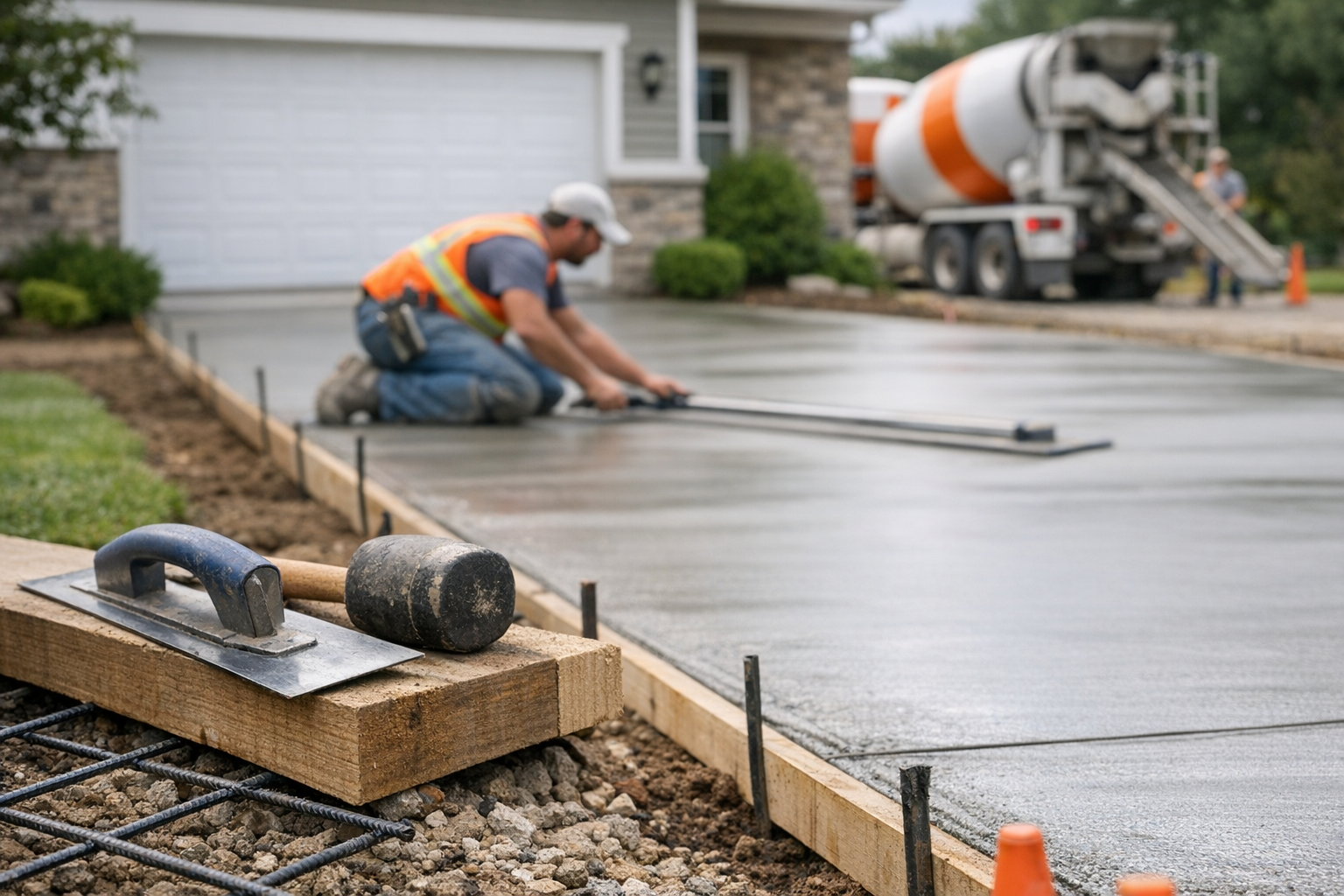
Choosing the right concrete driveway contractor can make the difference between a driveway that lasts for decades and one that starts cracking, sinking, or staining within just a few years. A well-built concrete driveway adds curb appeal, improves property value, and gives your home a clean, durable entrance. But because concrete work depends on skill, preparation, and proper finishing, hiring the right professional is essential.
Why Hire a Concrete Driveway Contractor?
Concrete may look simple once it’s poured, but a successful driveway project involves much more than mixing and setting material. A professional contractor understands soil conditions, drainage, reinforcement, thickness, curing time, and local building requirements. These details all affect how long your driveway will last and how well it will perform under daily traffic and weather changes.
Hiring an experienced contractor also helps reduce costly mistakes. Poor grading, weak base preparation, or improper finishing can lead to surface cracks, pooling water, or uneven sections. A qualified contractor brings the right tools, crew, and process to complete the job efficiently and correctly.
What a Concrete Driveway Contractor Does
A concrete driveway contractor manages the project from planning to final cleanup. Their responsibilities typically include site evaluation, demolition of an old driveway if needed, excavation, base preparation, forming, pouring, finishing, and sealing. They may also help you choose the right style, texture, and edge details for your home.
In many cases, the contractor will also assess drainage and recommend solutions to prevent water from collecting near the driveway or foundation. This is especially important in areas with heavy rainfall, freeze-thaw cycles, or poor soil stability.
Site Preparation
Good concrete work starts with the ground beneath it. The contractor should excavate to the proper depth and install a compacted base that supports the slab. Without this step, the driveway may settle unevenly over time.
Reinforcement and Pouring
Depending on the project, the contractor may add rebar, wire mesh, or fiber reinforcement to improve strength. Once the forms are in place, the concrete is poured and spread evenly to the correct thickness, usually based on vehicle load and local conditions.
Finishing and Curing
Finishing determines the look and texture of the surface. The contractor may apply a broom finish for traction or add decorative elements for a more polished appearance. After that, the concrete must cure properly. Curing is one of the most important steps because it helps the driveway reach its full strength and resist premature damage.
How to Choose the Right Contractor
Not all contractors deliver the same quality, so it’s worth taking time to compare your options. Start by looking for a company with experience specifically in driveway installation, not just general concrete or landscaping work. Driveways require a different approach than patios, sidewalks, or small slabs.
Ask for proof of licensing and insurance before signing any agreement. This protects you if something goes wrong during the project. You should also review photos of past work and read customer reviews to see whether the contractor consistently delivers quality results.
Questions to Ask
- How long have you been installing concrete driveways?
- What thickness and reinforcement do you recommend for my property?
- How do you handle drainage and base preparation?
- What finish options are available?
- How long will the project take from start to finish?
- Do you provide a written estimate and warranty?
The answers can reveal whether the contractor is knowledgeable, transparent, and prepared to stand behind their work.
Signs of a Reliable Contractor
A trustworthy concrete driveway contractor communicates clearly, provides detailed estimates, and explains the process in simple terms. They should be willing to visit your property, inspect the site, and discuss possible challenges before beginning the job.
Reliable contractors also help set realistic expectations. For example, they will explain that weather can affect the schedule and that concrete needs time to cure before it can handle full vehicle traffic. They won’t promise unrealistic timelines or ignore important preparation steps just to keep the project moving quickly.
Common Mistakes to Avoid
One of the biggest mistakes homeowners make is choosing a contractor based only on price. While it’s natural to compare bids, the cheapest estimate may leave out critical steps like proper excavation, reinforcement, or sealing. In concrete work, shortcuts often lead to expensive repairs later.
Another common mistake is failing to ask about maintenance. Even a professionally installed driveway benefits from basic care, such as cleaning spills, resealing when needed, and avoiding heavy loads before the concrete has fully cured. A good contractor should explain how to protect your investment after installation.
Benefits of a Professionally Installed Concrete Driveway
When installed correctly, concrete driveways offer several advantages. They are durable, low maintenance, and capable of handling heavy use. Concrete also provides a clean, classic appearance that works well with many home styles. With the right finish, it can be both practical and attractive.
In addition, concrete driveways can be customized. Homeowners can choose from brushed, stamped, colored, or exposed aggregate finishes to match their design preferences. A skilled contractor can help you balance style, performance, and budget.
Conclusion
Hiring the right concrete driveway contractor is one of the smartest ways to protect your home’s curb appeal and long-term value. By focusing on experience, workmanship, communication, and proper installation practices, you can feel confident that your driveway will look great and perform well for years to come.