
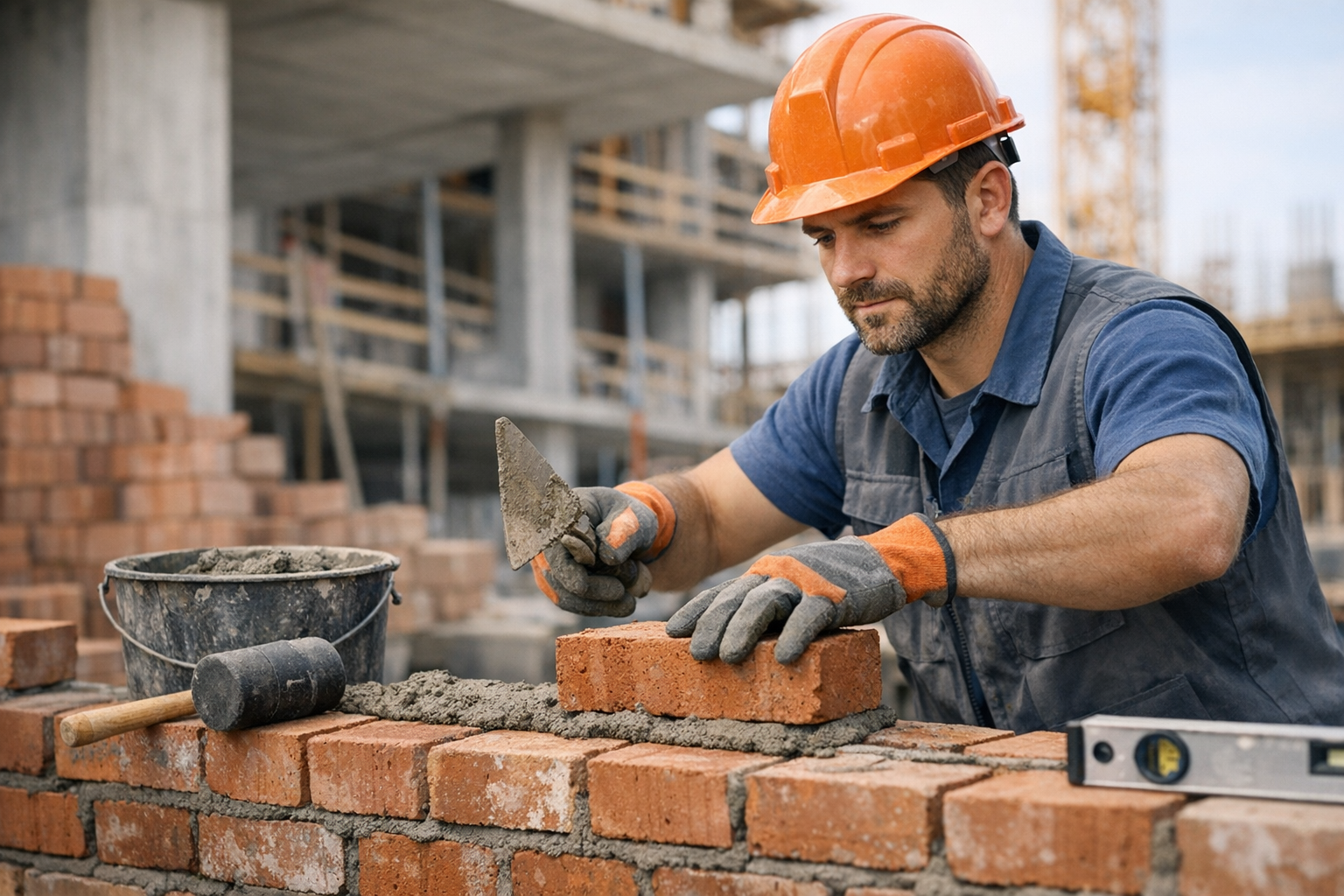
Masonry workers play a vital role in construction, restoration, and repair projects. From building strong brick walls to laying stone facades and repairing chimneys, these skilled professionals help create structures that are durable, attractive, and built to last. If you have ever admired a beautifully crafted fireplace, walkway, or exterior wall, there is a good chance a masonry worker helped make it possible.
What Is a Masonry Worker?
A masonry worker is a construction professional who builds and repairs structures using materials such as brick, block, concrete, and stone. Their work combines physical skill, technical knowledge, and precision. Masonry is one of the oldest trades in the world, but it remains essential in modern construction because of its strength, fire resistance, and timeless appearance.
Masonry workers may be employed on residential, commercial, or industrial projects. Some specialize in new construction, while others focus on restoration, decorative stonework, or structural repair. No matter the setting, the job requires attention to detail and a strong understanding of materials and layout.
What Does a Masonry Worker Do?
The daily responsibilities of a masonry worker can vary depending on the project, but the work often involves a mix of preparation, building, finishing, and repair. Accuracy is critical because even a small mistake can affect the appearance or stability of the finished structure.
Common Duties
- Reading blueprints, sketches, and project plans
- Measuring and cutting brick, block, or stone to fit
- Mixing mortar and other bonding materials
- Laying brick, block, or stone in proper patterns
- Applying mortar, grout, or sealants
- Repairing damaged walls, chimneys, steps, and foundations
- Cleaning finished surfaces and removing excess mortar
- Ensuring work meets safety and building code requirements
Masonry workers often collaborate with general contractors, carpenters, laborers, and other tradespeople. They may work outdoors in changing weather conditions or indoors on interior feature walls, fireplaces, and decorative finishes.
Essential Skills for Masonry Workers
Success in masonry depends on both technical ability and practical job-site skills. Since the trade requires working with heavy materials and exact measurements, masonry workers need patience, stamina, and problem-solving ability.
Technical Skills
A masonry worker must understand how to mix mortar correctly, align rows evenly, and choose the right materials for the job. Knowledge of tools such as trowels, levels, masonry saws, and jointers is also important. Reading plans and understanding construction layout are key parts of the trade.
Physical Strength and Endurance
This is a physically demanding profession. Masonry workers lift heavy blocks and stones, stand for long periods, and often kneel, bend, or climb during the workday. Good hand-eye coordination and steady hands are essential for creating clean, accurate work.
Attention to Detail
Masonry is as much about craftsmanship as it is about strength. The spacing of joints, the consistency of lines, and the finish of the surface all affect the final result. A careful eye helps produce work that is both structurally sound and visually appealing.
Communication and Teamwork
Because masonry projects usually involve multiple people, communication matters. Masonry workers need to follow instructions, coordinate with others, and report progress or problems clearly. Teamwork helps projects stay on schedule and reduces the risk of mistakes.
Tools and Materials Used in Masonry
Masonry workers rely on a combination of hand tools, power tools, and specialized equipment. The exact tools used depend on the type of project, but several are common across the trade.
Frequently Used Tools
- Trowels for spreading mortar
- Levels and plumb lines for alignment
- Masonry hammers and chisels for shaping material
- Measuring tapes and squares for accuracy
- Power saws with masonry blades for cutting stone or block
- Mixers for mortar and concrete
- Scaffolding and ladders for elevated work
Materials may include brick, concrete block, natural stone, manufactured stone veneer, mortar, and grout. Each material has its own strengths, appearance, and installation requirements. A skilled masonry worker understands how to handle them properly to achieve long-lasting results.
How to Become a Masonry Worker
Many masonry workers start their careers through on-the-job training, apprenticeships, or trade school programs. While some entry-level positions do not require formal education beyond a high school diploma or equivalent, training is extremely valuable in this trade.
Education and Training
Apprenticeships are one of the most common paths into masonry. These programs combine classroom instruction with paid hands-on experience. Apprentices learn how to mix materials, use tools safely, read plans, and build structures under the supervision of experienced tradespeople.
Trade schools and vocational programs can also help students develop a strong foundation in masonry techniques, construction safety, and blueprint reading. Some workers continue learning throughout their careers to expand into specialized areas such as restoration or commercial stonework.
Licensing and Certification
Requirements vary by location. In some areas, masonry workers may need licenses or certifications for specific types of projects. Safety training, such as OSHA-related instruction, is often required or strongly recommended.
Career Outlook and Work Environment
Masonry work offers a hands-on career for people who enjoy building, problem-solving, and seeing tangible results. Demand for masonry workers can remain steady because structures need both new construction and ongoing maintenance. Older buildings, in particular, often require repairs, repointing, and restoration to preserve their appearance and structural integrity.
The work environment can be challenging, especially because masonry workers may deal with heat, cold, dust, noise, and physically demanding tasks. However, many workers find the trade rewarding because it combines craftsmanship with practical impact. Seeing a finished wall, chimney, or patio that will last for years can be a strong source of pride.
Why Masonry Workers Matter
Masonry workers do more than simply place bricks or stones. They help create the foundations of everyday life, from homes and schools to sidewalks, retaining walls, and historic buildings. Their work contributes to safety, durability, and curb appeal, making them an important part of the construction industry.
Because masonry often blends function with design, skilled workers also help shape the look and character of neighborhoods and buildings. Whether they are repairing a century-old façade or constructing a modern outdoor living space, masonry workers bring craftsmanship and reliability to every project.
Conclusion
Masonry workers are skilled professionals who combine strength, precision, and craftsmanship to build and repair lasting structures. If you value hands-on work and take pride in creating something durable and beautiful, masonry can be a rewarding career path with real impact.